

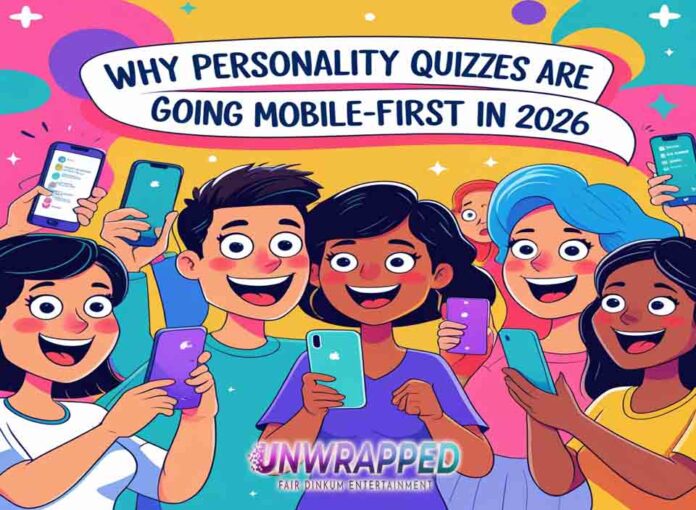
In an era where smartphones are the primary gateway to the internet, the humble personality quiz is undergoing a quiet but powerful shift. As mobile traffic continues to outpace desktop and user expectations for quick, interactive experiences rise, quiz makers and brands are turning to mobile-first delivery — designing quizzes from the ground up for smartphones and tablets rather than adapting desktop versions. This isn’t just a design tweak: it represents a deeper evolution in how personality quizzes are created, consumed and monetized in 2026.
Beyond screen sizes and form factors lies a set of strategic reasons why personality-quiz content is migrating to mobile: better accessibility, higher engagement, faster sharing and richer data capture. Understanding why this shift is happening and what it means for quiz creators, content strategists and marketers offers a unique window into the future of interactive digital experiences—one where users don’t open a laptop, they tap and swipe.
The Mobile Moment: Why Mobile-First is Now Essential
A tsunami of mobile usage
One of the clearest signals of this shift is the overwhelming dominance of mobile devices in global web traffic. According to recent data, mobile devices account for approximately 59.7 % of global website traffic in 2025. Meanwhile, expert commentary asserts that designing mobile-first is no longer optional—it’s the foundation of modern digital experiences.
What this means for personality quizzes is clear: the vast majority of potential takers are on a phone. Quizzes built primarily for desktop risk poor formatting, slow load times or clunky interfaces when delivered to the device most people are using.
Google and the mobile-first ranking imperative
Beyond user convenience lies search engine optimization (SEO). Google has long emphasized the importance of mobile-friendly design and now actively prioritizes mobile-first indexing and loading speed as ranking factors. Websites and interactive content (including quizzes) that load efficiently on mobile gain a clear advantage in discoverability.
This creates a double incentive: quiz creators should target mobile because (1) that’s where users are, and (2) that’s where search engines will reward visibility.
The psychology of micro-engagement
One subtle but significant trend is how mobile usage shapes interaction patterns. On a phone, users are often browsing while commuting, waiting in line or in the middle of another task. That means content must deliver quickly, feel lightweight and invite immediate response.
Interactive quizzes are uniquely positioned here, but only if they are optimized for mobile behaviors: quick load, minimal scrolling, clear buttons, thumb-friendly layout. Desktop-centric quizzes often fail to deliver that level of immediate engagement.
Trend data specific to personality quizzes
Beyond the macro trends, there’s evidence that personality quiz formats are evolving to fit mobile-first audiences. For example, platforms like PersonalityPeek advertise their mobile-friendly quiz environments, showing thousands of mobile takers and viral sharing. Data analysts also note that personality assessment tools themselves are being re-imagined with mobile behavior in mind—see for example the “Personality Assessment Quizzes” trend that emphasizes rapid, engaging formats.
Three Key Drivers for the Mobile-First Shift in Personality Quizzes
1. Instant sharing & virality
Mobile devices are inherently social: content gets taken, shared, screenshot, posted on stories, forwarded in messengers. A personality quiz that plays well on mobile is more likely to:
Be completed on the spot
Be shared immediately with friends via chat apps
Appear on social feeds and drive additional traffic
When a quiz is mobile-first, designers often build in social hooks, seamless share flows, interactive visuals and mobile-friendly UI—making it far more “shareable” than a desktop-adapted quiz.
2. Richer data capture & personalization
Smartphone usage also brings richer behavioral data. Recent research shows that mobile phone sensors can infer personality traits through movement and usage patterns. For instance, a study found mobile phone sensors could predict user personality with high accuracy. Another piece of academic work shows that mobile user engagement techniques vary by personality traits and thus can be tailored.
In practice, that means mobile-first quiz platforms have the opportunity to:
Capture micro-interactions (swipes, taps, time on page)
Deliver dynamic question flows tailored to how the user responds on mobile devices
Combine quiz results with mobile behavior data for deeper insight
Thus the shift is not merely about viewing on mobile, but about experience design and data strategy optimized for mobile contexts.
3. Monetization and attention economics
From a business standpoint, mobile-first quiz content aligns better with ad networks, sponsorships and lead-generation funnels. Advertisers increasingly target mobile devices where users spend the majority of time. When a quiz is mobile-optimized, it lands better, retains attention longer and offers smoother paths to conversion (e.g., post-quiz offers, share flows, app downloads).
Moreover, in mobile environments, attention spans are shorter—meaning quizzes must be shorter, visually engaging and immediately rewarding. Mobile-first design forces this discipline, which in turn improves completion rates and thus monetization metrics.
See Also: Enneagram and Emotional Intelligence: A 2026 Guide to Self‑Awareness
What It Means for Quiz Creators, Content Marketers and Brands
Revising quiz design strategy
For creators and brands, moving to mobile-first means rethinking format and user experience. Key action points include:
Layout optimization: Design quizzes for narrow screens first—big tap targets, minimal text, one question per screen.
Speed matters: Mobile networks vary, so quiz pages should load quickly, reduce images, optimize for touch responsiveness.
Share path built in: Include social sharing options (messengers, social apps) immediately after results.
Mobile behavioral data: Integrate analytics around mobile usage (time-per-question, drop-off points) to refine quiz flows.
Content and engagement tweaks
Mobile audiences favor micro-moments. Long quiz intros, heavy explanation text and complex result breakdowns may not perform as well. Instead:
Offer shorter formats (e.g., 8-10 questions vs 20+).
Use instant-gratification: quick results, share prompts right after completion.
Employ mobile interactions: swiping, tapping icons, animated visuals.
SEO & distribution benefits
A mobile-first quiz strategy enhances discoverability. Because mobile traffic is dominant and Google’s mobile indexing is central, a well-optimized mobile quiz can benefit in search rankings. Additionally, when quizzes are shared across mobile social channels, they generate inbound links and engagement signals helpful for SEO.
Analytics & A/B testing for mobile
Data on mobile behavior is critical. Creators should test:
Drop-off rates by question on mobile vs desktop
Completion time differences
Share rates from mobile devices
Engagement per result page on mobile
Such insights help refine the experience and drive higher conversion.
Monetization strategies
Better mobile quiz experiences open multiple monetization avenues:
In‐quiz advertising (mobile-optimized)
Lead capture flows (mobile friendly)
Post-quiz offers (apps, products, services) tailored to the quiz taker
Viral “share to unlock” hooks
Brands tapping mobile quiz experiences can gain high-quality leads and social reach more efficiently than desktop-first formats.
Challenges & Considerations When Going Mobile-First
Quiz fatigue and oversaturation
As mobile quizzes become more common, there’s a risk of oversaturation and diminishing novelty. Brands must innovate with formats, visuals and personalized result flows to stand out.
Performance & fragmentation
Mobile devices vary widely in screen size, network speed and capabilities. Ensuring that quizzes perform well across devices (including older phones or slower connections) is essential. This goes beyond “responsive design” into truly light and agile mobile-first builds.
Data privacy and permissions
When mobile quizzes integrate sensor data, behavioral tracking or share flows, privacy considerations become paramount. Transparent disclosures, opt-in model and compliance with regulations (e.g., GDPR, CCPA) are necessary.
Balancing depth vs brevity
Mobile audiences demand speed and ease—but personality quizzes often rely on thoughtful responses and deeper reflection. Striking the right balance between brevity (to suit mobile) and insight (to satisfy value) is an ongoing design challenge.
Call to Action
If you create personality quizzes or work in content marketing, now is the moment to re-evaluate your quiz strategy with mobile in mind. Ask yourself:
Are your quizzes optimized for mobile layout, speed and shareability?
Do you track mobile-specific metrics like completion rates, share rates, drop-off by device?
Are you leveraging mobile behaviors and data to personalize results?
Are share flows and social hooks mobile-first (e.g., messenger apps, story formats)?
Start by designing or redesigning your next quiz with mobile first, then test and iterate. Share your results, invite feedback in the comments below, and subscribe to stay informed about the latest mobile-engagement techniques. If you enjoyed this article, share it on your social feed—because yes, mobile-first means share-first, too.
Conclusion
In 2026, the migration of personality quizzes to mobile-first formats is not just a matter of design aesthetics—it’s a reflection of how users access content, how search engines prioritize delivery and how engagement and monetization strategies evolve. With mobile devices accounting for the majority of web traffic and user expectations shifting toward quick, interactive, and shareable experiences, quizzes must adapt. By embracing mobile-first layouts, smarter interaction flows, deeper analytics and seamless sharing, quiz creators and brands can unlock more reach, higher completion rates and richer insights.
Ultimately, personality quizzes are no longer just about “Which kind of person are you?” They’re about delivering the right experience on the right device, in the moment the user is ready to engage. As mobile becomes first—and often only—screen, the future of interactive content is in the palm of the hand.
People Also Love: The Secret Link Between Your MBTI Type and Side Hustles in 2026