


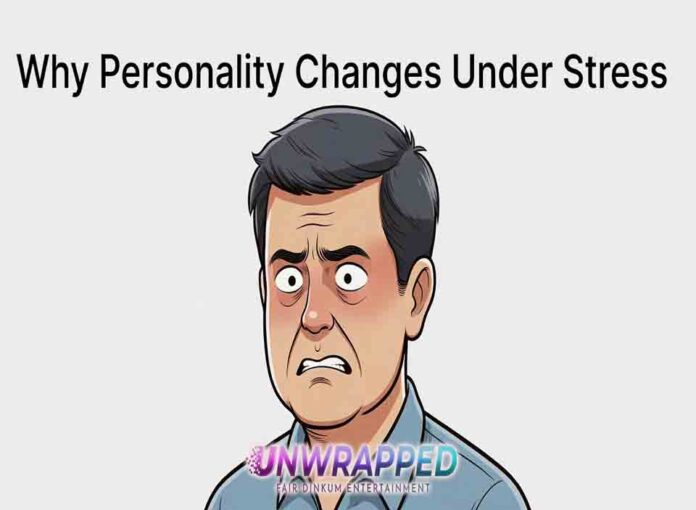
Stress has a strange way of making people feel unfamiliar—to others and to themselves. Someone patient becomes irritable. A confident decision-maker starts second-guessing everything. A warm, generous person turns withdrawn or sharp. These shifts are often interpreted as personality change, character flaws, or “showing true colors.”
Psychology tells a different story. Under stress, personality doesn’t disappear or suddenly transform—it reorganizes. The brain prioritizes survival over nuance, speed over reflection, and protection over connection. Understanding why personality changes under stress helps separate temporary survival responses from long-term identity, reducing shame, misjudgment, and unnecessary conflict.
Personality vs. Stress Response: A Crucial Distinction
Personality Is the Baseline, Stress Is the Override
Personality refers to relatively stable patterns in thinking, feeling, and relating. Stress responses are state-based, not trait-based. Stress activates biological systems designed for short-term threat—not long-term functioning.
When those systems stay on, behavior shifts—but the underlying personality remains intact.
Stress Narrows the Behavioral Menu
Under stress, the brain reduces options. Nuance, creativity, and empathy require cognitive resources that stress depletes. What’s left are faster, simpler responses that conserve energy and reduce perceived risk.
This narrowing explains why people seem “less themselves” during prolonged pressure.
See Also: What It Means to Have a Strong Sense of Self
What Happens in the Brain Under Stress
The Survival System Takes the Wheel
Stress activates the amygdala and stress hormones like cortisol. This shifts control away from the prefrontal cortex—the area responsible for planning, empathy, and impulse regulation. Neuroscience research shows that when this shift happens, people rely more on habit and instinct than reflection.
Personality expression becomes reactive rather than intentional.
Emotional Filters Become Sharper
Neutral cues can feel threatening. Minor setbacks feel personal. Feedback feels critical even when it isn’t. This isn’t oversensitivity—it’s the nervous system scanning for danger.
Common Personality Shifts Under Stress (And Why They Happen)
Calm People Become Irritable
Patience requires bandwidth. When cognitive and emotional resources are depleted, tolerance drops. Irritability often signals exhaustion, not temperament change.
Confident People Become Doubtful
Confidence relies on a sense of safety and predictability. Stress introduces uncertainty, which undermines decisiveness. Research on self-efficacy shows that confidence is context-dependent, not a fixed trait.
Empathetic People Withdraw
Empathy is energy-intensive. Under stress, people may conserve energy by pulling inward. To others, this can look like coldness—even when care hasn’t disappeared.
Organized People Become Controlling
Structure restores a sense of control. When stress removes predictability, some people respond by tightening rules or micromanaging. This is an attempt to regain stability, not dominate others.
Why Stress Makes People Look “Out of Character”
Stress Amplifies Latent Tendencies
Stress doesn’t invent traits—it magnifies existing ones. A cautious person becomes hypervigilant. A decisive person becomes rigid. A harmony-focused person becomes conflict-avoidant. Stress exaggerates coping styles rather than creating new personalities.
Stress Reduces Self-Awareness
Self-monitoring declines under pressure. People may not realize how sharply their behavior has shifted. This gap between intention and impact widens, increasing misunderstandings.
People Also Love: What “Self-Awareness” Really Looks Like in Real Life
The Role of Chronic vs. Acute Stress
Short-Term Stress Creates Temporary Shifts
Brief stressors—deadlines, emergencies—trigger short-lived changes that resolve with rest and recovery.
Chronic Stress Rewrites Habits
Long-term stress trains the nervous system to stay on alert. Over time, stress behaviors can become default habits. Chronic stress is linked to mood changes, irritability, withdrawal, and reduced emotional regulation.
This doesn’t mean personality has changed permanently—but recovery takes longer.
How Stress Affects Relationships Specifically
Communication Gets Shorter and Sharper
Under stress, people prioritize efficiency. Tone softening, emotional cushioning, and explanation drop away. Others experience this as rudeness or indifference.
Repair Becomes Harder
Stress reduces the capacity to apologize, reflect, or initiate repair. Even when people care deeply, they may not have the emotional energy to bridge gaps.
Relational repair requires emotional safety and capacity—both of which stress undermines.
How to Interpret Personality Changes More Accurately
Ask Capacity Questions, Not Character Questions
Instead of “Why are they like this?” ask:
How much pressure are they under?
What resources are missing?
How long has this stress been ongoing?
These questions lead to understanding instead of judgment.
Look for Recovery Signals
When stress eases, personality expression often rebounds. Humor returns. Patience reappears. Warmth resurfaces. This rebound is a strong indicator that stress—not identity—was driving the change.
Supporting Yourself or Others Under Stress
Normalize the Shift Without Excusing Harm
Understanding stress responses doesn’t mean tolerating harmful behavior. It means addressing the cause while still setting boundaries.
Prioritize Recovery Over Self-Fixing
Sleep, reduced stimulation, and emotional support restore personality expression more effectively than self-criticism or forced positivity.
Name the State Out Loud
Simple statements like “This isn’t me at my best—I’m under pressure” reduce misunderstanding and shame.
Call to Action
The next time someone—including yourself—seems “out of character,” pause before judging. Share this article with a team, partner, or friend navigating a stressful season, and start a conversation about capacity instead of character. Subscribe or comment to continue exploring psychology-backed insights into real human behavior.
Conclusion
Personality doesn’t vanish under stress—it adapts for survival. What looks like change is often the nervous system stepping in to protect, conserve, and manage threat with limited resources. These shifts are human, predictable, and reversible with recovery.
Understanding why personality changes under stress replaces shame with clarity and judgment with compassion. When pressure lifts and capacity returns, most people don’t need to “find themselves again”—they simply re-emerge.
Another Must-Read: Why Two Kind People Can Hurt Each Other