



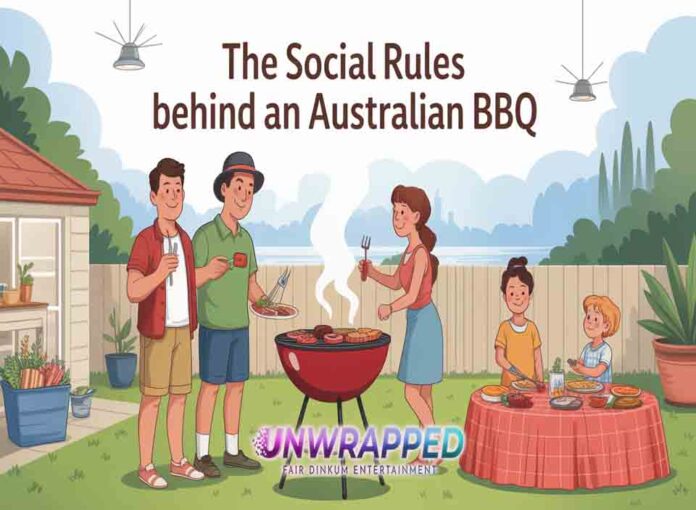
An Australian BBQ looks casual on the surface: plastic chairs, a sizzling grill, someone barefoot holding a drink, music playing just loud enough. But beneath the relaxed atmosphere sits a surprisingly precise social system. The Australian BBQ is not just a meal—it is a cultural ritual governed by unspoken rules, emotional cues, and subtle expectations.
Understanding these rules explains more than food etiquette. It reveals how Australians manage equality, belonging, humour, and boundaries without formal structure. To outsiders, it may feel informal. To Australians, it is one of the clearest expressions of social intelligence in everyday life.
Page Contents
ToggleThe BBQ as a Social Equaliser
At an Australian BBQ, hierarchy is intentionally flattened. Job titles, status symbols, and achievements are checked at the gate.
The BBQ works because:
Everyone eats the same food
Seating is unassigned
Conversation flows without agenda
No one is meant to “host” emotionally
This structure reflects a broader Australian value: no one should feel above or below anyone else. The grill is central, not the person running it.
See Also: Why Australians Use Humour to Test Trust
Never Arrive Empty-Handed (But Don’t Overdo It)
One of the clearest rules: bring something. It doesn’t need to be impressive—but it must signal participation.
Acceptable contributions include:
Drinks (especially to share)
A simple side dish
Something small for the grill
Ice (always appreciated)
What matters is not the item itself, but the message: I’m contributing, not consuming. Overly elaborate offerings, however, can disrupt the balance and make others uncomfortable.
The Subtle Art of Not Taking Over the Grill
The BBQ grill has a guardian. Sometimes it’s the host. Sometimes it’s someone who “just started cooking” and never stopped. Whoever it is, the rule remains: do not interfere unless invited.
Offering help is polite. Insisting is not.
Unspoken etiquette includes:
Never correcting cooking technique
Avoiding commentary on doneness
Letting minor mistakes pass without note
The grill is one of the few zones where authority exists—and it must be respected lightly.
Conversation Rules: Light, Playful, Inclusive
Australian BBQ conversations are rarely intense. Heavy topics—politics, money, personal trauma—are generally avoided unless the group naturally shifts there.
Preferred conversational tones include:
Self-deprecating humour
Casual teasing (without cruelty)
Storytelling rather than debating
Observational jokes
Humour often acts as a trust test. If someone can laugh at themselves, they’re considered safe.
Why No One Compliments the Food Too Much
This surprises many visitors. Lavish praise can feel awkward at an Australian BBQ.
Instead of:
“This is the best food I’ve ever had”
You’ll hear:
“Yeah, not bad”
“Goes alright”
“Could be worse”
This understatement is not dismissal. It’s a cultural signal that says no one needs to perform. Excessive enthusiasm can accidentally elevate someone above the group.
The Role of Alcohol (And Why It’s Optional Now)
Alcohol has historically played a strong role at BBQs, acting as a social loosener rather than a focal point. However, modern BBQ culture has shifted.
What remains consistent:
No one should be pressured to drink
Choices are not questioned
Moderation is respected
Bringing non-alcoholic options is now seen as socially aware, not dull.

Timing Matters—But Precision Doesn’t
Arriving exactly on time can feel overly formal. Arriving very late can feel dismissive.
The sweet spot:
10–30 minutes after the stated time
This allows the event to “warm up” naturally. Food rarely starts immediately, and impatience is considered poor form.
Children, Noise, and Chaos Are Expected
Australian BBQs are not quiet affairs. Kids run around. Conversations overlap. Someone inevitably drops something.
This chaos is not a flaw—it’s part of the comfort.
Attempts to control or organise too tightly often feel out of place. The expectation is tolerance, not perfection.
Leaving Without Making It a Thing
One of the most important rules: leave quietly.
Proper exit behaviour includes:
Thanking the host briefly
A casual goodbye to the group
No long explanations
Announcing departure dramatically or apologising excessively disrupts the flow. The ideal exit barely registers.
Why the BBQ Builds Trust So Effectively
The Australian BBQ creates trust because it removes pressure.
It:
Doesn’t demand deep disclosure
Allows people to observe rather than perform
Encourages consistency over charisma
Trust is built through ease, not intensity.
What Outsiders Often Get Wrong
Common missteps include:
Trying too hard to impress
Talking about achievements too openly
Correcting others playfully but too sharply
Over-hosting when not hosting
Australians read effort quickly. Too much can feel intrusive.
People Also Love: The Psychology of “She’ll Be Right”
The Psychological Purpose of the BBQ
At its core, the BBQ is a social regulation tool.
It:
Reinforces equality
Prevents emotional escalation
Rewards humility
Encourages belonging without obligation
In a culture that values independence, the BBQ offers connection without demand.
Call to Action
If this article clarified an experience you’ve had—or one you’re about to have—share it with someone new to Australian culture. Subscribe for more psychology-backed explanations of everyday social rituals that shape how people connect.
Conclusion
The Australian BBQ is not about food mastery or hosting excellence. It’s about shared space, mutual ease, and unspoken respect. Every rule exists to prevent imbalance—of power, ego, or emotion.
Understanding these social rules doesn’t mean overthinking them. In fact, the best way to succeed at an Australian BBQ is to relax into the system it quietly provides. Bring something small. Don’t take over. Laugh easily. Leave lightly.
If that feels natural, you’re already doing it right.
Another Must-Read: Why Australians Apologize When They’re Not Sorry