


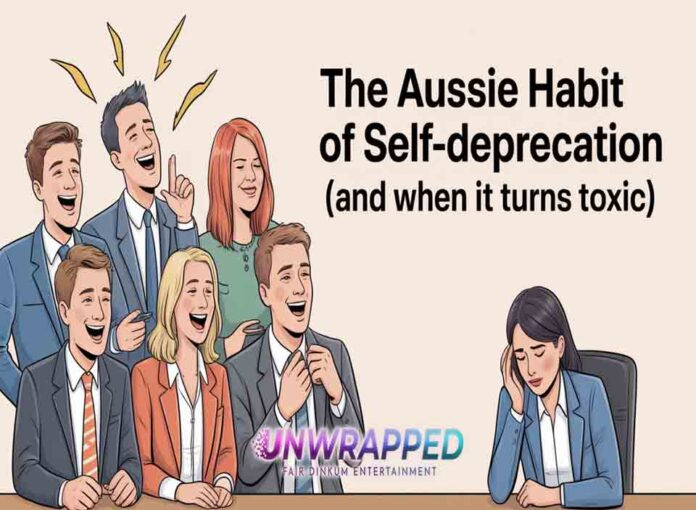
In Australia, self-deprecation is practically a social language. People downplay achievements, mock their own mistakes, and brush off praise with a joke. It signals approachability, equality, and a refusal to take oneself too seriously. In many contexts, this habit makes Australians easier to trust and more comfortable to be around.
But there is a line—often invisible—where healthy self-deprecation quietly shifts into something heavier. When jokes about oneself become automatic, defensive, or relentless, humor stops bonding and starts eroding confidence. Understanding when Aussie self-deprecation is socially healthy—and when it turns toxic—reveals a lot about identity, belonging, and emotional safety.
Why Self-Deprecation Is So Australian
Self-deprecating humor did not arise by accident. It grew out of cultural values that prize egalitarianism, resilience, and social balance.
Historically, Australians have resisted:
Tall poppy behavior
Excessive self-promotion
Visible hierarchy
Self-deprecation became a way to say, “I’m not above you.” It lowers social friction and keeps interactions relaxed.
People Also Love: What Australians Really Mean by “Legend”
Self-Deprecation as Social Glue
At its best, self-deprecating humor performs several useful functions:
It reduces power distance – No one feels talked down to
It invites connection – Others feel safe to be imperfect
It softens confidence – Skill without arrogance
In workplaces, friendships, and casual settings, this style creates ease. People relax around someone who doesn’t demand admiration.
The Unspoken Rule: Don’t Take Yourself Too Seriously
In Australian culture, seriousness about the self can feel risky. Strong self-focus may be interpreted as ego, insecurity, or social overreach.
As a result:
Praise is often deflected
Success is minimized
Confidence is wrapped in irony
This keeps the group emotionally level—but it also discourages open self-affirmation.
When Self-Deprecation Becomes a Reflex
Healthy self-deprecation is chosen. Toxic self-deprecation is automatic.
Warning signs include:
Joking about oneself before anyone else can
Undercutting achievements immediately
Using humor to pre-empt criticism
At this point, humor stops being social and becomes protective. The joke isn’t for connection—it’s armor.
The Psychology Behind Toxic Self-Deprecation
Repeated self-directed humor can become a form of self-suppression. Rather than expressing pride, disappointment, or hurt, emotions are neutralized through jokes.
Over time, this pattern can:
Weaken self-trust
Reinforce negative self-beliefs
Make genuine validation feel uncomfortable
What begins as modesty slowly trains the brain to dismiss worth.
Why Praise Can Feel Uncomfortable
For many Australians, praise creates tension. Compliments disrupt the cultural rhythm of understatement.
Common responses include:
“Nah, it was nothing.”
“Anyone could’ve done it.”
“I just got lucky.”
While socially acceptable, constant deflection can quietly erode self-recognition.

The Link Between Self-Deprecation and Emotional Safety
Self-deprecation often acts as a pre-emptive strike. By criticizing oneself first, the risk of external judgment feels reduced.
This pattern is more common in people who:
Value harmony highly
Fear appearing arrogant
Grew up in criticism-heavy environments
The humor hides vulnerability rather than sharing it.
How Group Dynamics Reinforce the Habit
Australian groups often reward self-deprecation with laughter and acceptance. This positive feedback loop can unintentionally reinforce harmful patterns.
The group reaction says:
“You’re safe when you stay small.”
“We like you when you don’t stand out.”
Over time, people may feel they must shrink to belong.
When Humility Turns into Self-Erosion
The difference between humility and self-erasure is subtle but important.
Healthy humility:
Acknowledges strengths without boasting
Allows pride alongside modesty
Toxic self-deprecation:
Invalidates effort
Rejects positive feedback
Makes self-worth conditional
The joke stops being funny when it becomes belief.
Impact on Mental Health
Research in psychology consistently links excessive self-criticism to:
Increased anxiety
Lower self-esteem
Difficulty receiving support
When humor constantly frames the self as flawed, the nervous system listens—even if the audience laughs.
Why Australians Often Don’t Notice the Shift
Toxic self-deprecation hides in plain sight because it sounds familiar. It fits cultural expectations. It earns laughs.
But familiarity doesn’t equal health.
Because the behavior is socially rewarded, it can persist long after it stops serving the individual.
See Also: Why Australians Prefer Understatement
Reclaiming Healthy Self-Deprecation
The goal is not to abandon humor—it’s to rebalance it.
Healthier patterns include:
Letting compliments land without deflection
Using humor about situations, not identity
Pausing before self-criticism becomes automatic
Humor should lighten life, not quietly diminish the self.
Call to Action
If this article resonated, share it with someone who always laughs at themselves first. Subscribe for more psychology-based insights into everyday cultural habits—and how to keep them healthy rather than harmful.
Conclusion
Self-deprecation is woven deeply into Australian culture. At its best, it creates warmth, equality, and trust. It reminds people that no one needs to perform superiority to belong.
But when self-deprecation becomes constant, defensive, or identity-based, it quietly turns against the person using it. The humour still lands—but the cost is internal.
True balance comes from keeping the joke without becoming it. Australians don’t need to abandon understatement—only to ensure it remains a social tool, not a personal burden.
Another Must-Read: Why Australians Can Be Friendly but Hard to Know