

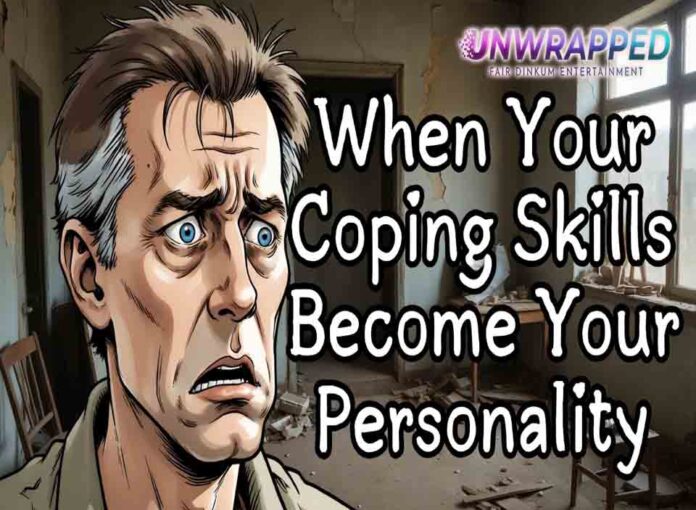
Everyone develops coping skills. Some learn to stay quiet to avoid conflict. Others become hyper-independent. Some turn into the “funny one” in the room to deflect discomfort. At first, these behaviors serve a purpose—they protect, stabilize, and help survive difficult environments.
But over time, something subtle can happen. The coping strategy that once protected a person can slowly fuse with their identity. What began as a response to stress can solidify into a personality trait. Understanding when coping skills become personality patterns is essential for emotional growth, healthier relationships, and long-term psychological well-being.
What Are Coping Skills—And Why Do They Form?
Coping skills are adaptive behaviors developed to manage stress, trauma, or uncertainty. Coping mechanisms help regulate emotional responses when faced with pressure.
They often develop in response to:
Family dynamics
Social rejection
Academic or professional pressure
Trauma or instability
In childhood especially, coping strategies are survival tools. A child in a chaotic home may become hyper-responsible. A child who feels unheard may become unusually self-reliant.
These strategies work—until they start limiting growth.
Another Must-Read: Why Australians Can Be Friendly but Hard to Know
The Shift: When Protection Becomes Identity
From Strategy to Self-Concept
A coping skill becomes part of someone’s personality when it moves from temporary adaptation to permanent identity.
For example:
“I avoid conflict” becomes “I’m just easygoing.”
“I don’t rely on anyone” becomes “I’m fiercely independent.”
“I stay busy so I don’t feel things” becomes “I’m ambitious and productive.”
The behavior is no longer questioned. It is defended.
Common Coping Styles That Turn Into Personality Traits
1. The Hyper-Independent Identity
Independence is valuable. But hyper-independence can stem from early experiences of unreliability or neglect.
Signs it may be a coping mechanism:
Discomfort asking for help
Viewing vulnerability as weakness
Feeling safest when emotionally detached
What looks like strength may actually be fear of dependence.
2. The “Chill” Avoider
Some people pride themselves on being low-maintenance and calm. But chronic avoidance of emotional confrontation can mask anxiety.
Patterns may include:
Suppressing needs to keep peace
Laughing off discomfort
Saying “it’s fine” when it isn’t
Avoidance can reduce short-term anxiety but increase long-term stress.
3. The Caretaker Personality
Being nurturing is admirable. But when identity revolves around rescuing others, it may reflect a learned need for control or approval.
Indicators include:
Feeling responsible for others’ emotions
Guilt when resting
Difficulty receiving care
Over time, the caretaker role can eclipse personal needs.
4. The Overachiever Mask
Achievement can become armor. Productivity distracts from discomfort.
When coping turns into identity:
Self-worth depends on output
Downtime triggers anxiety
Rest feels unearned

Why This Happens: The Brain’s Efficiency Bias
The brain prefers familiar pathways. When a coping strategy successfully reduces stress, it reinforces neural circuits.
Over time:
The brain associates the behavior with safety
The behavior becomes automatic
Identity forms around what feels stabilizing
This process is not conscious. It is neurological reinforcement.
Repeated coping behaviors create psychological grooves. Eventually, the question shifts from “Why do I do this?” to “This is just who I am.”
The Cost of Over-Identification
When coping skills merge with personality, growth can stall.
Hidden Consequences
Reduced emotional flexibility
Difficulty adapting to healthier environments
Strained relationships
Internal exhaustion
For example, someone who learned emotional suppression in childhood may struggle in a relationship that values openness. What once protected them now creates distance.
Adaptability—not rigidity—supports long-term well-being.
How to Tell If It’s Coping or Core Personality
Not every trait is a trauma response. The distinction lies in function and flexibility.
Questions That Reveal the Difference
Does this behavior show up only under stress?
Does it limit connection or opportunity?
Does it feel chosen—or automatic?
Is there fear underneath it?
Healthy personality traits feel expansive. Coping-based identities often feel protective.
See Also: Why Some People Can’t Eat When They’re Stressed
The Difference Between Strength and Survival
There is nothing inherently wrong with coping skills. In fact, they represent resilience. They prove adaptability.
The issue arises when:
Survival strategies operate in safe environments
Old patterns respond to new situations
Identity narrows instead of expands
A hyper-independent child may grow into a capable adult. But if independence prevents intimacy, it is no longer protective—it is restrictive.
True personality emerges when coping skills become optional rather than mandatory.
Conclusion
When coping skills become personality, identity narrows around protection. What once ensured safety begins shaping relationships, self-worth, and emotional boundaries. The transformation is gradual and often invisible, which is why it can persist for years without question.
But awareness creates choice. Recognizing which traits stem from survival—and which stem from authentic preference—opens the door to flexibility. Personality is not meant to be a shield; it is meant to be an expression. When coping strategies are integrated rather than embodied, individuals regain the freedom to respond rather than react.
Call to Action
Did this article resonate with your experiences or someone you know? Share it with a friend who prides themselves on being “just independent” or “just the calm one.” Leave a comment below about which coping style you see most often—and subscribe for more psychology-backed insights that help decode human behavior.
People Also Love: Why Some People Need to Talk It Out Immediately