



The Australian residential property sector enters 2026 at a significant crossroads, defined by a starkly “two-speed” market dynamic that challenges traditional national narratives. While the post-pandemic era was characterized by synchronized growth across most jurisdictions, the current landscape reveals a widening gap between the massive eastern seaboard capitals and the surging mid-sized cities. As the Reserve Bank of Australia continues to fine-tune its monetary policy in response to persistent inflationary pressures, the resilience of housing values remains a central theme for homeowners and investors alike. Understanding these shifts requires a deep dive into the macroeconomic drivers and local supply constraints that are reshaping the national property map.
Navigating this complex environment requires more than just a cursory glance at headline figures, as the performance of individual suburbs often deviates from city-wide averages. This is where the expertise of professional advocates like The Best Buyers Agents becomes invaluable, providing the local data and negotiation leverage necessary to secure assets in a market where the margin for error has narrowed. As borrowing capacities remain constrained by elevated interest rates, the ability to identify under-valued pockets and emerging growth corridors has become the primary differentiator for successful market participation in 2026.
The Monetary Backdrop: RBA Cash Rate and Interest Rate Stability
The defining feature of the early 2026 economic climate is the shift in interest rate expectations. Following a period of relative stability in 2025, the Reserve Bank of Australia raised the official cash rate to 3.85% in February 2026, with major financial institutions like CBA and ANZ forecasting a further hike to 4.10% by mid-year. This hawkish turn is driven by a domestic economy that continues to run hotter than anticipated, with inflation proving stickier than previous models suggested. For the property market, this means the era of cheap credit remains a distant memory, and the “higher for longer” reality is now firmly priced into buyer behavior.
Despite these headwinds, the anticipated “mortgage cliff” of previous years has largely been absorbed without a catastrophic wave of forced sales. Instead, the market has seen a reset in buyer expectations. While higher rates have undoubtedly reduced the maximum borrowing power of the average household—roughly a 5% reduction for every 25-basis point increase—demand has not evaporated. Rather, it has shifted toward more affordable price points and jurisdictions where the debt-to-income ratio remains more manageable. This interest rate environment acts as a natural ceiling on price growth in premium markets like Sydney and Melbourne, while simultaneously pushing more buyers toward the mid-tier capitals.
The Chronic Supply vs. Demand Crunch
The primary force keeping a floor under Australian property prices in 2026 is the persistent and worsening supply-demand imbalance. Australia faces a structural housing shortfall estimated to be between 200,000 and 300,000 dwellings. While the federal government has introduced various initiatives to stimulate new builds, the construction sector continues to grapple with high material costs, labor shortages, and feasibility challenges. Consequently, dwelling completions are failing to keep pace with a population that continues to grow through both natural increase and steady net overseas migration.
This supply crunch is most visible in the rental market, where vacancy rates in several capital cities remain near historic lows of 1%. The lack of available stock is creating a feedback loop: as rents rise, more tenants are incentivized to enter the buying market, even at higher interest rates, simply to secure housing stability. Furthermore, the total volume of advertised listings across the country is significantly below five-year averages, particularly in cities like Perth and Brisbane. When demand remains constant or grows while available stock remains at record lows, upward pressure on prices becomes an inevitability, regardless of the broader economic cooling.
2026 Price Growth Forecasts by City
The 2026 forecast reveals a nation divided by affordability and inventory levels. Perth and Brisbane are widely expected to remain the country’s top performers. In Perth, house prices are projected to rise by as much as 12.8% over the year, fueled by a mining sector boom and a chronic shortage of stock that has seen listings sit nearly 50% below long-term averages. Brisbane follows closely with a forecast growth of approximately 10.9%, as the city continues to benefit from interstate migration and a massive infrastructure pipeline ahead of the 2032 Olympic Games. Adelaide also maintains strong momentum with an 8.2% growth forecast, though affordability limits are starting to emerge in the South Australian capital.
In contrast, the nation’s largest markets, Sydney and Melbourne, are entering a period of more moderate, balanced growth. Sydney house prices are expected to grow by roughly 5.8%, constrained by a median value that now exceeds $1.6 million and a buyer pool that is increasingly hit by borrowing capacity limits. Melbourne is tipped for a slightly stronger rebound of 6.8% as it begins to recover from several years of underperformance relative to other capitals. Meanwhile, smaller markets like Darwin and Hobart are showing renewed signs of life, with Darwin emerging as a hotspot for high-yield seekers, with unit price growth forecasts exceeding 13% for the year.
Identifying Capital Growth Suburbs and Emerging Trends
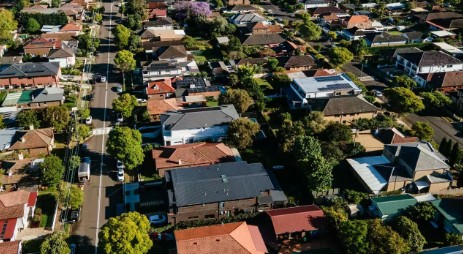
The 2026 market is also defined by a clear trend toward “location-based affordability.” Buyers are increasingly looking beyond the inner-ring suburbs toward middle and outer-ring areas that offer better value for money and lifestyle amenities. In Sydney, suburbs like Northmead and Jannali are gaining traction as they provide a balance of rail connectivity and relative value. In Melbourne, the focus has shifted toward the outer southern and eastern corridors, where suburbs under the $900,000 mark continue to attract strong competition from first-home buyers utilizing the expanded 5% deposit schemes.
Another notable trend in 2026 is the outperformance of the lower quartile of the market. Across almost every capital city, entry-level houses and well-located units are growing at twice the rate of premium, upper-quartile properties. This “up-crash” is driven by first-time buyers and downsizers who are competing fiercely for a limited pool of affordable stock. Additionally, the apartment market is seeing a resurgence in cities where house prices have become prohibitive, with units in Brisbane and Perth often seeing double-digit gains as they offer a more accessible entry point for both investors and owner-occupiers.
Strategic Outlook for 2026
As the year progresses, the Australian property market will likely continue its trajectory of uneven growth. The key for participants in this environment is a shift from broad market optimism to a disciplined, data-driven approach. Success in 2026 is not about timing the bottom of a cycle—which has proven notoriously difficult—but about identifying assets with strong underlying fundamentals that can withstand a period of higher interest rates. Resilience, rather than rapid speculation, has become the hallmark of the current property cycle.
For those looking to enter or expand within the market, partnering with a specialized team like The Best Buyers Agents can provide the necessary edge to navigate these “two-speed” conditions. By focusing on local scarcity, infrastructure developments, and long-term rental demand, buyers can position themselves to benefit from the ongoing supply shortage while mitigating the risks posed by shifting monetary policy. As we look toward the remainder of 2026, the Australian property market remains a landscape of significant opportunity for those who are prepared to look beneath the headline figures and act with precision.