


What if discovering a person’s purpose isn’t about finding the right career, following a formula or reaching a particular destination? What if it begins with understanding how someone naturally thinks, responds to situations and experiences the world?
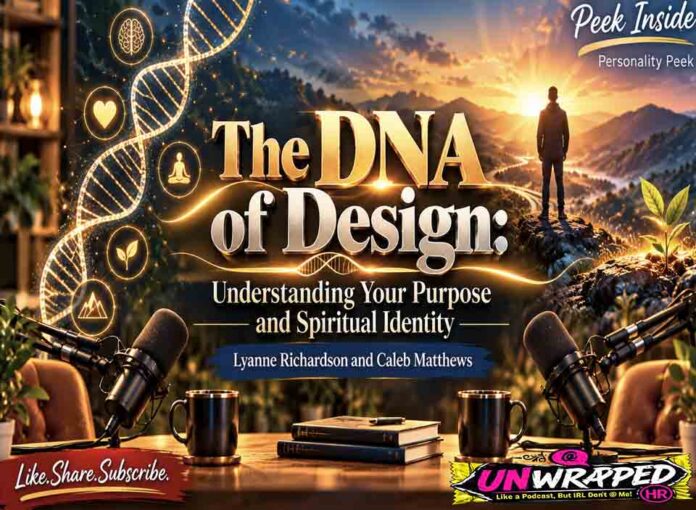
In this episode of Peek Inside Podcast, host Lyanne Richardson speaks with Caleb Matthews, creator of the DNA of Design quiz and founder of The SeeLink, about personality, spiritual identity and the relationship between self-awareness and purpose. Their conversation brings together personal experiences, Christian spirituality and two different perspectives on what makes people who they are.
How the DNA of Design Quiz Explores Personality and Purpose
The conversation begins with an exchange of personality test results.
Caleb shares that he received The Igniter archetype from Personality Peek, a result he feels reflects his enthusiasm for bringing people together around a shared purpose.
Lyanne, meanwhile, took Caleb’s DNA of Design quiz and received Builder, also described as Kingdom Architect. She relates this to her tendency to identify underlying problems, develop practical solutions and consider how decisions affect others.
Caleb explains that his framework draws inspiration from Romans 12 and his experiences helping people explore spirituality and personal purpose over two decades.
His quiz identifies seven design types:
- Builder
- Seer
- Catalyst
- Activator
- Navigator
- Steward
- Healer
Rather than treating purpose as something people can discover through a rigid checklist, Caleb suggests that genuine understanding begins with curiosity.
He compares this process to childhood play, when children experiment, investigate and learn without necessarily knowing what they are looking for.
For Caleb, discovery comes before finding.
It’s an interesting distinction, particularly in a culture where people often feel pressured to identify their purpose as quickly as possible.
Can Personality Change While Spiritual Identity Stays the Same?
One of the conversation’s more interesting moments comes when Lyanne challenges the idea of having one defining personality type.
She explains that although she identifies as a Builder today, she may have expressed very different characteristics several years earlier.
Her perspective is that personality develops through experiences, changing circumstances and personal growth.
Caleb offers a slightly different interpretation.
He believes each person possesses a predominant, God-given design while remaining capable of expressing other characteristics during different stages of life.
That difference leads naturally into a broader discussion about spiritual identity.
Caleb describes human beings through three interconnected dimensions: spirit, soul and body. Within his Christian understanding, the spirit is intended to guide the soul, which he associates with the mind, will and emotions.
Lyanne contributes her own interpretation, emphasising the importance of nurturing one’s spiritual life alongside relationships, responsibilities and personal ambitions.
Their exchange raises a question worth considering: How much of a person’s identity comes from their natural tendencies, and how much develops through experience and conscious choice?
The discussion doesn’t settle that question. Instead, it shows how different interpretations can create a more thoughtful conversation about self-understanding.
The Three Cs: A Practical Framework for Spiritual Self-Discovery
When Lyanne asks how someone struggling with direction might begin exploring their spiritual identity, Caleb introduces his three-part framework: Construct, Conform and Contract.
Construct concerns the foundation a person builds their life upon. Caleb encourages individuals to consider their personal relationship with God and whether their beliefs reflect their own understanding rather than outside expectations.
Conform focuses on the influences shaping identity. He cautions against copying successful public figures or adopting someone else’s definition of achievement.
Contract, in his framework, represents the commitments and spiritual agreements that influence a person’s direction and choices.
Throughout the discussion, Lyanne brings the ideas back to everyday decisions, personal responsibility and the importance of maintaining a balance between ambition and spiritual wellbeing.
Caleb also introduces The SeeLink‘s wider projects, including its YouTube community and planned SeeLink Academy.
Perhaps the most memorable aspect of this episode is the contrast between the two speakers’ approaches. Lyanne repeatedly returns to practical experience and the possibility of personal change, while Caleb emphasises spiritual discovery and an underlying design.
Their conversation offers more than an introduction to a personality quiz. It invites listeners to examine their beliefs about identity, question familiar definitions of purpose and consider whether self-discovery is a destination or an ongoing process.
For anyone interested in personality development, Christian spirituality, personal growth or finding direction in life, the full discussion offers plenty to reflect upon.
Watch the full conversation to hear Lyanne Richardson and Caleb Matthews explore the DNA of Design, discuss their different perspectives and examine what it means to discover personal and spiritual purpose.
Watch the full conversation on Peek Inside:
See Also: Breaking Old Patterns Through Hypnotherapy: Lyanne Richardson Talks with Leo Dulay