


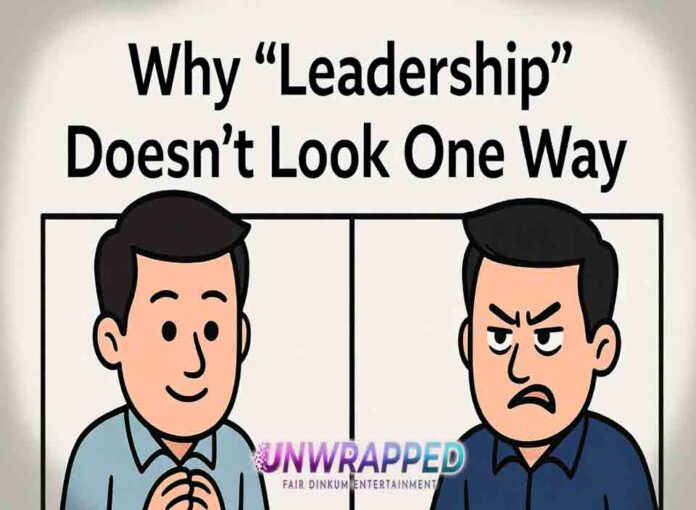
Leadership is often described with confident simplicity: be decisive, speak up, inspire others, take charge. Over time, this narrow image has hardened into an unspoken rulebook—one that rewards visibility, certainty, and command. Yet in real organizations, communities, and movements, leadership rarely fits that single mold.
In practice, leadership shows up in many forms: quiet stabilizers, systems thinkers, protectors of culture, patient mentors, and fast-moving catalysts. Research and lived experience increasingly show that effective leadership is not a personality type—it is a function shaped by context, values, and human differences. Understanding why leadership doesn’t look one way is essential for building stronger teams and healthier organizations.
The Myth of the “Default Leader”
Modern leadership culture often favors a specific archetype: assertive, charismatic, outspoken, and highly visible. This image is reinforced by media portrayals, keynote speakers, and even promotion criteria.
Leadership effectiveness depends more on situational fit than on fixed traits. Different environments reward different behaviors, and no single style consistently outperforms others across contexts.
The problem with a single “default leader” model is not that it works—it’s that it excludes.
See Also: Why Some People Do Their Best Work Alone
Leadership Is a Role, Not a Personality
One of the most common misconceptions is that leadership is something a person is rather than something a person does. This belief quietly sidelines individuals who don’t match traditional expectations.
Leadership roles can include:
Setting direction
Holding boundaries
Making sense of complexity
Supporting others under pressure
Protecting long-term vision
Leadership behaviors shift depending on organizational needs, team maturity, and external pressure.
A crisis demands decisiveness. Growth demands patience. Stability demands consistency. Leadership adapts—or it fails.
Quiet Leadership Is Still Leadership
Not all leaders lead loudly.
Some lead by:
Asking the right questions
Creating psychological safety
Noticing what others miss
Making thoughtful, well-timed decisions
Quieter leaders often excel in listening, preparation, and long-term thinking.
These leaders may not dominate rooms, but they often anchor them.
Cultural Context Shapes What Leadership Looks Like
Leadership expectations are not universal. What signals strength in one culture may signal aggression in another.
Cultural dimensions such as power distance and individualism dramatically influence leadership norms.
For example:
Some cultures value consensus over command
Others value humility over visibility
Some prioritize relational trust over speed
When leadership is evaluated through a single cultural lens, capable leaders are often mislabeled as weak, passive, or disengaged.

Situational Leadership: Why Context Matters More Than Style
The same person can be an excellent leader in one setting and ineffective in another—not because they changed, but because the situation did.
Situational leadership as a core competency, noting that adaptability predicts long-term leadership success better than any single trait.
Leadership styles often rotate across:
Directive
Coaching
Supportive
Delegative
Strong leaders don’t cling to one identity. They shift as needed.
The Hidden Cost of One-Size-Fits-All Leadership
When organizations reward only one leadership style, several things happen:
Talent pipelines narrow
Diverse thinkers disengage
Teams lose complementary strengths
Organizations with diverse leadership styles outperform those with rigid leadership norms.
The cost of sameness is not just cultural—it’s strategic.
Leadership Across Roles, Not Just Titles
Leadership is often mistakenly tied to hierarchy. In reality, leadership happens at every level.
Examples include:
An employee who stabilizes morale during uncertainty
A specialist who prevents costly mistakes
A team member who mentors quietly but consistently
Modern organizations increasingly rely on distributed leadership rather than centralized authority.
When leadership is defined too narrowly, these contributions disappear from recognition systems.
People Also Love: Why Some People Do Their Best Work With an Audience
Why Leadership Development Often Misses the Mark
Many leadership programs focus on polishing confidence, presence, and persuasion. These skills matter—but they are not the whole picture.
Leadership development fails when it trains people to perform leadership rather than practice judgment, empathy, and systems thinking.
Leadership growth is not about becoming louder. It’s about becoming more effective.
Call to Action
If this article challenged how leadership is usually defined, share it with a colleague or team. Subscribe for more research-backed insights on personality, performance, and modern leadership that actually reflects how people work.
Conclusion
Leadership does not have one face, one voice, or one personality. It emerges where responsibility meets context—and where individuals use their strengths in service of something larger than themselves.
Organizations that recognize this truth don’t just become more inclusive; they become more resilient. When leadership is allowed to look different, it finally starts working better for everyone.
Another Must-Read: The Hidden Personality Tax of Open-Plan Offices