


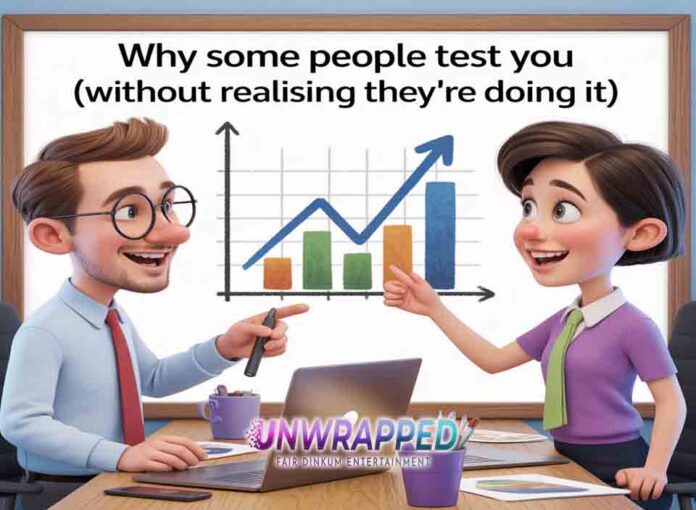
Not all relationship friction comes from conflict, dishonesty, or bad intentions. Sometimes it comes from something far subtler: testing. Many people unknowingly test others—pushing boundaries, withdrawing affection, provoking reactions, or creating small emotional hurdles—without consciously meaning to. To the person on the receiving end, it can feel confusing, exhausting, or even manipulative.
Psychology suggests that these behaviors are rarely about control. More often, they are about safety-seeking, attachment, and unmet emotional certainty. Understanding why people test—often unconsciously—can transform how these behaviors are interpreted and responded to, both in personal relationships and professional settings.
What “Testing” Looks Like in Real Life
Testing is rarely overt. It does not usually sound like a challenge or a demand. Instead, it shows up indirectly.
Common examples include:
Pulling away to see if someone will chase
Making a critical comment and watching the reaction
Cancelling plans to see if the other person gets upset
Withholding information, affection, or effort temporarily
Saying something provocative “as a joke”
These actions are not always strategic. In many cases, the person testing is not fully aware they are doing it at all.
The Psychological Root: Seeking Emotional Certainty
At its core, testing behavior is often about one question:
“Am I safe with you?”
People who did not experience consistent emotional responsiveness early in life may seek reassurance indirectly rather than ask for it directly.
Testing becomes a workaround for vulnerability. Instead of saying “Do you care about me?”, the nervous system asks, “What happens if I pull back?”
Attachment Styles and Unconscious Testing
Different attachment styles tend to test in different ways:
Anxious Attachment
People with anxious attachment may:
Seek reassurance repeatedly but feel unsatisfied by it
Create emotional distance to see if someone will close the gap
Escalate emotions to confirm importance
Anxious attachment often leads to “protest behaviors”—actions designed to restore closeness without direct communication.
Avoidant Attachment
Avoidantly attached individuals may:
Test whether closeness can be tolerated without loss of autonomy
Pull away to see if boundaries will be respected
Devalue relationships when intimacy increases
These behaviors are less about rejection and more about self-protection.
Disorganized Attachment
Disorganized attachment can result in mixed signals:
Wanting closeness but fearing it
Testing loyalty while expecting abandonment
Oscillating between pursuit and withdrawal
This pattern is often linked to early experiences of unpredictability.
Why Testing Feels Easier Than Asking
Direct emotional requests require clarity, trust, and risk. Testing does not.
From a nervous system perspective:
Asking risks rejection
Testing preserves emotional deniability
Testing provides data without vulnerability
People often default to indirect strategies when emotional expression feels unsafe or unfamiliar.
In short, testing feels safer than stating a need—even when it damages connection.
See Also: Why Some People See Conflict as Connection
Testing vs Manipulation: An Important Distinction
Not all testing is manipulation.
The key differences:
Unconscious testing is driven by anxiety or uncertainty
Manipulation is intentional and outcome-driven
Testing seeks reassurance; manipulation seeks control
That said, unconscious testing can still be harmful if it becomes chronic or escalates. Impact matters more than intent.
How Testing Erodes Relationships Over Time
While testing may provide short-term reassurance, it often creates long-term instability.
Common consequences include:
Emotional exhaustion for the other person
Loss of trust and predictability
Escalating cycles of distance and pursuit
Increased defensiveness or shutdown
Stable relationships depend on direct bids for connection, not indirect emotional stress tests.
Over time, repeated testing trains both people to feel unsafe.
Why Some People Don’t Know They’re Doing It
Many testing behaviors are learned early and reinforced unconsciously.
People may believe:
“If they care, they’ll prove it without being asked”
“Needing reassurance is weak”
“If I ask directly, it won’t be real”
These beliefs are often absorbed from family systems or early relationships where needs were inconsistently met.
Emotional habits formed in childhood can persist into adulthood unless they are consciously examined.
How Testing Can Stop (Without Blame)
Testing behaviors usually reduce when emotional safety increases.
Helpful shifts include:
Learning to name needs instead of staging scenarios
Building tolerance for vulnerability
Developing emotional literacy
Receiving consistent, calm responses—not reactive ones
For the person being tested, boundaries matter. Reassurance does not require tolerating instability.
People Also Love: Why “Good Communication” Doesn’t Fix Everything
What Healthy Reassurance Actually Looks Like
Healthy reassurance is:
Direct, not conditional
Given freely, not extracted
Grounded in consistency, not crisis
When reassurance is clear and reliable, testing loses its purpose.
Call to Action
If this article clarified confusing dynamics in your relationships, share it with someone who may be misreading—or being misread. Subscribe for more psychology-backed insights that explain the hidden patterns behind everyday behavior.
Conclusion
Most people who test others are not trying to create drama or gain power. They are trying to feel secure without knowing how to ask for it. Testing is often a language learned before emotional clarity was available.
Understanding this does not mean tolerating harm—but it does mean responding with insight instead of confusion. When needs become speakable, tests become unnecessary.
Another Must-Read: How People Show Love When They Don’t Know How to Say It