


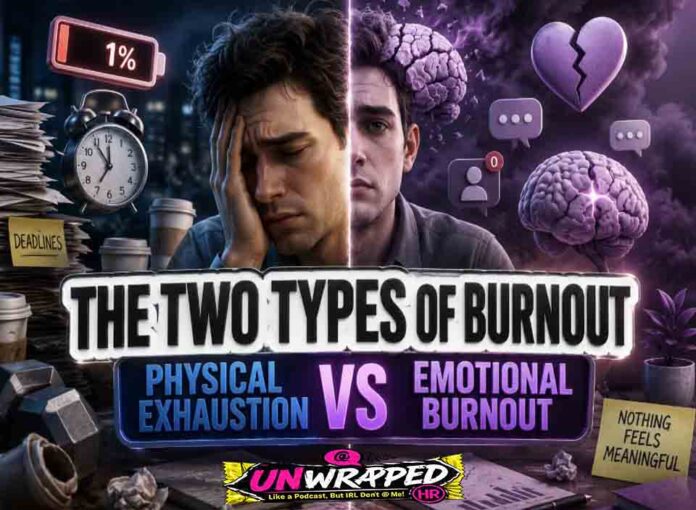
Burnout is often treated like one simple problem: someone worked too hard, gave too much, slept too little, and finally ran out of energy. That version is real, but it is not the whole story. Many people rest for a weekend, take a short break, sleep more than usual, and still wake up feeling heavy, irritated, disconnected, or strangely empty.
That is because not all burnout comes from doing too much. Some burnout comes from doing too much of the wrong thing for too long. One kind of burnout drains the body. The other drains the meaning. When people do not separate the two, they keep using the wrong cure. They try sleep when they need purpose. They try motivation when they need recovery. They try discipline when they actually need a different rhythm.
What Burnout Really Feels Like
Burnout is more than being tired after a long week. Normal tiredness usually improves with rest, food, sleep, and a slower day. Burnout feels deeper. It can make simple tasks feel heavier than they should. It can make a person feel detached from work they used to care about. It can make kindness feel difficult, focus feel impossible, and small responsibilities feel strangely personal.
Burnout can show up as:
- Constant exhaustion, even after sleeping
- Irritability over small things
- Feeling numb, detached, or emotionally flat
- Losing interest in work or responsibilities
- Trouble focusing or finishing tasks
- Feeling resentful, cynical, or unappreciated
- Wanting to disappear from everyone
- Feeling like effort no longer leads anywhere
The difficult part is that burnout does not always look dramatic. Sometimes it looks like someone still answering messages, still showing up, still smiling, still meeting deadlines, but quietly losing the ability to feel present in their own life.
The First Kind: Energy Burnout
Energy burnout happens when the body and mind have been pushed beyond their limit for too long. This is the kind most people recognize. It comes from overload, constant pressure, poor sleep, too many obligations, emotional labor, nonstop decisions, and not enough real recovery.
A person with energy burnout may still care about their life, job, family, or goals. The problem is not that everything feels meaningless. The problem is that their system has no fuel left.
They may think:
“I care, but I cannot keep going like this.”
“I want to do it, but I am too exhausted.”
“I just need everyone to stop needing something from me.”
“I could handle this before. Why does it feel impossible now?”
This kind of burnout often builds when someone ignores their limits because they feel responsible, ambitious, guilty, afraid of disappointing others, or trapped by bills and expectations.
Energy burnout is common in people who are always “on.” They work, reply, plan, help, solve, clean, manage, remember, support, and perform. Even when they rest, their mind stays busy. Their body stops moving, but their nervous system never fully powers down.
Signs of Energy Burnout
Energy burnout usually feels physical first. The body begins sending signals that it cannot keep carrying the same load.
Common signs include:
- Waking up tired
- Feeling heavy or slow
- Needing more caffeine to function
- Getting sick more often
- Headaches, tension, or body aches
- Snapping at people easily
- Losing patience with normal tasks
- Feeling overwhelmed by small decisions
- Wanting silence more than entertainment
The biggest clue is this: rest sounds good. The person may fantasize about sleeping, taking a day off, being left alone, canceling plans, or doing absolutely nothing.
For energy burnout, recovery often begins with reducing the load. Not just adding a bubble bath to an impossible schedule. Not just taking one Sunday nap and going back to the same pressure. Real recovery means the body gets a believable message: the emergency is over.
How to Recover From Energy Burnout
Energy burnout needs practical recovery, not inspirational quotes.
A person may need to:
- Sleep without guilt
- Reduce unnecessary commitments
- Stop saying yes automatically
- Take real breaks from screens and messages
- Ask for help before reaching collapse
- Eat properly, hydrate, and move gently
- Create quiet time with no performance attached
- Lower the number of decisions in a day
- Set boundaries around work and emotional labor
The key is not laziness. It is restoration.
Energy burnout often improves when the body is allowed to recover and the person stops treating exhaustion like a character flaw. Sometimes the most productive thing someone can do is stop demanding productivity from a system that is already depleted.
The Second Kind: Meaning Burnout
Meaning burnout is different. This is the kind nobody separates clearly enough.
Meaning burnout does not always come from doing too much. It comes from feeling disconnected from why the effort matters. A person may be sleeping enough, working normal hours, and still feel emotionally drained because their life no longer feels aligned with their values, identity, needs, or hopes.
This kind of burnout sounds like:
“I am doing everything I am supposed to do, so why do I feel empty?”
“I am not even that busy, but I feel tired of my life.”
“I cannot tell if I need rest or a completely different direction.”
“I keep showing up, but none of this feels like me anymore.”
Meaning burnout can happen when someone spends too long in a role that does not fit them. It can happen in a job where their strengths are ignored, a relationship where they feel unseen, a routine that feels lifeless, or a life built around survival instead of purpose.
This burnout is not only about workload. It is about emotional disconnection.
Another Must-Read: Why Some People Can’t Stand Being Controlled
Signs of Meaning Burnout
Meaning burnout often feels less physical and more existential. The person may still function, but the emotional reward is gone.
Common signs include:
- Feeling bored by things that used to matter
- Feeling trapped in a life that looks fine from the outside
- Losing excitement about the future
- Feeling disconnected from personal goals
- Resenting responsibilities that once felt meaningful
- Daydreaming about disappearing or starting over
- Feeling like life is only maintenance
- Asking, “What is the point of all this?”
The biggest clue is this: rest does not fully fix it.
A person may take time off and still feel the same heaviness when they return. They may sleep more and still feel emotionally tired. They may reduce their workload but still feel uninspired. That usually means the issue is not only exhaustion. Something deeper needs attention.
Why People Confuse the Two
People confuse energy burnout and meaning burnout because both can feel like tiredness. Both can make a person less motivated, less patient, and less focused. Both can make everyday life feel heavier.
But they need different solutions.
Energy burnout asks, “What is draining the body?”
Meaning burnout asks, “What is draining the spirit?”
Energy burnout says, “There is too much on the plate.”
Meaning burnout says, “The plate may be full of things that no longer feel worth carrying.”
Energy burnout often needs rest, boundaries, and recovery.
Meaning burnout often needs honesty, reflection, change, and reconnection.
This is why some people rest and still feel burned out. They are treating meaning burnout like energy burnout. They keep sleeping, escaping, scrolling, or taking small breaks, but they never ask whether the life they are returning to still fits them.
How to Recover From Meaning Burnout
Meaning burnout does not always require quitting everything or making one dramatic life change. Sometimes it begins with small honesty.
A person can ask:
- What part of life feels most disconnected?
- What responsibility creates the most resentment?
- What used to feel meaningful but now feels empty?
- What is being done only to please others?
- What strength is being overused?
- What need has been ignored for too long?
- What would feel honest, even if it is small?
Meaning burnout often improves when someone reconnects with choice. Not perfect freedom. Not instant transformation. Just one area where they stop moving on autopilot.
That might mean changing how they work, not changing jobs immediately. It might mean having a hard conversation, not ending a relationship right away. It might mean making space for creativity, learning, friendship, faith, health, or personal goals again. It might mean admitting that the old version of success no longer fits.
The Overlooked Third Problem: Mixed Burnout
Many people are not dealing with only one type. They are dealing with both.
They are physically exhausted and emotionally disconnected. They need sleep and a new direction. They need fewer demands and more meaning. They need rest and a more honest life.
Mixed burnout is why recovery can feel confusing.
A person may take a break and feel slightly better, but not fully restored. That does not mean rest failed. It may mean rest only solved one layer.
The body needed recovery.
The heart still needs truth.
A Simple Burnout Check-In
To understand what kind of burnout may be happening, these questions can help:
- If all responsibilities stopped for one week, would the person feel restored or still empty?
- Is the biggest problem lack of energy, lack of meaning, or both?
- Does the person want rest, escape, change, or reconnection?
- Is the schedule too full, or does the life feel misaligned?
- Is the person tired from effort, or tired from pretending?
- What keeps getting ignored because survival feels more urgent?
These questions matter because the right solution depends on the real problem.
Conclusion
Burnout is not always one thing. Sometimes it is the body saying, “This is too much.” Other times, it is the inner self saying, “This is not right anymore.” Both deserve attention, but they do not ask for the same kind of care.
Energy burnout needs recovery, boundaries, sleep, support, and a lighter load. Meaning burnout needs honesty, reflection, reconnection, and sometimes a new direction. When people separate the two, they stop blaming themselves for not being fixed by the wrong solution.
The goal is not to become endlessly productive again. The goal is to become alive again in a healthier way. Burnout is often a warning that something cannot continue as it is. Sometimes that something is the pace. Sometimes it is the path. And sometimes healing begins by finally knowing the difference.
See Also: 7 Unusual Human Personality Facts That Were Discovered by Accident