

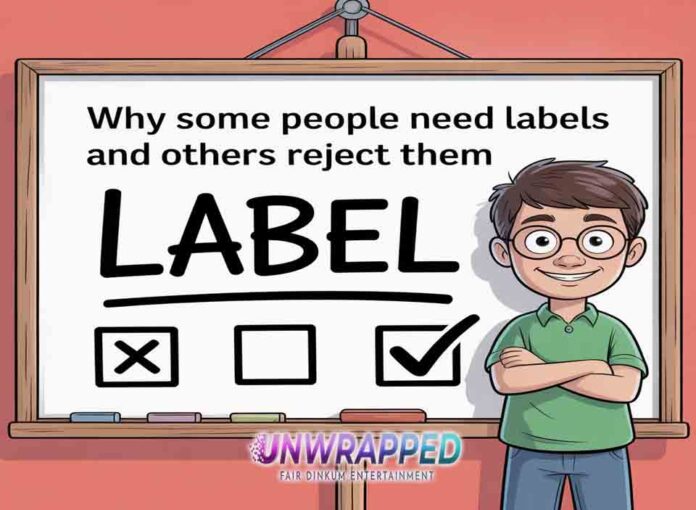
Labels are everywhere. Personality types, diagnoses, identities, roles, generations, archetypes. For some people, labels feel like relief—finally, something explains their inner world. For others, labels feel restrictive, even threatening, as if a word could shrink a complex human life into a box.
This divide is not random, nor is it about intelligence or openness. It reflects different psychological needs, coping strategies, and relationships to uncertainty. Understanding why some people seek labels while others resist them reveals more about how humans create meaning, safety, and agency than about the labels themselves.
What Labels Actually Do in the Brain
At a basic level, labels reduce cognitive load. The brain is constantly trying to make sense of overwhelming information, and naming something creates order.
Labels help by:
Organizing experience into categories
Reducing ambiguity and uncertainty
Making internal experiences communicable
Creating shared language with others
Research in cognitive psychology shows that naming emotions or experiences can reduce distress and increase perceived control. This is why diagnostic labels, personality frameworks, or identity terms often feel grounding rather than limiting—at least initially.
See Also: Why Being “Logical” Can Be an Emotional Pattern
Why Some People Need Labels
For many, labels function as anchors.
People who gravitate toward labels often:
Experience high internal complexity or emotional intensity
Have struggled to explain themselves to others
Feel relief when their experience is validated by language
Seek predictability and coherence
A label can say, “This isn’t random. There’s a pattern.” That recognition can reduce shame and isolation.
Common reasons labels feel necessary:
Validation: “What I experience has a name.”
Belonging: “Others feel this too.”
Navigation: “This helps me know what to expect.”
Self-compassion: “I’m not broken—this is a known pattern.”
For people who grew up misunderstood or dismissed, labels can be profoundly stabilizing.
When Labels Become Over-Relied On
While labels can clarify, they can also harden.
Problems arise when labels are treated as:
Fixed identities rather than descriptors
Explanations instead of starting points
Limits rather than lenses
Over-identification with labels can lead to:
Reduced experimentation
Self-fulfilling behavior
Fear of outgrowing the label
Outsourcing self-understanding to definitions
At this point, labels stop serving the person and start managing them.

Why Others Reject Labels Entirely
Label rejection is often misinterpreted as denial or avoidance. In reality, it frequently comes from a protective instinct.
People who resist labels often:
Value autonomy and fluidity
Have experienced being misunderstood through labels
Fear being reduced or stereotyped
Associate labels with loss of control
For these individuals, labels feel less like clarity and more like constraint.
Common beliefs behind label rejection:
“I don’t want to be boxed in.”
“People stop seeing nuance once they label.”
“I change too much for one word.”
“Labels get used against people.”
This resistance is not anti-self-awareness. It is often pro-agency.
Labels and Power Dynamics
Labels do not exist in a vacuum. They carry social power.
Who applies the label matters:
Self-chosen labels tend to feel empowering
Externally imposed labels often feel invasive
Institutional labels can affect opportunity and treatment
Historically, labels have been used to:
Pathologize difference
Control behavior
Justify exclusion
It is reasonable, then, that some people instinctively push back against labels—not because they reject understanding, but because they are sensitive to how language can be weaponized.
Labels as Tools, Not Truths
The most psychologically flexible approach treats labels as temporary tools.
Healthy label use looks like:
“This explains part of my experience.”
“This helps right now.”
“This may change as I grow.”
Unhealthy label use looks like:
“This is all I am.”
“I can’t act outside this.”
“This defines my limits.”
The distinction lies in whether the label serves understanding or replaces it.
Identity Development and Life Stage
People’s relationships with labels often shift over time.
Common patterns include:
Early adulthood: seeking labels for self-definition
Midlife: rejecting labels that feel outdated
Later stages: integrating labels with nuance
Periods of transition—grief, career change, healing, growth—often trigger re-evaluation of labels. What once felt clarifying may later feel restrictive, and vice versa.
This doesn’t indicate inconsistency. It reflects development.
Why the Debate Is So Emotional
Discussions about labels often become heated because they touch identity, safety, and autonomy.
When someone says:
“Labels saved me,” they are expressing relief and validation.
“Labels harm people,” they are expressing fear of reduction or control.
Both experiences can be true—depending on context, timing, and power.
The conflict arises when one experience is universalized.
People Also Love: The Difference Between Independence and Disconnection
Finding a Middle Ground
The most resilient psychological stance allows for both structure and flexibility.
This includes:
Using labels as maps, not cages
Allowing others to choose their own relationship to labels
Updating or discarding labels when they no longer fit
Separating description from destiny
Labels can coexist with complexity when they are held lightly.
Call to Action
If this article helped clarify why labels feel supportive for some and suffocating for others, consider sharing it with someone navigating identity questions. Readers can also subscribe for more psychology-based insights that move beyond oversimplified self-help narratives.
Conclusion
Labels are neither inherently liberating nor inherently limiting. They are tools shaped by context, power, and individual psychology. Some people need them to feel seen. Others need distance from them to feel free.
Understanding this difference reduces unnecessary conflict and increases empathy. When labels are used with intention—and released when they no longer serve—they become bridges to understanding rather than barriers to growth.
Another Must-Read: The Difference Between Privacy and Secrecy