


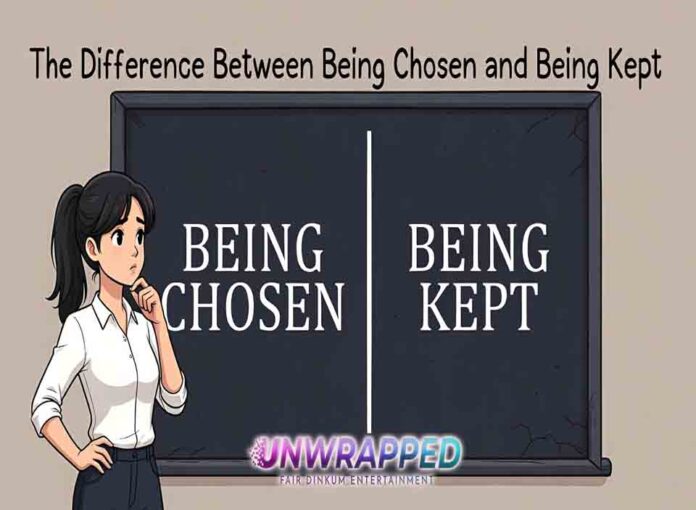
Modern relationships are filled with subtle signals. A message that comes late. A plan that never gets defined. A partner who says all the right words but hesitates when it matters. In this landscape of situationships, exclusivity talks, and evolving expectations, one question quietly shapes emotional security: is someone being chosen—or simply being kept?
The distinction may appear subtle, yet its impact is profound. Relationship psychology consistently shows that clarity and intentional commitment create long-term satisfaction. Stable bonds thrive on deliberate investment, not passive convenience. Understanding the difference between being chosen and being kept reveals the deeper patterns that define attachment, security, and mutual value.
1. Being Chosen Is Intentional; Being Kept Is Convenient
At its core, being chosen involves a conscious decision. It means someone actively evaluates their options and selects the relationship with clarity and pride.
Being kept, however, often operates in ambiguity. It may involve affection and attention—but without decisive commitment.
Signals of being chosen:
Clear communication about exclusivity
Public acknowledgment of the relationship
Future planning that includes both partners
Consistent effort and follow-through
Signals of being kept:
Avoidance of labels
Vague responses about the future
Emotional availability that fluctuates
Commitment only when threatened
Choice requires courage. Convenience requires nothing.
2. Emotional Security vs. Emotional Limbo
Psychologists who study attachment styles explain that security grows from reliability and clarity. Secure bonds form when partners demonstrate consistent responsiveness and emotional presence.
When someone is chosen, emotional safety develops because intentions are transparent.
When someone is kept, uncertainty becomes the default setting.
Emotional limbo often includes:
Overanalyzing messages
Waiting for reassurance
Feeling unsure of one’s position
Living in “almost”
Being kept may feel like affection—but without foundation, it produces instability.
3. Investment Speaks Louder Than Affection
Affection can be warm, exciting, and convincing. But investment tells the deeper truth.
Long-term commitment is built on shared goals, mutual influence, and daily effort—not just chemistry.
Being chosen often includes:
Time carved out intentionally
Emotional labor shared equally
Conflict addressed rather than avoided
Sacrifices made willingly
Being kept may include romantic gestures—but rarely structural commitment.
Love without investment becomes performance. Love with investment becomes partnership.
People Also Love: Common Mistakes to Avoid When Preparing for ITIL 5 Foundation Bridge
4. Clarity vs. Ambiguity
Clear relationships eliminate guessing games.
When someone chooses a partner, clarity emerges in language and action. There is no strategic silence or prolonged uncertainty.
In contrast, being kept often involves ambiguity as leverage. The relationship may continue—but without definition.
Common patterns of ambiguity:
“Let’s just see where this goes.”
Avoiding future-oriented conversations
Deflecting commitment discussions
Clarity reduces stress and enhances trust. Ambiguity increases anxiety and emotional strain.
Clarity is a gift. Ambiguity is a placeholder.
5. Priority vs. Backup Position
One of the clearest differences lies in priority.
Being chosen means being integrated into someone’s life. Time, energy, and planning reflect that integration.
Being kept often feels conditional. Attention appears when convenient but disappears when circumstances shift.
Signs of priority:
Plans made in advance
Inclusion in important decisions
Introduction to close friends and family
Reliability during stressful moments
Signs of backup positioning:
Last-minute scheduling
Inconsistent availability
Emotional distance during hardship
Sudden disappearances
Partnership thrives on priority—not leftovers.
6. Growth vs. Maintenance
Healthy relationships evolve. They move forward intentionally.
Being chosen involves shared growth. Both individuals adapt, improve, and build a future together.
Being kept often results in stagnation. The relationship remains in a suspended state, neither progressing nor ending.
Shared goals significantly increase long-term satisfaction.
Growth includes:
Discussing future plans
Supporting career or personal development
Setting mutual goals
Resolving recurring conflicts
Maintenance, by contrast, preserves comfort without expansion.
7. Accountability vs. Emotional Loopholes
When someone chooses a partner, accountability strengthens trust.
Mistakes are acknowledged. Apologies are sincere. Effort to repair damage is visible.
When someone keeps a partner, loopholes emerge:
Minimizing concerns
Shifting blame
Offering partial reassurance
Avoiding difficult discussions
Accountability demonstrates emotional maturity. Loopholes reveal reluctance.
The Psychological Impact of Being Kept
Remaining in an undefined relationship can affect mental health.
Prolonged ambiguity may lead to:
Increased anxiety
Lowered self-worth
Emotional dependency
Fear of abandonment
Uncertainty is a significant trigger for psychological distress.
Being chosen nurtures confidence. Being kept erodes it slowly.
Why Some People Keep Instead of Choose
Understanding motivations fosters compassion—but not tolerance of misalignment.
Common reasons include:
Fear of Commitment
Some individuals equate commitment with loss of freedom.Attachment Avoidance
Avoidant attachment styles may resist deeper intimacy.Desire for Options
Keeping someone available without exclusivity preserves alternatives.Emotional Immaturity
Lack of self-awareness can prevent decisive action.Past Relationship Trauma
Fear of vulnerability may delay commitment.
Recognizing these patterns allows individuals to evaluate compatibility realistically.
See Also: 10 Personality Facts Most People Learn Too Late in Life
How to Recognize Your Position
Clarity begins with honest self-reflection.
Ask:
Are future plans discussed clearly?
Does effort feel balanced?
Is reassurance consistent or reactive?
Is exclusivity defined?
If answers remain uncertain, the relationship may lean toward being kept rather than chosen.
Ending Thoughts
The difference between being chosen and being kept is not always loud. It often reveals itself in small, repeated patterns: consistency, clarity, priority, and shared vision.
Being chosen creates stability. It invites growth, mutual accountability, and emotional security. Being kept may feel affectionate in the moment—but without intentional commitment, it leaves lingering doubt.
Healthy love requires decisiveness. It requires the courage to define, to prioritize, and to invest fully. Anything less risks remaining in emotional limbo.
Choosing someone is an action. Keeping someone is a hesitation.
Call to Action
Have you experienced the difference between being chosen and being kept? Share this article with someone navigating relationship uncertainty, and join the conversation in the comments. Healthy love begins with awareness—and awareness begins with honest dialogue.
Another Must-Read: Why Some People Avoid Arguments at Any Cost