




Nobody regrets seeing the Colosseum. The problem is that a trip built entirely around a list of landmarks tends to produce the same photographs everyone else came home with, and not much else. The parts people actually talk about years later are usually smaller and harder to plan: a meal that took four hours, a train window somewhere in the Alps, a festival nobody back home had heard of.
None of this means skipping the big sights. It means leaving enough room in the itinerary that the rest of Europe gets a chance to show up.
Eat Where the Region Actually Eats
Food is the easiest way into a place, and the most commonly wasted opportunity. Europe’s regional cooking shifts dramatically over short distances, far more than most visitors expect from a continent that looks compact on a map. Bologna’s ragù has nothing to do with what gets served as bolognese elsewhere. San Sebastián runs on pintxos eaten standing up, bar to bar, for a couple of euros at a time. Lyon’s bouchons serve offal-heavy dishes that would struggle on a tourist menu anywhere else and remain some of the best eating in France.
The practical move is simple enough: eat lunch where the local working population eats it, usually between noon and two, and book dinner somewhere small rather than somewhere with photographs on the menu outside. Markets are worth a morning in their own right. La Boqueria in Barcelona has become a sight in itself, but the smaller neighbourhood markets in Lisbon, Naples or Kraków are still doing what they have always done, which is feeding people who live there.
Take the Slow Train on Purpose
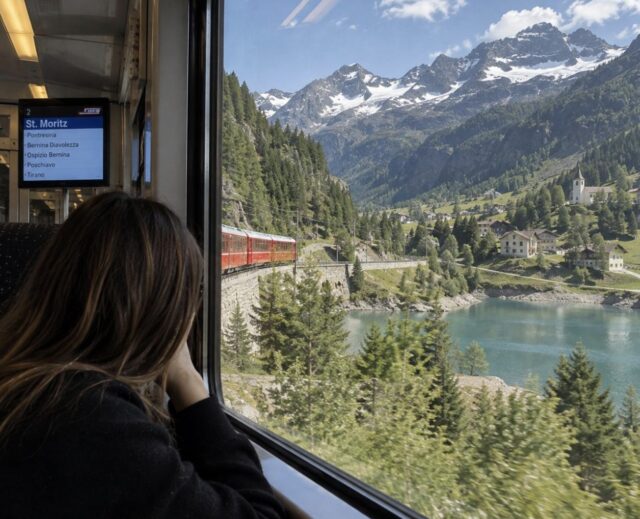
Flying between European cities is cheap and efficient and skips the part worth seeing. Some of the continent’s best hours happen through a train window. The Bernina Express crosses from Switzerland into Italy past glaciers and viaducts. The Flåm Railway drops through Norwegian fjord country in an hour. The Rhine Valley stretch between Mainz and Koblenz passes castle after castle without asking anyone to get off the train.
Even ordinary regional services earn their place. A slow train through Tuscany, the Douro Valley, or the Scottish Highlands does something a budget flight cannot: it shows how one place becomes another. Booking a window seat and giving up two hours to it is a genuine experience rather than dead time between destinations.
Go When the Locals Are Celebrating
Europe’s festival calendar runs deeper than Oktoberfest and Carnival. Siena’s Palio turns a medieval piazza into a horse race twice each summer, with neighbourhood rivalries that predate most countries. Las Fallas in Valencia ends with enormous sculptures burning in the streets. Wales hosts the Hay Festival, Iceland’s Þorrablót serves food most visitors will try exactly once, and half the villages in Provence hold a lavender or truffle fête that never makes an international guidebook.
Timing a trip around one of these changes its character completely. The catch is that accommodation fills months ahead in small towns, so this is the one area where planning far in advance genuinely pays.
Stay Somewhere Small for Part of the Trip
Two weeks split across four capital cities produces a blur of train stations and check-ins. Giving three or four days to one small place, a village in the Dolomites, a town on the Alentejo coast, an island in the Aegean, produces something else entirely. The café owner starts recognising you. The walk you did on the first morning reveals something new on the third. Prices drop noticeably outside the major cities too, which means the same budget stretches further.
This is also where Europe stops feeling like a theme park version of itself. Small towns are not performing for visitors, and the difference in atmosphere is immediate.
Sorting the Practical Side Before You Go
Spontaneity works better with a bit of groundwork. Train tickets for scenic routes often sell out weeks ahead, particularly in summer. Museums increasingly require timed entry booked online. Restaurants worth eating at in small towns may have one sitting and a phone number rather than a booking platform.
Connectivity is the quiet enabler for most of this. Checking a regional train timetable, translating a menu in a village with no English signage, or finding a room when a plan changes all depend on having data that works across borders. Roaming charges mount quickly once a trip crosses several countries, and buying a local SIM at each border is not realistic on a route through four or five of them. An eSIM Europe plan covers this by working across multiple European countries on a single installation set up before departure. Holafly is one of several providers offering this kind of regional coverage, though it’s worth checking which specific countries a given plan includes against the actual route, since coverage varies between providers.
Leave Room for the Things You Cannot Plan
The experiences people describe most vividly afterwards are rarely the ones that were booked. A church with a choir rehearsing when you walked past. A market day nobody mentioned. Weather that turned a planned beach afternoon into a long lunch that lasted until dark.
An itinerary with a spare afternoon in it, or a day with nothing scheduled at all, is what allows any of that to happen. The landmarks will still be there. They have been for a while. What makes a European trip worth the airfare is usually everything arranged around them.