



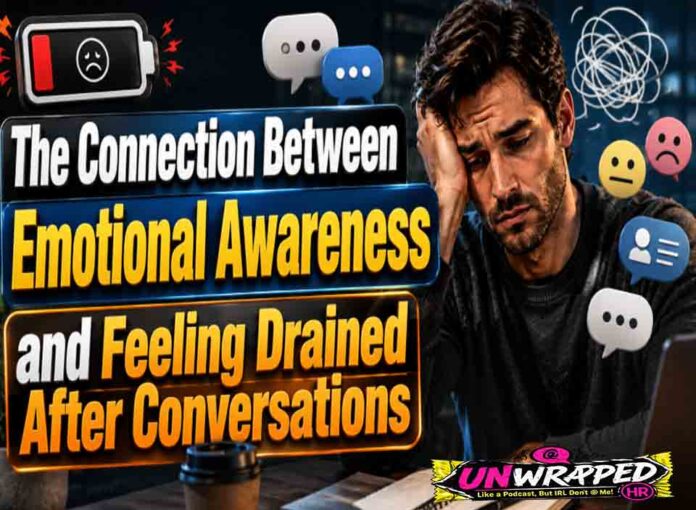
Some conversations end when people say goodbye. Others continue inside the mind for hours. A person may replay a change in tone, wonder whether someone felt dismissed, analyze what was left unsaid, and carry the emotional atmosphere long after leaving the room. This often happens to people with strong emotional awareness—the ability to notice feelings, shifts in mood, and subtle social signals.
Emotional awareness can strengthen relationships, improve communication, and help someone respond with care. However, it can also become exhausting when awareness turns into constant monitoring, emotional suppression, or responsibility for everyone else’s comfort. Feeling drained after conversations does not necessarily mean someone dislikes people. It may mean their mind was performing far more emotional work than anyone could see.
What Emotional Awareness Really Means
Emotional awareness is more than being sensitive. It includes noticing emotions, identifying what may have caused them, and understanding how they influence behavior.
During an ordinary conversation, an emotionally aware person may notice:
- A smile that does not match someone’s tone
- A sudden pause after a sensitive comment
- A change in posture or eye contact
- Tension between two people in the group
- Their own growing discomfort
- The pressure to make the interaction feel better
Emotional attention and clarity can become stronger in social settings, particularly during interactions with people who matter to someone. In other words, conversations can naturally make emotions more noticeable—not only in others, but also within the person observing them.
That awareness can be valuable. The problem begins when every signal feels like a problem that must be interpreted, managed, or repaired.
Why Emotionally Aware People May Feel Drained
They Process More Than the Spoken Words
Two people can participate in the same conversation while having completely different internal experiences.
One person hears the words and responds. The other also tracks facial expressions, emotional shifts, possible misunderstandings, unspoken expectations, and whether everyone still feels included.
This extra processing requires attention. The conversation may look relaxed from the outside while the emotionally aware person is quietly running several mental tasks at once.
They may be asking:
- Did that comment hurt someone?
- Is the room becoming uncomfortable?
- Should the subject be changed?
- Was that response too direct?
- Does someone need reassurance?
- Is it safe to express an honest opinion?
Even when these questions are never spoken, they consume energy.
They May Regulate Everyone’s Emotions
Some people do not simply notice the emotional atmosphere; they begin trying to change it.
They tell a joke when tension rises, soften a disagreement, reassure the upset person, redirect an awkward discussion, or hide their own frustration to protect the mood. Psychology researchers describe this broader process as the social regulation of emotion, where one person attempts to influence another person’s emotional experience.
This can be generous and socially skilled. It can also become invisible labor when one person repeatedly assumes responsibility for keeping conversations calm, warm, and comfortable.
A useful question is: Was that person participating in the conversation—or quietly managing it?
Emotional Suppression Has a Cost
Emotionally aware people sometimes notice so much that they begin hiding their own responses.
They may feel annoyed but remain pleasant. They may disagree but stay silent. They may become overwhelmed yet continue listening because the other person appears to need support.
Studies on everyday social interaction have linked emotional suppression with greater fatigue, lower feelings of acceptance, more interpersonal distance, and reduced relationship satisfaction.
This helps explain why a conversation can feel exhausting even when no argument occurred. The person may have spent the entire interaction filtering reactions, choosing safe words, and preventing their real emotions from becoming visible.
Calm behavior does not always mean a calm internal experience.
Another Must-Read: Why Australians Downplay Their Success
When Empathy Turns Into Emotional Absorption
Empathy allows someone to recognize and respond to another person’s feelings. Emotional absorption goes further: the other person’s mood begins to feel like something that must be carried.
After speaking with a distressed friend, an emotionally aware person may remain worried for the rest of the evening. After a tense meeting, they may feel responsible for repairing relationships between colleagues. After listening to someone complain, they may experience the heaviness as though the problem belongs to them.
This is more likely when the person believes:
- Caring means always being available
- Good listeners should never interrupt
- Setting limits will appear selfish
- Another person’s distress must be solved
- Leaving someone upset means failing them
Empathy is not the problem. Empathy without boundaries is what becomes expensive.
Mental Fatigue Makes Emotional Regulation Harder
Social exhaustion can become a cycle. Emotional regulation requires effort, and sustained effort contributes to mental fatigue. Once mentally tired, a person may find it harder to regulate emotions during the next interaction.
Mental fatigue impaired participants’ ability to deliberately reduce emotional responses, even though their initial emotional reactions remained similar. A broader review also notes that deliberate emotion regulation can require meaningful effort, particularly during repeated workplace and social demands.
This can create a familiar pattern:
- A person carefully manages a demanding conversation.
- They leave mentally tired.
- The next interaction feels harder to handle.
- They become more sensitive, irritable, or withdrawn.
- They blame themselves for “overreacting.”
The reaction may not reflect weakness. It may reflect depleted emotional resources.
Signs That a Conversation Required Too Much Emotional Work
Feeling tired after social contact is not automatically concerning. Some conversations are naturally intense. However, a repeated pattern may deserve attention when someone regularly:
- Replays conversations for hours
- Feels responsible for everyone’s mood
- Needs long recovery after ordinary interactions
- Leaves feeling guilty without knowing why
- Hides honest opinions to avoid discomfort
- Becomes the default listener but receives little support
- Feels relief when plans are cancelled
- Struggles to separate another person’s emotions from their own
These signs do not prove a mental health condition. They may simply show that the person’s emotional awareness is operating without enough limits, reciprocity, or recovery.
How to Stay Emotionally Aware Without Becoming Exhausted
Notice Without Automatically Intervening
Recognizing tension does not mean it must be fixed immediately.
A person can privately acknowledge, “The mood changed,” without taking responsibility for restoring it. Observation can remain observation.
Ask What Kind of Support Is Needed
Instead of guessing, a simple question can reduce unnecessary emotional labour:
“Would listening, reassurance, or practical advice help most?”
This makes support clearer and prevents one person from performing every possible role.
Stop Treating Every Pause as a Problem
Silence, discomfort, and disagreement are not always emergencies. Other adults can process their own emotions, clarify their own words, and participate in repairing tension.
Use a Clear Ending
Emotionally heavy conversations often feel endless because no boundary is stated. A respectful limit might sound like:
“There is time to talk for another ten minutes, but then a break is needed.”
Boundaries do not cancel compassion. They make compassion sustainable.
Create a Recovery Ritual
After an intense interaction, recovery may involve quiet, movement, music, journaling, a shower, fresh air, or time without conversation. The goal is not to analyze the exchange again. It is to signal that the emotional task has ended.
Call to Action: Understand the Pattern Behind the Exhaustion
Feeling drained after conversations may be less about being “too sensitive” and more about how someone naturally notices, interprets, and carries emotional information. Understanding that pattern can reveal where empathy is helping—and where it is quietly becoming over-responsibility.
Share this article with someone who always notices the mood in the room, and comment with the type of conversation that requires the most recovery.
Wrapping Up
Emotional awareness is a meaningful strength. It helps people recognize needs, respond thoughtfully, and create conversations where others feel heard. Yet that same ability becomes draining when someone constantly scans for tension, suppresses honest reactions, absorbs other people’s feelings, or assumes responsibility for the entire emotional atmosphere.
The goal is not to become less caring or less observant. It is to recognize that noticing an emotion does not create an obligation to carry it. When emotional awareness is paired with direct communication, shared responsibility, and healthy recovery, conversations can remain connected without leaving one person emotionally empty.
See Also: The Quiet Signs You’re Running on Empty