

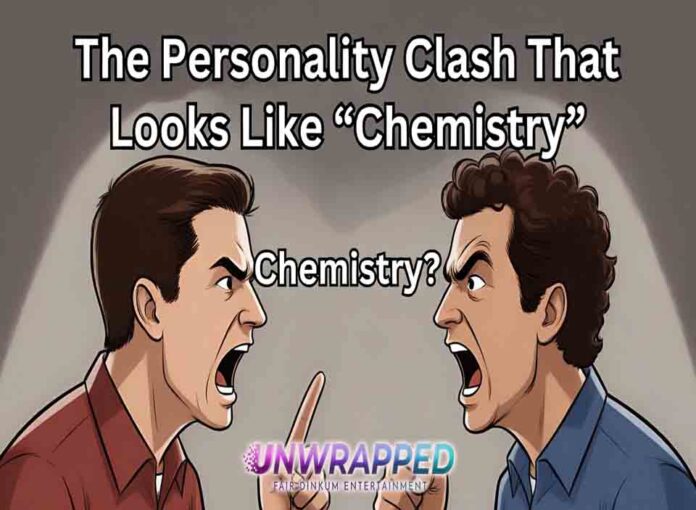
Some connections feel electric from the start. Conversations are intense, eye contact lingers, and emotions rise quickly. Friends might say, “You two have amazing chemistry.” Yet over time, that same spark often turns volatile, confusing, or exhausting.
This isn’t rare—and it isn’t magic. In many cases, what feels like chemistry is actually a personality clash with perfect timing. Understanding why these clashes feel intoxicating at first can help explain why so many high-intensity connections burn fast, burn hot, and then burn out.
Why “Chemistry” Is Often Misread
Chemistry is commonly described as ease, flow, and attraction. But psychologically, what people label as chemistry is often nervous system activation.
When two personalities trigger each other’s core patterns—especially unmet needs or defenses—the brain releases adrenaline, dopamine, and cortisol. Emotional arousal is frequently mistaken for compatibility.
Intensity feels meaningful. The body interprets activation as importance.
See Also: Why Some People Test You (Without Realising They’re Doing It)
Complementary Wounds, Not Complementary Traits
Many high-“chemistry” pairings are built on opposing coping styles rather than shared values.
Common examples include:
One person seeks closeness; the other pulls away
One thrives on emotional expression; the other relies on logic
One needs reassurance; the other values independence
These pairings create constant motion. Each person activates the other’s unresolved patterns, producing emotional highs and lows that feel compelling.
The Attachment Project explains how anxious and avoidant attachment styles often feel magnetically drawn to each other despite long-term friction.
Why Tension Feels Like Spark
Tension keeps attention locked in.
When interactions are unpredictable, the brain stays alert:
Waiting for the next signal
Interpreting tone and timing
Searching for reassurance or control
This heightened focus can feel intimate. But it is driven by uncertainty, not safety. Neuroscience research shows that unpredictability increases dopamine release, strengthening emotional attachment even in unstable situations.

Familiar Chaos Disguised as Passion
For many people, intense connections feel familiar because they mirror early relational environments.
If emotional inconsistency, volatility, or emotional labor were normalized growing up, then calm can feel dull—and tension can feel like home.
Psychologists often note that people are drawn to what they recognize, not what is healthy.
When Opposites Don’t Balance—They Collide
The popular idea that “opposites attract” is only partially true.
Opposites can complement each other when both sides are regulated and self-aware. But without that balance, opposites amplify conflict:
Differences become power struggles
Communication becomes misalignment
Needs feel mutually invalidating
What starts as intrigue becomes friction. The very traits that felt exciting early on become sources of resentment later.
Emotional Intensity vs. Emotional Intimacy
True intimacy is often quiet. It builds through consistency, trust, and emotional safety.
Clash-based chemistry relies on:
Emotional spikes
Repair cycles
Intimacy relies on:
Predictability
Mutual regulation
Emotional availability
Stable relationships thrive on emotional safety, not emotional fireworks.
The Role of Projection
Early-stage “chemistry” often includes heavy projection.
People may project:
Hope onto potential
Familiar roles onto new people
Unmet needs onto intense connections
Because the bond feels powerful, warning signs are reframed as depth, mystery, or passion. Over time, reality replaces projection—and disappointment follows.
Signs It’s a Clash, Not Chemistry
Common indicators include:
Rapid emotional escalation
Frequent misunderstandings
Feeling energized and drained at the same time
Confusion mixed with attraction
High highs followed by sharp lows
If calm feels boring and conflict feels bonding, the connection may be driven by activation rather than alignment.
Why These Connections Are Hard to Leave
Clash-based bonds are reinforced through intermittent reinforcement—the same mechanism seen in addictive behaviors.
Unpredictable rewards (affection, validation, closeness) strengthen emotional attachment more than consistent ones. Behavioral psychology research explains why intermittent reinforcement is especially powerful.
The bond feels rare, intense, and hard to replicate—even when it hurts.
People Also Love: Why Some People Fall for Potential
What Real Compatibility Actually Feels Like
Healthy compatibility is often understated.
It feels like:
Emotional steadiness
Clear communication
Mutual effort without constant tension
Growth without chaos
At first, it may feel unfamiliar or even “boring” to those used to emotional spikes. Over time, it feels grounding rather than consuming.
Call to Action
If this article clarified a confusing connection, share it with someone navigating an intense relationship. Subscribe for more psychology-based insights that help decode emotional patterns with clarity, not judgment.
Conclusion
Not all chemistry is connection. Some of the strongest sparks come from friction, not fit. Personality clashes can feel powerful because they activate deep emotional systems—not because they offer stability or growth.
Recognizing the difference between intensity and intimacy allows people to choose relationships that calm the nervous system rather than consume it. Real connection doesn’t keep someone guessing. It creates space to breathe.
Another Must-Read: Why Some People Can’t Trust Calm