

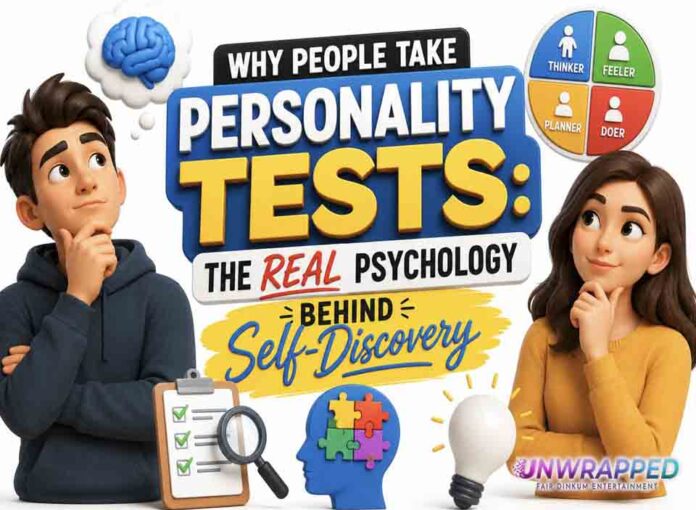
Personality tests have exploded in popularity over the past decade. From workplace assessments and relationship quizzes to viral social media trends, millions of people are constantly searching for answers about themselves. Some want to understand why they think differently. Others want clarity about relationships, careers, habits, or emotional patterns.
But why are personality tests so appealing in the first place?
The answer goes deeper than curiosity. Psychology suggests that humans naturally seek identity, meaning, and self-understanding. People want language for who they are. They want to understand why certain situations energize them while others drain them. Personality tests offer a structured way to explore those questions.
Modern personality assessments are no longer just entertainment. Many people use them for career planning, communication improvement, emotional growth, and relationship awareness. According to research shared by Psychology Today, personality frameworks can help people better recognize recurring behavioral patterns and emotional tendencies.
The Desire to Understand Yourself
One major reason people take personality tests is simple: they want clarity.
Life constantly pushes people into roles, expectations, responsibilities, and routines. Over time, many begin wondering:
- Why do certain environments feel exhausting?
- Why do some people recharge socially while others need isolation?
- Why do some individuals thrive under pressure while others avoid it?
- Why do certain relationship patterns keep repeating?
Personality tests can help organize those questions into understandable categories.
For many people, reading personality insights feels strangely accurate because it puts long-existing feelings into words. Someone who always felt “different” may finally understand they are highly analytical, emotionally intuitive, or deeply independent.
That sense of recognition can feel powerful.
Personality Tests Help Explain Social Differences
One of the biggest causes of conflict in relationships is assuming everyone thinks the same way.
They do not.
Some people process emotions internally. Others speak immediately. Some value logic first. Others prioritize harmony and emotional connection. Personality tests help explain why communication styles clash even when intentions are good.
Relationship experts discussed on Verywell Mind often highlight self-awareness as one of the strongest foundations for healthy communication.
Understanding personality differences can help people:
- Communicate more effectively
- Reduce misunderstandings
- Recognize emotional triggers
- Improve teamwork
- Build stronger friendships
- Navigate romantic compatibility
Instead of seeing someone as “difficult,” personality insight may reveal they simply process the world differently.
Career Direction and Workplace Growth
Another major reason people take personality tests is career clarity.
Many workers spend years in jobs that do not match their natural strengths. Someone highly creative may feel trapped in repetitive systems. A deeply structured thinker may struggle in chaotic environments.
Personality assessments can help identify:
- Preferred work styles
- Leadership tendencies
- Communication habits
- Problem-solving approaches
- Stress patterns
- Motivational drivers
This is one reason major organizations and hiring teams continue using personality-based tools in professional environments. The American Psychological Association explains that personality research has long been connected to workplace behavior, productivity, and leadership studies.
People often feel more fulfilled when their environment aligns with their natural tendencies.
Another Must-Read: Can Personality Tests Be Wrong?
Emotional Validation and Identity
Sometimes personality tests provide something deeper than information: emotional validation.
A person who spent years feeling “too quiet,” “too emotional,” “too intense,” or “too independent” may finally realize those traits are part of a recognizable personality pattern shared by many others.
That realization can reduce shame.
Instead of viewing themselves as flawed, people begin understanding themselves with more compassion and nuance. This is especially true for highly sensitive individuals, introverts, deep thinkers, or emotionally analytical personalities who often feel misunderstood in fast-paced social environments.
The emotional comfort of being understood is one reason personality content spreads so quickly online.
People are not only searching for labels. They are searching for recognition.
Why Personality Content Goes Viral
Personality-based content dominates social media because it creates instant emotional connection.
People naturally share posts that make them feel:
- Seen
- Understood
- Exposed
- Validated
- Curious
- Emotionally connected
A simple statement like “You overthink because your brain searches for emotional certainty” can instantly resonate with millions of people.
According to studies published through the National Institutes of Health, self-reflection and identity exploration play major roles in emotional development and social belonging.
Personality tests turn abstract emotions into understandable patterns.
That makes them deeply shareable.
The Difference Between Good and Bad Personality Tests
Not every personality test is equally valuable.
Some online quizzes are created purely for entertainment and rely on vague statements that could apply to almost anyone. Others are built using psychological frameworks, behavioral analysis, and structured personality dimensions.
A stronger personality test usually:
- Explores behavioral patterns deeply
- Avoids generic descriptions
- Balances strengths and weaknesses
- Focuses on emotional tendencies
- Explains communication styles
- Provides actionable insights
The best assessments do not just flatter people. They help them grow.
Good personality frameworks encourage self-awareness, not excuses.
Personality Tests Can Improve Relationships
One overlooked benefit of personality testing is empathy.
When people understand that others naturally think, process, and communicate differently, they often become less judgmental. Instead of assuming someone is cold, dramatic, lazy, controlling, or distant, they begin recognizing different emotional wiring and coping styles.
This shift can improve:
- Romantic relationships
- Family communication
- Friendships
- Parenting styles
- Workplace dynamics
A calm, highly logical person may not express affection the same way as an emotionally expressive personality. Neither is automatically wrong — they are simply different.
Personality awareness can create healthier expectations between people.
The Human Need for Meaning
At its core, personality testing connects to something deeply human: the need to understand identity.
People want to know:
- Who they are
- Why they behave certain ways
- What motivates them
- What drains them
- What kind of future fits them best
Personality frameworks help organize those questions into something easier to explore.
They give people language for parts of themselves they may have struggled to explain for years.
That is why personality tests continue growing in popularity across generations, workplaces, relationships, and online communities.
Final Thoughts
Personality tests are not popular simply because they are trendy. They are popular because people crave self-understanding.
In a world full of pressure, comparison, and constant noise, personality assessments offer a moment of reflection. They help people recognize emotional patterns, communication styles, motivations, and personal strengths that may have always existed beneath the surface.
The best personality tests do not put people into boxes. They help people understand the shape of their mind, emotions, and behaviors more clearly.
And for many people, that clarity feels empowering.
Call to Action
Curious about your own personality patterns, emotional tendencies, and hidden strengths?
Take the FREE Core-64 Personality Quiz today at Personality Peek and discover the deeper personality archetype shaping the way you think, connect, communicate, and grow.