


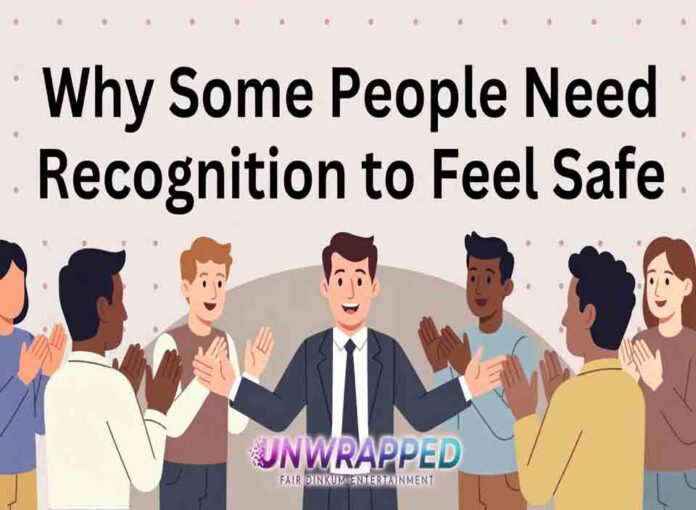
Recognition is often described as a motivational tool—something that encourages productivity, boosts morale, or rewards achievement. In workplaces, classrooms, and social circles, praise and acknowledgment are widely used to reinforce positive behavior. However, for some individuals, recognition goes beyond motivation. It becomes something deeper: a signal of safety, belonging, and emotional stability.
Psychologists increasingly observe that the need for recognition can be tied to how people interpret social environments. For some, being acknowledged reassures them that they are valued, accepted, and secure within a group. Human beings naturally seek signals that confirm their place within social structures. Recognition, praise, and validation often function as those signals.
Understanding why some people rely on recognition to feel safe offers valuable insight into personality patterns, emotional development, and the social dynamics that shape confidence and belonging.
The Psychology Behind Recognition and Emotional Safety
Recognition activates powerful psychological mechanisms. Humans evolved in social groups where acceptance increased survival chances. Being seen and valued by others helped individuals maintain their place within the group.
Acknowledgment reinforces feelings of connection and social inclusion.
Recognition can signal several things at once:
Acceptance – confirmation that one is part of the group
Competence – reassurance that one’s actions matter
Stability – evidence that relationships remain secure
For people who interpret social cues strongly, recognition becomes more than praise—it becomes a psychological safety signal.
See Also: Why Some People Are Great at Small Talk but Crave Depth
Signals That Someone May Rely on Recognition for Emotional Safety
1. Sensitivity to Feedback and Praise
One common signal is heightened awareness of feedback.
Individuals who rely on recognition for safety often pay close attention to:
Positive comments about their work or contributions
Public acknowledgment in group settings
Verbal appreciation from authority figures
These responses can strongly influence how secure they feel in a social environment.
Acknowledgment significantly increases engagement and confidence for many individuals. For some personalities, it also reduces anxiety about their standing within the group.
2. Strong Desire to Know Where They Stand
Another revealing behavior is a need for clarity about social position.
People who rely on recognition often appreciate:
Clear appreciation from leaders or peers
Direct communication about performance
Explicit acknowledgment of contributions
Without these signals, uncertainty may grow.
Individuals who receive regular acknowledgment report higher feelings of stability and engagement.
Recognition reduces ambiguity about belonging.

3. Motivation Through Visibility
Recognition-driven individuals often perform best in environments where effort is visible.
Examples include:
Collaborative team settings
Leadership roles that highlight contribution
Public acknowledgment of achievements
In these environments, recognition reinforces both effort and identity.
Social reward systems—such as praise and acknowledgment—can strongly influence behavior patterns.
For some personalities, visibility reinforces emotional stability.
4. Fear of Being Overlooked
Another subtle signal is discomfort when contributions go unnoticed.
Situations that may trigger this reaction include:
Working hard without feedback
Seeing others receive recognition instead
Silence from leaders or peers after completing tasks
The reaction is not always about ego or attention. Often it reflects uncertainty about one’s place within the social structure.
Human belonging research frequently highlights that being ignored can feel psychologically threatening, because it removes signals of inclusion.
5. Early Experiences That Shape Validation Needs
The need for recognition often has developmental roots.
Psychologists suggest that individuals may become recognition-sensitive if they grew up in environments where:
Praise was tied closely to achievement
Approval from authority figures felt unpredictable
Success was the primary way to receive attention
Early experiences with validation can influence how adults interpret recognition later in life.
For some individuals, acknowledgment becomes an emotional reassurance mechanism.
People Also Love: Why Some People Dislike Networking (and What They Prefer Instead)
When Recognition Becomes Healthy Motivation
Recognition itself is not problematic. In fact, it plays an important role in healthy social systems.
Constructive recognition can:
Encourage continued effort
Strengthen team morale
Reinforce positive behaviors
Increase engagement and creativity
Employees who feel appreciated are significantly more likely to remain engaged and productive.
When recognition is balanced and authentic, it strengthens both confidence and collaboration.
Conclusion
Recognition is often misunderstood as a simple form of praise, but for many individuals it carries deeper meaning. Being acknowledged can signal belonging, stability, and appreciation within a group. For people who are especially sensitive to social cues, recognition functions as reassurance that they are valued and secure in their environment.
At the same time, emotional security becomes strongest when recognition is balanced with internal confidence and supportive relationships. When individuals develop both external acknowledgment and internal self-trust, recognition transforms from a necessity into a positive reinforcement—something that encourages growth without defining personal worth.
Call to Action
Have you noticed how recognition influences motivation and confidence in everyday life?
Observe how acknowledgment—whether from colleagues, friends, or leaders—affects the way people respond and perform. Share this article with someone interested in personality psychology or workplace dynamics and start a conversation about the powerful role recognition plays in emotional safety and human connection.
Another Must-Read: Things People Do That Reveal More About Their Personality Than They Realize