


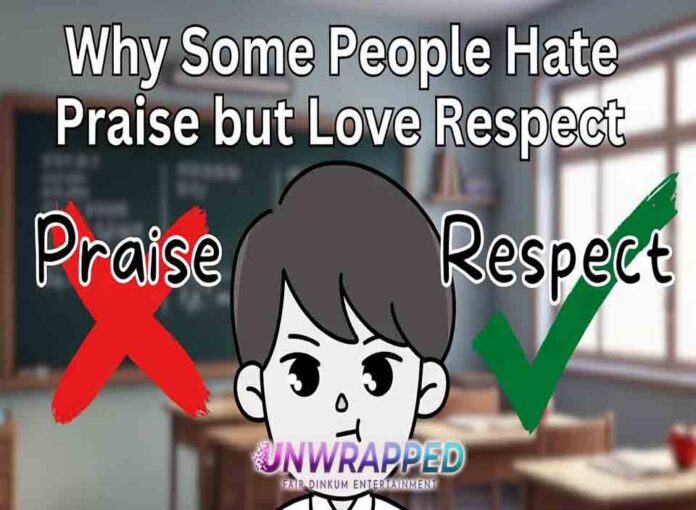
Praise is often assumed to be universally motivating. Managers are trained to give it, teachers are encouraged to use it, and relationships are advised to include it generously. Yet in real life, a surprising number of people recoil from praise—even when it’s sincere—while responding strongly to something quieter and less obvious: respect.
This isn’t contrariness or emotional coldness. It’s a difference in how people interpret social signals. For some, praise feels uncomfortable, performative, or even destabilizing. Respect, on the other hand, feels grounding. Understanding this distinction explains many workplace tensions, leadership misfires, and relationship misunderstandings that don’t improve no matter how much “positive feedback” is added.
Page Contents
TogglePraise and Respect Are Not the Same Signal
Praise and respect are often used interchangeably, but psychologically, they land very differently.
Praise highlights performance or behavior in a visible way
Respect acknowledges competence, autonomy, and boundaries
Praise says, “I see what you did.”
Respect says, “I trust who you are.”
Recognition that feels evaluative can trigger self-consciousness rather than motivation, especially in high-competence individuals.
For people who value respect, praise can feel like being put on display instead of being taken seriously.
See Also: The Hidden Personality Tax of Open-Plan Offices
Why Praise Can Feel Uncomfortable or Suspicious
People who dislike praise often don’t dislike appreciation—they dislike being positioned beneath the evaluator.
Common internal reactions to praise include:
Feeling watched or measured
Worry that expectations will now increase unfairly
Discomfort with emotional spotlight
Suspicion about hidden motives
Individuals with high self-standards or independence often experience praise as pressure rather than encouragement.
In these cases, praise doesn’t feel supportive—it feels like surveillance.
Respect Supports Autonomy, Not Performance
Respect operates differently. It doesn’t require applause or verbal affirmation. It shows up through behavior.
Respect looks like:
Being trusted with responsibility
Having opinions taken seriously
Not being micromanaged
Receiving honest, direct communication
Research from Self-Determination Theory shows that autonomy is a core driver of intrinsic motivation.
For autonomy-driven people, respect fuels growth more effectively than praise ever could.
Early Experiences Shape Feedback Preferences
People’s reactions to praise are often shaped early in life. Some grew up in environments where praise was:
Conditional
Used to control behavior
Followed by raised expectations or pressure
Others experienced praise as inconsistent or performative, making it feel unreliable.
As adults, these individuals may prefer respect because it feels stable and non-invasive. Respect doesn’t fluctuate with mood or performance—it’s embedded in how someone is treated.
Reinforcement styles in childhood strongly influence adult sensitivity to feedback.

Why Respect Feels Safer Than Praise
Praise is public. Respect is structural.
Praise often:
Draws attention
Creates comparison
Invites judgment
Respect:
Reduces friction
Signals trust
Preserves dignity
For people who value internal motivation, respect communicates, “You don’t need to prove yourself again.”
Employees who feel respected show higher engagement than those who receive frequent praise without trust or autonomy.
Cultural and Personality Differences Matter
Not all cultures or personalities prioritize praise. In some contexts, overt praise is seen as unnecessary, embarrassing, or even disrespectful.
People more likely to prefer respect over praise often:
Value competence over visibility
Associate praise with hierarchy
Prefer private validation
Focus on mastery rather than affirmation
Motivation strategies fail when they ignore individual differences in how people experience recognition.
One-size-fits-all praise strategies frequently miss their mark.
The Hidden Cost of Over-Praising the Wrong People
When praise is used indiscriminately, it can backfire.
Negative outcomes include:
Reduced risk-taking
Increased self-monitoring
Quiet disengagement
Emotional withdrawal
People who crave respect may interpret excessive praise as a lack of seriousness. Instead of feeling valued, they feel underestimated.
Ironically, they may work harder in environments that offer less praise but more trust.
People Also Love: Why “Leadership” Doesn’t Look One Way
How to Show Respect Without Awkward Praise
Respect doesn’t require silence—it requires precision.
Effective ways to communicate respect include:
Asking for input before decisions
Giving ownership, not just tasks
Offering direct, honest feedback
Avoiding performative compliments
When appreciation is needed, framing matters. Acknowledging impact without emotional inflation is often the sweet spot.
For example:
Instead of “You’re amazing,” say “Your judgment held up under pressure.”
Instead of public praise, offer private acknowledgment paired with trust.
Call to Action
If this article clarified a pattern you’ve seen at work or in relationships, share it with someone who leads, teaches, or manages others. Subscribe for more deep dives into personality differences, motivation, and human behavior.
Conclusion
Some people grow with applause. Others grow with trust.
Disliking praise doesn’t mean someone is ungrateful or emotionally closed—it often means they value autonomy, dignity, and competence over visibility. Respect communicates confidence in someone’s capacity, not approval of a single moment.
When respect replaces performative praise, many people don’t just feel better—they do better.
Another Must-Read: Why Some People Need Praise to Grow