



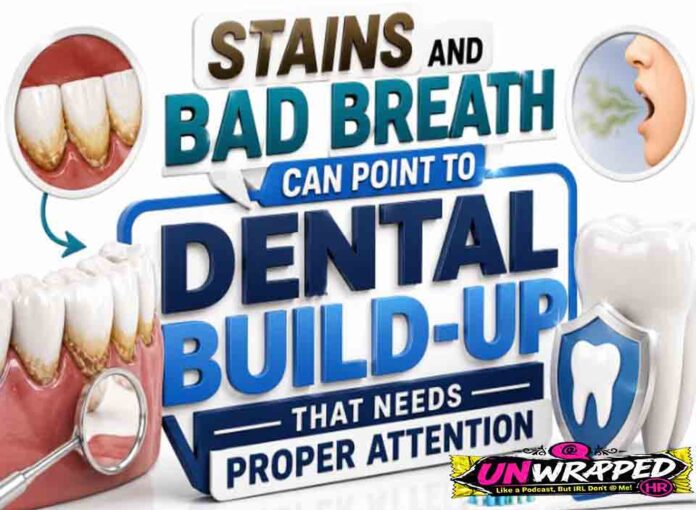
You brush your teeth every day, but your breath still does not feel fresh. Maybe your teeth are looking more yellow than usual, or you have noticed rough patches near the gum line that do not disappear no matter how much you brush. These are common signs people often ignore until discomfort or gum problems begin.
In many cases, persistent stains and bad breath are linked to plaque and tartar build-up that requires more than regular brushing at home. While daily oral care is important, hardened deposits can only be removed professionally once they settle on the teeth.
Why Plaque and Tartar Build Up Happens
Plaque is a sticky film of bacteria that constantly forms on teeth throughout the day. It develops when bacteria mix with saliva and food particles, especially sugars and carbohydrates. If plaque is not removed properly through brushing and flossing, it begins to harden into tartar, also known as dental calculus. Unlike plaque, tartar cannot be removed with brushing alone.
Tartar commonly forms around the gum line and between teeth, where toothbrushes often miss. Over time, the rough surface attracts even more bacteria and stains, making oral hygiene increasingly difficult.
How Dental Build-Up Causes Stains
Many people associate stained teeth only with coffee, tea, wine, or smoking. While these factors contribute, plaque and tartar also play a major role. Plaque creates a sticky surface that easily traps pigments from food and drinks. As tartar hardens, it can appear yellow, brown, or darker near the gums.
This type of staining often does not improve with whitening toothpaste because the issue is not just surface discolouration. The hardened deposits underneath need to be professionally removed first.
Ignoring these stains can also allow bacteria to continue building up around the gums, increasing the risk of inflammation and gum disease.
The Link Between Build-Up and Bad Breath
Persistent bad breath is another strong indicator that plaque and tartar may be accumulating in the mouth. Bacteria feed on trapped food particles and release unpleasant-smelling compounds as they break them down.
When tartar forms, it creates rough areas where bacteria collect more easily. Food debris and bacteria become trapped around the gum line and between teeth, leading to ongoing odour even after brushing. Some people try to mask the smell with mouthwash or mints, but this only provides temporary relief if the underlying build-up remains untreated. Bad breath linked to dental build-up is often accompanied by swollen gums, bleeding while brushing, or a bad taste in the mouth.
Why Home Cleaning Is Not Always Enough
Brushing twice daily and flossing regularly remain essential for maintaining oral health. However, once tartar develops, it attaches firmly to the teeth and below the gum line. Professional cleaning becomes necessary because tartar cannot be safely removed at home without damaging the teeth or gums.
A proper dental check up and clean allows a dentist or hygienist to remove hardened deposits, assess gum health, and identify early signs of decay or gum disease before they worsen. Many people delay professional cleaning because there is no pain initially. Unfortunately, plaque and tartar can continue progressing silently for months or years.
Risks of Ignoring Dental Build-Up
Untreated plaque and tartar can lead to more serious oral health issues over time. The most common problem is gingivitis, which causes red, swollen, or bleeding gums. If left untreated, gingivitis may progress into periodontal disease, which affects the structures supporting the teeth. Advanced gum disease can eventually lead to gum recession, loose teeth, infections, and tooth loss.
Plaque build-up also increases the risk of cavities because bacteria produce acids that gradually damage tooth enamel. In some cases, ongoing bad breath may also affect confidence, social interactions, and overall quality of life.
Signs You Should Not Ignore
Certain symptoms strongly suggest that professional attention may be needed. Persistent bad breath that does not improve with brushing is one common warning sign. Yellow or brown deposits near the gums are another. You may also notice gums bleeding during brushing or flossing, increased tooth sensitivity, or a rough feeling on the teeth when running your tongue across them. Even if there is no pain, these symptoms should not be ignored because dental problems often progress gradually.
Preventing Future Build-Up
Preventing plaque and tartar requires consistency rather than aggressive cleaning. Brushing twice daily with fluoride toothpaste, flossing every day, and limiting sugary foods all help reduce bacterial growth. Staying hydrated is also important because saliva helps naturally clean the mouth.
Regular professional cleaning remains one of the most effective ways to manage build-up before it develops into more serious problems. For people prone to tartar accumulation, more frequent cleaning may be recommended depending on their oral health condition.
Conclusion
Stains and persistent bad breath are not always cosmetic concerns. In many cases, they are early signs of plaque and tartar build-up that need proper professional attention. Ignoring these symptoms can allow bacteria to continue damaging teeth and gums over time. While daily brushing and flossing are essential, hardened tartar cannot be removed at home safely. Recognising the signs early and seeking appropriate dental care helps prevent more serious oral health complications later.
FAQs
- What causes plaque and tartar build-up?
Plaque forms when bacteria mix with food particles and saliva. If not removed, it hardens into tartar over time. - Can tartar cause bad breath?
Yes. Tartar traps bacteria and food particles, which can create persistent bad breath. - Why do my teeth still look stained after brushing?
Surface stains and tartar deposits often cannot be removed with regular brushing alone. - Can I remove tartar at home?
No. Hardened tartar usually requires professional dental cleaning for safe removal. - How often should I get a dental cleaning?
Most people benefit from professional cleaning every six months, although some may need it more frequently. - Is bleeding while brushing a sign of build-up?
Yes. Bleeding gums can indicate plaque accumulation and early gum disease.