



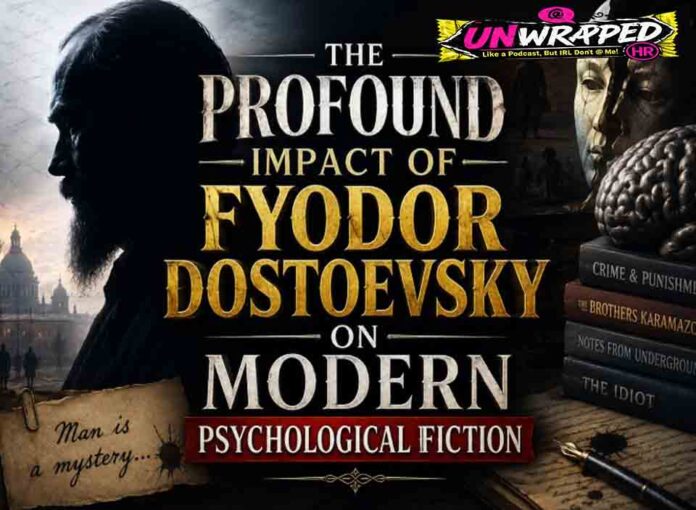
Fyodor Dostoevsky changed the direction of narrative focus toward the human mind. His influence shaped psychological fiction in a way that still feels active today. Modern writers often build stories around inner pressure and moral weight. His legacy lives in character driven storytelling that values thought over action.
Interest in his ideas remains strong across literature studies and reading culture. Many readers explore classic writing through free books collections that open access to older texts. This access keeps psychological storytelling in circulation and supports a wider understanding of narrative depth.
Origins Of Psychological Depth
Psychological fiction draws early strength from attention to inner struggle. Characters became more than figures in action. They turned into minds filled with doubt and reflection. This shift changed how stories develop and how meaning forms inside them.
His influence encouraged writers to treat thought as the main space of drama. External events became less important than inner response. This approach created a path for modern fiction that focuses on mental experience and emotional tension.
Inner Conflict And Narrative Voice
Inner conflict became a core element of psychological storytelling. Characters often carry opposing thoughts that guide their actions. This creates tension that feels close to real human behavior. Narrative voice also became more fluid and open to variation.
Multiple layers of voice inside one story reflect unstable perception. This style allows fiction to show shifting emotion without explanation. It builds a sense of movement inside the mind rather than fixed description.
Literary Techniques That Shaped Modern Writing
His methods shaped how modern psychological fiction builds meaning. Focus moved toward internal reaction and moral weight. This shift still defines many forms of narrative today.
Several core techniques continue to influence modern psychological fiction today:
Fragmented dialogue and thought flow
Fragmented dialogue allows thoughts to appear in a raw form. Characters shift between ideas without smooth transition. This method reflects how the mind often works under stress. It removes polished structure and brings direct expression. The technique influences many modern psychological novels that aim to capture unstable emotion. Scenes feel immediate and personal. The reader follows mental movement rather than structured speech. This creates tension and realism that shapes the entire reading experience in subtle ways.
Moral uncertainty in character design
Modern psychological fiction often draws from moral uncertainty. Characters do not follow fixed paths of right or wrong. Their decisions emerge from pressure and confusion. This approach reflects human complexity in real life. It allows stories to avoid simple judgment and instead present layered behavior. The influence of this method leads to richer storytelling that values ambiguity. Each action can carry hidden motives. Each choice can shift meaning over time depending on context and reflection.
Focus on interior perception
Focus on interior perception changes how stories are built. The outer world becomes less important than the inner response. Scenes often describe thoughts sensations and emotional reactions in detail. This style shapes psychological fiction into a study of awareness itself. It encourages attention to small mental shifts that define character identity. The influence remains strong in modern writing where inner experience drives narrative structure and emotional tone.
The influence of these techniques remains visible across modern storytelling. Psychological fiction uses them to explore identity and memory. The legacy continues through writers who focus on mental depth and emotional truth. This creates a bridge between past literature and present forms.
Lasting Cultural Echoes
The cultural impact extends beyond literature. It shapes film theater and modern narrative games. The focus on mind driven stories continues to evolve. Audiences respond to complex characters who carry internal conflict. This reflects a long tradition that values psychological realism over simple storytelling.
Modern storytelling continues to adapt these ideas in new forms. The attention to inner life remains central. Writers and creators draw from this legacy to build depth in their work. The result is a lasting framework for psychological expression.