



Why does my belly button smell?
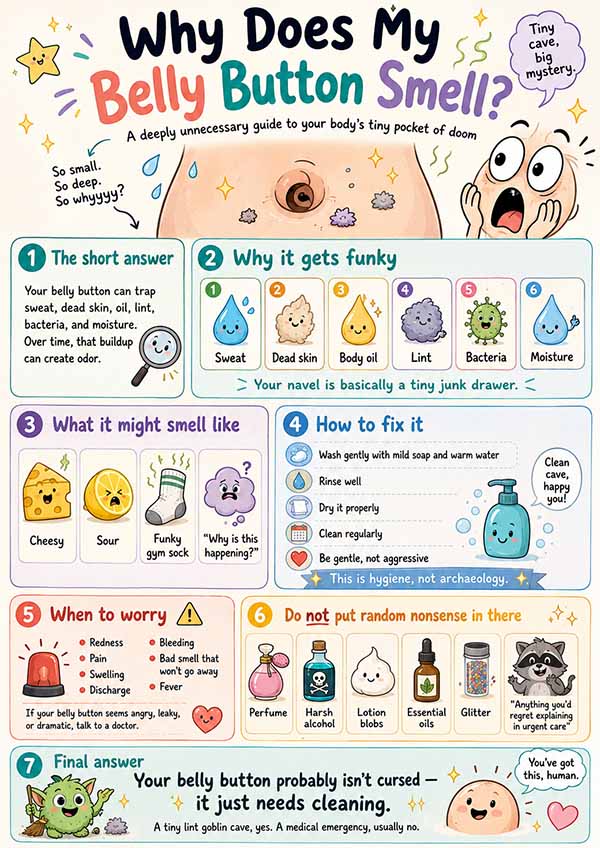
Your belly button smells because it is basically a tiny biological junk drawer. Sweat, dead skin cells, body oils, lint, bacteria, and moisture can all get trapped inside it. Leave that little cave alone for long enough and it may start smelling like an abandoned gym sock with emotional issues.
If you are wondering how to get rid of belly button smell, it helps to understand what causes it in the first place. Most of the time, a smelly belly button is caused by simple buildup.Your navel has folds and creases that can trap sweat, dirt, dead skin, and other debris, which can create odor over time. Cleveland Clinic says yeast infections, cysts, and infected piercings can also be causes of belly button problems.
So, no, you are not necessarily rotting from the middle.
But yes, your belly button may be running a small illegal composting operation.
What even is a belly button?
Your belly button, also called your navel or umbilicus, is the scar left behind after your umbilical cord was cut when you were born.
Beautiful? Sort of.
Useful now? Not really.
Aesthetic? Depends how emotionally prepared you are to inspect it.
For some people, the belly button is shallow and easy to clean. For others, it is a deep mysterious portal where lint goes to become folklore. If you have an “innie,” your belly button can trap more stuff, which means it may be more likely to smell if it is not cleaned regularly.
The main reason your belly button smells
The most common reason is buildup.
Your belly button can collect:
- Sweat
- Dead skin cells
- Dirt
- Body oil
- Clothing lint
- Bacteria
- Soap residue
- Moisture
Medical News Today notes that many belly buttons are indented and can trap sweat, dead skin, and dirt, and that dirt and bacteria are common causes of belly button odor.
This is disgusting, yes.
But it is also normal.
Your skin naturally produces oil. Your body naturally sweats. Your clothes naturally shed little bits of fluff. Your belly button quietly collects the evidence like a weird little detective.
Eventually, if you do not clean it, the smell can appear.
Why does it smell cheesy?
A cheesy belly button smell usually comes from a mix of sweat, oil, dead skin, bacteria, and trapped debris.
That does not mean actual cheese is forming inside you.
Please do not check with a cracker.
The “cheesy” smell happens because skin oils and bacteria can create strong odors when they build up in warm, moist places. Belly buttons are perfect for this because they are small, folded, and often ignored during showers.
Basically, your belly button is a tiny basement apartment with poor ventilation.
Why does my belly button smell even after a shower?
Your belly button may still smell after a shower because water running over your stomach is not the same as cleaning inside your belly button.
A lot of people wash their body but skip the navel completely. The belly button needs gentle attention. Not violent excavation. Not archaeology. Just cleaning.
The issue may be:
- You are not washing inside the folds
- You are not drying it properly
- Soap or moisture is getting trapped
- There is a deeper buildup
- There may be irritation or infection
- A piercing or cyst may be involved
Cleveland Clinic recommends cleaning your belly button gently and making sure it is dry afterward because trapped moisture can contribute to irritation and infection.
Your belly button does not need a priest. It needs soap, water, and boundaries.
How to clean a smelly belly button
Here is the simple version.
Wash it gently with mild soap and warm water. Use your finger or a soft washcloth. Rinse well. Dry it properly afterward.
That is it.
Do not go in there like you are mining for ancient treasure.
Easy belly button cleaning routine
- Wash your hands.
- Use warm water and mild soap.
- Gently clean around and inside the belly button.
- Rinse away soap.
- Pat dry with a clean towel.
- Make sure no moisture is trapped inside.
For deeper innies, you can gently clean with a cotton swab, but do not shove it in aggressively. Your belly button is not a vending machine that ate your money.
Should you use alcohol or hydrogen peroxide?
Usually, no.
Alcohol and hydrogen peroxide can irritate skin, especially if your belly button is already sore, dry, cracked, pierced, or infected-looking. Mild soap and water is usually enough for normal cleaning.
If there is pain, swelling, discharge, bleeding, rash, or a smell that does not go away after gentle cleaning, it is better to speak to a doctor rather than attack your navel with bathroom chemicals.
Your belly button is weird, but it is still attached to you.
Can a belly button get infected?
Yes, a belly button can get infected.
A smelly belly button is often just buildup, but odor plus other symptoms can point to infection. Cleveland Clinic explains that yeast can overgrow in warm, moist areas like the belly button and may cause redness, itching, burning, swelling, or discharge.
Possible signs of a belly button infection include:
- Bad smell that does not improve
- Redness
- Pain or tenderness
- Swelling
- Itching
- Burning
- Discharge
- Crusting
- Bleeding
- Warm skin around the navel
If your belly button looks angry, wet, crusty, swollen, or like it has started making its own decisions, get it checked.
See Also: Why Do Humans Have Butt Hair? The Absurdly Serious Guide to Your Rear-End Forest
Why does my belly button smell like fish?
A fishy smell can happen when bacteria build up, but it can also be a sign of infection. The exact smell is not enough to diagnose the cause.
If the smell is mild and there are no other symptoms, cleaning and drying the area may fix it. If there is discharge, pain, redness, swelling, or the smell keeps coming back, speak to a healthcare professional.
Your belly button should not smell like low tide.
Why does my belly button smell like poop?
A poop-like smell is usually from bacteria, sweat, trapped debris, or infection. It does not usually mean poop is inside your belly button, unless your life has taken a very unusual turn.
But a strong foul odor, especially with discharge, pain, swelling, or fever, should be taken seriously.
Your navel should not smell like a haunted toilet.
Why does my belly button smell and leak fluid?
Fluid or discharge can happen with infections, cysts, irritated piercings, or other skin problems. Healthline notes that odor can come from buildup, infection, or skin conditions such as cysts, and recommends seeing a doctor if the smell remains after cleaning.
Possible discharge colors include:
- Clear
- White
- Yellow
- Green
- Brown
- Bloody
Do not ignore smelly discharge. A little lint is funny. A leaking belly hole is not a hobby.
Can belly button piercings smell?
Yes. Belly button piercings can smell if sweat, bacteria, dead skin, or discharge builds up around the jewelry. A piercing can also get infected, especially if it is new, irritated, or not cleaned properly.
Watch for:
- Redness
- Swelling
- Heat
- Pain
- Pus
- Crusting
- Bad odor
- Jewelry rejection or migration
If your piercing smells but looks normal, gentle cleaning may help. If it is painful, swollen, leaking pus, or getting worse, get medical advice.
Do not simply spin the jewelry and hope for the best like you are unlocking a cursed safe.
Can belly button lint cause smell?
Yes, belly button lint can contribute to smell if it mixes with sweat, oil, dead skin, and bacteria.
Belly button lint usually comes from clothing fibers. Hair around the stomach can help move fibers toward the belly button, where they collect like tiny fabric tumbleweeds.
Belly button lint by itself is not usually dangerous. It is just strange. Humanity has built satellites, cured diseases, and invented microwave pizza, yet we still generate pocket fluff in our torsos.
Nature is not serious.
What is a belly button stone?
A belly button stone, also called an omphalolith, is a hardened buildup of sebum, dead skin, dirt, and debris inside the navel.
Yes. Belly button stones are real.
No. You should not try to become a belly button geologist.
They can happen when material builds up over time, especially in deep belly buttons. They may look dark, hard, or waxy and can sometimes smell bad. If you think you have one, it is best to let a healthcare professional remove it safely, especially if there is pain, bleeding, swelling, or discharge.
How often should you clean your belly button?
You should clean your belly button regularly as part of normal bathing.
For most people, that means whenever you shower or bathe. If you sweat a lot, exercise often, have a deep innie, have a piercing, or notice odor easily, you may need to pay more attention to it.
The goal is not to obsess over it. The goal is to stop treating it like a forbidden cave.
What not to put in your belly button
Please do not put random nonsense in your belly button.
Avoid:
- Perfume
- Harsh alcohol
- Hydrogen peroxide unless told by a clinician
- Thick lotion inside the navel
- Essential oils
- Glitter
- Food
- Coins
- “Just seeing what fits” objects
- Anything you would be embarrassed to explain in urgent care
Your belly button is not storage.
When should you worry about belly button smell?
You should speak to a doctor if your belly button smell does not go away after cleaning or if it comes with other symptoms.
Get medical advice if you notice:
- Persistent bad smell
- Pain
- Swelling
- Redness
- Heat
- Pus
- Bleeding
- Fever
- A lump or cyst
- A rash
- Discharge
- A piercing that looks infected
Baptist Health lists accumulation of dirt and debris, infection, and cysts as primary causes of belly button odor, and persistent symptoms may need medical attention.
Basically: if your belly button has gone from “a bit funky” to “I think it has formed a government,” get help.
How to prevent belly button smell
Preventing belly button smell is mostly about keeping the area clean and dry.
Try this:
- Wash it gently in the shower
- Rinse out soap
- Dry it properly
- Wear breathable clothing
- Change sweaty clothes after exercise
- Clean piercings as advised
- Avoid trapping lotion or oil inside
- Do not ignore redness or discharge
The big secret is boring: clean it, dry it, leave it alone.
Your belly button does not need a 12-step skincare routine. It needs basic hygiene and less mystery.
Frequently asked questions
Is it normal for your belly button to smell?
A mild smell can happen, especially if sweat, lint, oil, or dead skin builds up. But a strong, persistent, painful, or discharge-related smell is not something to ignore.
Why does my belly button smell sour?
A sour smell may come from sweat, bacteria, moisture, or yeast. If it clears after cleaning, it may just be buildup. If it keeps returning or comes with itching, redness, or discharge, get it checked.
Why does my belly button smell when I touch it?
Touching your belly button may disturb trapped debris or bacteria, releasing the odor. It may also mean the inside needs cleaning.
Can belly button smell be caused by sweat?
Yes. Sweat can collect inside the navel, especially after exercise, hot weather, or tight clothing.
Can belly button smell go away on its own?
If it is caused by minor buildup, yes, cleaning and drying may fix it. If it is caused by infection, cysts, or piercing problems, it may need treatment.
Should I be embarrassed?
No. Bodies are weird. Every human is basically a haunted meat saxophone with chores.
Final answer: your belly button smells because it is a tiny lint goblin cave
A smelly belly button is usually caused by trapped sweat, dead skin, bacteria, dirt, oil, and lint. Most of the time, gentle cleaning and drying will sort it out.
But if the smell is strong, persistent, painful, leaky, red, swollen, or crusty, do not ignore it. Get medical advice.
Your belly button is probably not cursed.
But it is definitely suspicious.
People Also Love: Types of Dingleberries: A Serious Field Guide to Humanity’s Most Undignified Rear-End Hitchhikers