



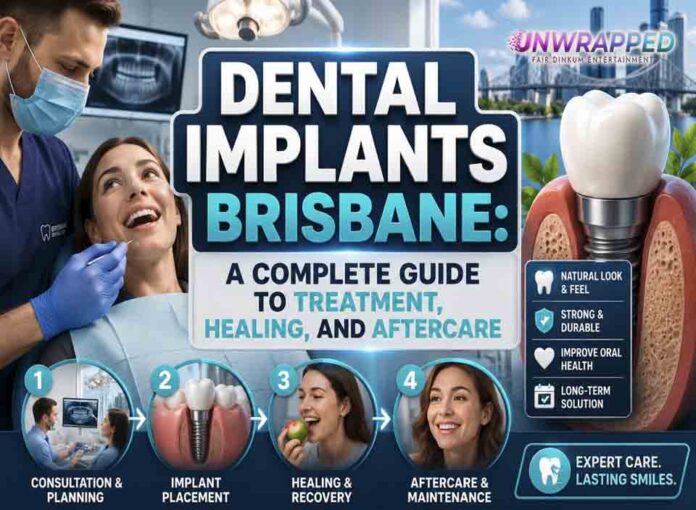
If you are looking into dental implants in Brisbane, you are likely trying to understand more than the treatment itself. You want to know what happens during the process, how long healing takes, what aftercare involves, and whether dental implants suit your mouth, health, and budget.
Dental implants are used to replace missing teeth. They act as artificial tooth roots placed into the jawbone. Once healing has taken place, they support a crown, bridge, or full-arch replacement teeth.
At Springfield Dental, dental implant treatment starts with a consultation. Your dentist checks your teeth, gums, jawbone, bite, medical history, and treatment goals before discussing suitable options. This helps you understand what is realistic for your situation before making a decision.
What Are Dental Implants?
Dental implants are small titanium or ceramic posts placed into the jawbone to support replacement teeth.
They are commonly used for one missing tooth, several missing teeth, loose or uncomfortable dentures, full-mouth tooth replacement, teeth lost due to decay, gum disease, trauma, or ageing.
A dental implant does not replace the visible tooth straight away. The implant first needs time to heal and bond with the jawbone. This process is called osseointegration.
Why Do People Choose Dental Implants?
People often consider dental implants because missing teeth affect more than appearance. A missing tooth might change how you chew, speak, and clean your mouth. It might also place extra pressure on nearby teeth.
Dental implants are often discussed when a patient wants:
- A fixed tooth replacement option
- Better chewing support than removable dentures
- A solution that does not rely on neighbouring teeth
- Support for a crown, bridge, or full arch
- Improved comfort when eating and speaking
- A long-term replacement option with proper care
Dental implants are not suitable for everyone. Your dentist needs to assess your gum health, jawbone support, medical history, and oral hygiene before recommending treatment.
Who Might Be Suitable for Dental Implants?
You might be suitable for dental implants if you have one or more missing teeth and enough healthy jawbone to support an implant.
Your dentist will also check:
- Your gum health
- Your bone density
- Your bite pressure
- Your smoking history
- Your medical conditions
- Your medication use
- Your oral hygiene routine
- Your healing ability
- Your expectations
If you have gum disease, your dentist will usually treat it before implant placement. If you have bone loss, bone grafting might form part of your treatment plan.
Who Might Not Be Suitable Straight Away?
Some patients need extra care before dental implant treatment starts.
This includes patients with:
- Active gum disease
- Untreated tooth decay
- Poor oral hygiene
- Heavy smoking habits
- Uncontrolled diabetes
- Certain bone conditions
- Certain medications affecting healing
- Not enough jawbone support
This does not always mean implants are ruled out. It means your dentist needs to manage risk and plan treatment carefully.
Types of Dental Implant Treatment
- Single Tooth Dental Implant
A single dental implant replaces one missing tooth. The implant is placed in the jawbone. After healing, a crown is attached to the implant.
This option is often used when one tooth is missing and the neighbouring teeth are healthy.
- Multiple Dental Implants
If several teeth are missing, your dentist might discuss implant-supported bridges. This means two or more implants support a row of replacement teeth.
This avoids placing one implant for every missing tooth in some cases.
- Implant-Supported Dentures
Implant-supported dentures attach to implants for improved stability compared with regular removable dentures.
They still need cleaning and maintenance. Your dentist will explain whether they are fixed or removable.
- All-On-4 Dental Implants Treatment
All-On-4 treatment is used for people missing most or all teeth in one jaw. It uses a set number of implants to support a full arch of replacement teeth.
All-On-4 Dental Implants Brisbane treatment needs detailed planning. Your dentist will assess your jawbone, bite, medical history, and current teeth before confirming whether this approach suits you.
What Happens During Dental Implant Treatment?
Dental implant treatment usually happens in stages. The exact process depends on your mouth, health, and treatment plan.
Step 1: Consultation and Assessment
Your dentist will check your mouth and ask about your health history. This appointment helps identify whether implants are suitable.
The consultation might include:
- Dental examination
- Gum assessment
- Bite assessment
- X-rays or 3D scans
- Discussion of missing teeth
- Review of medical history
- Treatment planning
- Cost discussion
You should ask questions at this stage. Good implant planning starts with clear information.
Step 2: Treatment Planning
Your dentist will explain the treatment options available to you. This might include a single implant, multiple implants, implant-supported dentures, or All-On-4 treatment.
Your plan should cover:
- Number of implants
- Expected timeline
- Healing stages
- Possible need for bone grafting
- Risks and limitations
- Aftercare needs
- Estimated costs
- Review appointments
Step 3: Implant Placement
During implant placement, the dentist places the implant into the jawbone. Local anaesthetic is used. Some patients might also discuss comfort options depending on their medical history and treatment needs.
After placement, the gum area needs time to heal.
Step 4: Healing Period
The implant needs time to bond with the jawbone. This healing process often takes several months. The timeline depends on your bone quality, treatment type, general health, and whether extra procedures were needed.
Step 5: Final Tooth or Teeth
Once healing is complete, your dentist places the final crown, bridge, or full-arch teeth. Your bite is checked to make sure the replacement teeth sit correctly.
How Long Does Dental Implant Healing Take?
Dental implant healing often takes a few months. Some patients heal faster than others. Your dentist will give a timeline based on your treatment.
Healing depends on bone quality, gum health, Implant location, number of implants, smoking, medical conditions, oral hygiene, Bone grafting needs.
Your mouth might feel better after the early healing period, but the implant still needs time to bond with the jawbone. This is why follow-up appointments matter.
What Should You Expect After Dental Implant Surgery?
After implant surgery, it is normal to have some swelling, tenderness, light bleeding, and mild discomfort. Your dentist will give you aftercare instructions.
You should follow these instructions carefully.
Common early aftercare advice includes:
- Rest after treatment
- Avoid touching the area
- Use medication as directed
- Avoid smoking
- Avoid alcohol in the early healing period
- Eat soft foods
- Keep the mouth clean
- Attend review appointments
- Contact the clinic if pain, swelling, bleeding, or fever worsens
What Should You Eat After Dental Implant Treatment?
Soft foods are usually recommended in the early healing stage.
Suitable foods might include soup, not too hot; mashed vegetables; scrambled eggs; yoghurt; smoothies without a straw; soft pasta; oats; and soft fish.
Avoid hard, sticky, crunchy, or spicy foods during early healing unless your dentist advises otherwise.
You should also avoid chewing directly on the implant area while it heals.
How Do You Care for Dental Implants?
Dental implants need regular cleaning. They are not natural teeth, but the gum and bone around them still need care.
Daily care includes:
- Brushing twice a day
- Cleaning around the implant
- Using floss or interdental brushes if advised
- Following your dentist’s cleaning instructions
- Attending regular dental reviews
- Avoiding smoking
- Managing gum health
- Wearing a night guard if you grind your teeth and your dentist recommends one
- Poor cleaning around implants increases the risk of inflammation and implant complications.
What Are the Risks of Dental Implants?
All dental treatments carry risks. Your dentist should explain these before treatment begins.
Possible risks include:
- Infection
- Delayed healing
- Gum inflammation
- Implant movement
- Implant failure
- Nerve irritation
- Sinus issues for upper back teeth
- Bite pressure problems
- Bone loss around the implant
These risks vary from patient to patient. A careful assessment helps reduce risk, but no dental treatment has a guaranteed outcome.
Do dental implants hurt?
Dental implant placement is done with anaesthetic, so the area is numb during treatment. After the procedure, some soreness and swelling are expected.
Most patients manage early discomfort with aftercare instructions and suitable pain relief. If pain becomes worse instead of better, you should contact your dentist.
How Much Do Dental Implants Cost in Brisbane?
The cost of dental implants in Brisbane varies because each case is different
Cost depends on number of implants, type of replacement teeth, need for scans, need for bone grafting, gum treatment, complexity of surgery, materials used, laboratory work, review appointments.
A single implant has a different cost from full-arch treatment such as All-On-4 Dental Implants Brisbane. Your dentist should provide a treatment plan after your consultation.
What Questions Should You Ask Before Treatment?
Before starting dental implant treatment, ask:
- Am I suitable for dental implants?
- Do I have enough bone?
- Do I need gum treatment first?
- Do I need bone grafting?
- How long will treatment take?
- What are the risks in my case?
- What happens if healing takes longer?
- What aftercare will I need?
- How often do I need reviews?
- What costs are involved?
- What alternatives should I consider?
These questions help you make a more informed decision.
What Are the Alternatives to Dental Implants?
Dental implants are one option, not the only option.
Your dentist might also discuss dental bridges, partial dentures, full dentures, resin-bonded bridges, No replacement, if clinically appropriate.
Each option has pros and limits. The right choice depends on your mouth, budget, health, and comfort needs.
Springfield Dental and Dental Implant Care in Brisbane
Springfield Dental provides dental services for patients looking for clear advice about tooth replacement, dental implants, and ongoing oral health care.
If you are considering Dental Implants Brisbane, the team will assess your mouth first and explain whether implants, bridges, dentures, or another option suits your needs.
Springfield Dental also provides a range of dental services, including:
General dentistry, Emergency dental care, Dental check-ups and cleans, Tooth-coloured fillings, Crowns and bridges, Teeth whitening, Veneers, Dental implants, All-On-4 treatment.
If your treatment involves appearance, function, and bite planning, Springfield Dental also provides services often searched for under cosmetic dentist Brisbane. This might include crowns, veneers, whitening, and restorative options after a clinical assessment.
How Long Do Dental Implants Last?
Dental implants are designed as a long-term tooth replacement option, but their lifespan depends on care, health, bite forces, and regular maintenance.
Good care includes daily cleaning, dental reviews, gum checks, and prompt treatment if problems develop.
Smoking, gum disease, poor cleaning, uncontrolled health conditions, and heavy grinding increase the risk of complications.
FAQs About Dental Implants Brisbane
- Are dental implants suitable for older adults?
Age alone does not decide suitability. Gum health, bone support, medical history, and healing ability matter more. Your dentist will assess these before recommending implants.
- How soon after tooth removal do I need an implant?
Timing varies. Some patients need healing time after extraction. Others might suit earlier implant planning. Your dentist will check the socket, bone, gum tissue, and infection risk.
- What is the difference between a dental implant and a bridge?
A dental implant replaces the tooth root and supports a crown. A bridge uses nearby teeth for support. Your dentist will explain which option suits your mouth.
- Do dental implants need special cleaning?
Yes. You need to clean carefully around the implant and gumline. Your dentist or hygienist will show you the right tools.
- What happens if I do not have enough bone?
Your dentist might discuss bone grafting or alternative treatment options. This depends on the amount of bone loss and the implant location.
- Is All-On-4 suitable for everyone?
No. All-On-4 needs a detailed assessment. Your dentist will check your jawbone, bite, gum health, medical history, and expectations before discussing suitability.
- Will I be without teeth during treatment?
This depends on your treatment plan. Some patients receive temporary teeth during healing. Your dentist will explain your options before treatment starts.
- How often do dental implants need review appointments?
Your dentist will set a review schedule based on your risk level. Regular check-ups help detect gum inflammation, bite problems, and cleaning issues early.
Final Thoughts
Dental implants involve more than replacing a missing tooth. The process includes planning, surgery, healing, final tooth placement, and long-term aftercare.
If you are considering Dental Implants Brisbane, start with a proper consultation. Ask clear questions. Understand the risks, costs, healing time, and maintenance needs before making a decision.
Springfield Dental provides dental implant consultations and wider dental care for patients who want practical advice about tooth replacement, oral health, and treatment options in Brisbane.