



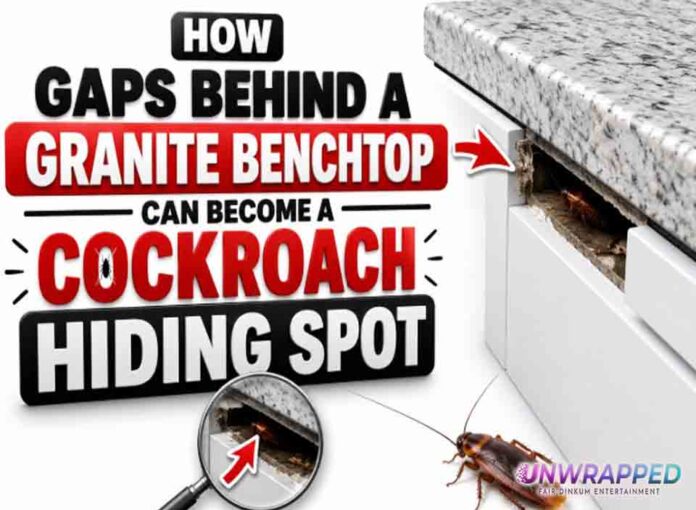
You clean the kitchen regularly, wipe down the benchtops every night, and still somehow spot a cockroach disappearing behind the counter. For many Australian homeowners, this is where the frustration starts. The kitchen may appear spotless on the surface, yet hidden gaps behind a granite benchtop can quietly become an ideal hiding area for cockroaches.
These narrow spaces are often overlooked during cleaning and inspections. However, once cockroaches settle into these concealed areas, the infestation can become difficult to control without addressing the underlying structural problem.
Why Cockroaches Are Drawn to Benchtop Gaps
Cockroaches actively seek environments that provide warmth, moisture, darkness, and easy access to food. Kitchens naturally offer all of these conditions, especially around sinks, appliances, and cabinetry.
Even a small gap between a wall and a benchtop can become an attractive hiding spot. These spaces are usually dark, undisturbed, and close to food preparation areas. Tiny crumbs, grease residue, and moisture from sinks or splashback areas create a stable environment where cockroaches can survive and breed.
In many kitchens, the problem develops gradually. Small openings around cabinetry, plumbing penetrations, or poorly sealed benchtop edges allow cockroaches to move freely behind surfaces without being noticed.
Why Granite Benchtops Create Ideal Hiding Areas
Granite itself does not attract cockroaches. The issue lies in the installation gaps and concealed cavities around the benchtop structure. When granite benchtops are installed, tiny spaces can remain between the stone, cabinetry, splashback, or adjacent walls. Over time, movement in the home, moisture exposure, or worn sealants may widen these gaps slightly.
Cockroaches prefer tight spaces where their bodies touch surfaces on multiple sides. This instinct helps them feel protected from predators and disturbance. Narrow crevices behind benchtops provide exactly that type of shelter.
The area becomes even more attractive if it is located near dishwashers, sinks, coffee machines, or refrigerators, where warmth and condensation are common. Kitchens consistently rank among the most common indoor infestation zones because they provide easy access to food and water.
Common Signs of Hidden Cockroach Activity
Cockroach infestations behind benchtops are often difficult to detect early because the insects remain concealed during the day. One of the first signs is seeing cockroaches emerge at night around kitchen counters or sinks. You may also notice droppings that resemble black pepper or coffee grounds near cupboard corners or along benchtop edges.
A persistent musty smell can also indicate hidden activity. Larger infestations sometimes produce an oily odour caused by pheromones and accumulated waste. In some cases, homeowners hear faint rustling sounds behind cabinetry late at night, especially in quiet kitchens.
When cockroaches are regularly appearing around the same section of the benchtop, it often suggests a nearby hiding area behind the structure.
Why Cleaning Alone Often Fails
Many people respond by increasing surface cleaning, but this rarely solves the actual problem. Cockroaches hiding behind granite benchtops are protected from ordinary cleaning methods because the infestation exists inside concealed gaps and cavities. Surface sprays may kill visible insects temporarily, but the colony itself often remains hidden behind cabinetry or walls.
This is why infestations frequently return even after repeated cleaning. Effective cockroach pest control involves more than simply treating visible insects. It requires identifying and addressing the hidden spaces that allow cockroaches to shelter safely.
The Role of Moisture and Heat
Moisture plays a major role in kitchen infestations. Cockroaches can survive for extended periods with limited food, but they require regular access to water. Even minor leaks beneath sinks or condensation around appliances can sustain hidden infestations. Areas behind granite benchtops often trap humidity because airflow is limited.
Heat also contributes to the problem. Dishwashers, ovens, refrigerators, and small appliances create warm microenvironments that attract cockroaches. These insects commonly hide behind and beneath kitchen appliances because of the combination of warmth, food residue, and moisture.
Once established in these conditions, cockroach populations can grow quickly without obvious signs.
How to Reduce the Risk
The first step is identifying any visible gaps around the benchtop, splashback, cabinetry, or plumbing areas. Sealing these openings with appropriate silicone or caulking reduces access to hidden hiding spaces.
Moisture control is equally important. Leaking taps, condensation issues, or damp cabinetry should be addressed immediately. Keeping kitchen surfaces dry overnight helps make the environment less attractive to pests.
Regular deep cleaning behind appliances is also essential because grease, crumbs, and food residue commonly accumulate in these hidden areas. Food should always be stored in sealed containers, and rubbish should not be left overnight in open bins.
When Professional Pest Control Becomes Necessary
If cockroach activity continues despite cleaning and sealing efforts, the infestation is likely more established than it appears. Cockroaches nesting behind granite benchtops are difficult to eliminate completely without professional treatment because the hiding areas are often inaccessible.
Professional pest controllers use targeted baiting systems and treatments designed to reach hidden colonies rather than simply killing visible insects. In many cases, targeted bait placement inside concealed gaps is more effective than widespread spraying.
Early intervention is important because cockroach infestations can spread rapidly into surrounding cabinetry, appliances, and wall cavities.
Conclusion
Gaps behind granite benchtops may seem insignificant, but they can quickly become ideal hiding spots for cockroaches. Warmth, moisture, food residue, and dark enclosed spaces create the perfect environment for hidden infestations to develop unnoticed.
The problem often goes beyond surface cleanliness. Without addressing concealed gaps and underlying moisture issues, cockroach activity may continue returning despite repeated cleaning efforts.
Understanding how these hiding areas form is essential for effective prevention and long-term control. Proper sealing, moisture management, regular inspection, and professional treatment when necessary all play an important role in reducing the risk of infestation.
FAQs
- Why do cockroaches hide behind granite benchtops?
They are attracted to dark, narrow spaces with warmth, moisture, and nearby food sources. - Can small gaps behind a benchtop really cause an infestation?
Yes. Even tiny crevices can provide enough shelter for cockroaches to hide and breed. - Are granite benchtops themselves attracting cockroaches?
No. The issue is usually the concealed gaps and cavities around the installation rather than the granite itself. - What are the signs of cockroaches behind kitchen counters?
Common signs include droppings, musty odours, nighttime sightings, and repeated activity near the same area. - Will sealing gaps stop cockroaches completely?
Sealing gaps helps reduce hiding spots, but existing infestations may still require professional treatment. - When should I call pest control?
If cockroach sightings continue despite cleaning and sealing efforts, professional inspection and treatment are recommended.