



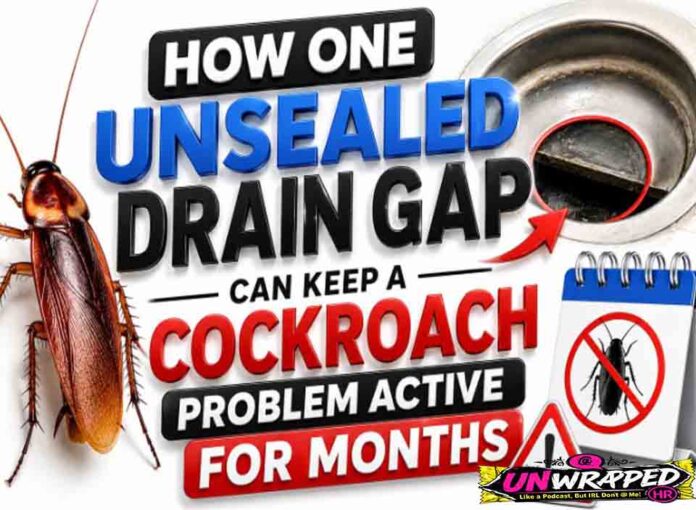
It can be frustrating to keep seeing cockroaches weeks or even months after a treatment. A homeowner may clean thoroughly, use sprays or baits, and still notice insects appearing near the kitchen sink or bathroom floor drain at night. In many cases, the ongoing issue is not the treatment itself. It is a small, unsealed drain gap that continues giving cockroaches access to moisture, shelter, and hidden travel routes inside the property.
Cockroaches are highly adaptable pests that thrive in dark, humid environments. Drain systems, pipe penetrations, and gaps around plumbing fixtures provide ideal conditions for them to survive unnoticed. Even a narrow opening around a drain pipe can allow repeated movement between wall cavities, sewer systems, and living areas.
Why Drain Gaps Attract Cockroaches
Drain areas naturally create the conditions cockroaches prefer. Bathrooms, laundries, and kitchens often contain warmth, condensation, food residue, and constant moisture. When small gaps exist around plumbing penetrations, these spaces become protected pathways for pests.
Many drain gaps develop gradually over time. Sealants shrink, tiles loosen slightly, pipe fittings shift, or renovations leave unfinished openings behind cabinets or beneath sinks. Some gaps are hidden entirely behind vanities, under flooring edges, or around old plumbing connections.
Cockroaches can flatten their bodies to squeeze through surprisingly narrow spaces. Openings around pipes, damaged seals, and loose drain fittings are common entry points that often go unnoticed for long periods.
How Cockroaches Use Plumbing Systems
Cockroaches commonly travel through drainage systems because they provide darkness, moisture, and protection from outside conditions. Sewer-connected species, particularly larger cockroaches, are known to move through drain lines and emerge through vulnerable openings inside homes.
In some homes, the issue is linked to dried-out drain traps. Floor drains or unused sinks can lose the water barrier that normally blocks pests from moving upward through the plumbing system. Once that barrier disappears, cockroaches may access internal areas more easily.
However, even functioning drains can contribute to infestations when surrounding pipe gaps remain unsealed. Cockroaches do not always come directly through the drain opening itself. They often move through the surrounding wall voids or spaces around the plumbing line. This is why persistent infestations sometimes continue despite repeated surface treatments.
Why the Problem Often Persists for Months
Many homeowners focus only on visible cockroaches without identifying the structural conditions supporting the infestation. Sprays may kill active insects temporarily, but the hidden access route remains untouched. Once cockroaches establish regular movement through a drain gap, they can continue breeding inside wall cavities, beneath cabinets, or within damp subfloor areas. Moisture from nearby plumbing also supports their survival.
Effective cockroach control usually requires more than treating exposed surfaces. The source of moisture and access must also be addressed. Otherwise, surviving insects or new arrivals continue entering the same area repeatedly.
This problem is especially common in apartment buildings and older homes where shared plumbing systems allow pests to travel between units. Even if one property is clean, cockroaches may still move through connected pipe pathways from neighbouring areas.
Signs a Drain Gap May Be Involved
Recurring activity near sinks, bathrooms, laundries, or floor drains is often a strong indicator. Cockroaches appearing mainly at night around wet areas can point to hidden plumbing access.
Other warning signs include musty odours under sinks, droppings near pipe penetrations, visible cracks around drain fittings, or insect activity returning shortly after treatment. In some cases, homeowners may notice cockroaches disappearing behind cabinetry or vanities rather than into the drain itself.
Properties with leaking pipes, excess condensation, or poorly ventilated wet areas are particularly vulnerable because moisture encourages long-term harbourage.
Why Sealing Gaps Matters
Closing drain-related entry points helps interrupt the conditions that allow infestations to continue. Proper sealing reduces movement between wall cavities and living spaces while also limiting moisture exposure around vulnerable areas.
Gaps around plumbing penetrations should be inspected carefully, especially beneath sinks, behind toilets, around floor drains, and inside cabinetry. Durable sealants suitable for wet environments are generally more effective than temporary patching materials.
Drain covers and properly maintained traps also help reduce pest movement through plumbing systems. In rarely used drains, running water regularly can help maintain the protective water barrier inside the pipe trap.
Importantly, sealing should happen alongside sanitation and moisture control. Cockroaches are less likely to remain active when food residue, leaks, and damp harbourage areas are removed.
Long-Term Prevention Starts With Structural Maintenance
Recurring cockroach issues are often linked to overlooked building maintenance rather than poor cleaning habits alone. Small plumbing gaps, deteriorated seals, and hidden moisture problems can quietly support infestations for extended periods.
Routine inspection of wet areas is important, especially in kitchens, bathrooms, and laundries. Addressing leaks quickly, repairing damaged seals, and checking around plumbing penetrations can reduce the likelihood of repeated activity.
A small unsealed drain gap may seem insignificant, but for cockroaches, it can become a reliable pathway that keeps the infestation active long after treatments have been applied.
FAQs
Can cockroaches really enter through drain gaps?
Yes. Cockroaches can squeeze through very small openings around plumbing and drain fittings, especially in damp areas.
Why do cockroaches appear mostly at night near drains?
Cockroaches are nocturnal and prefer dark, moist environments. Drains and nearby pipe gaps provide ideal shelter and movement routes.
Can clean homes still get cockroaches from drains?
Yes. Even clean homes can experience infestations if structural gaps, plumbing leaks, or connected drainage systems provide access.
Do unused drains increase the risk?
They can. Water inside drain traps may evaporate if drains are rarely used, reducing the barrier that helps block pests.
Are sprays enough to solve the problem?
Not always. Surface treatments may reduce visible activity temporarily, but infestations often continue if access points and moisture sources remain.
Which areas should be inspected first?
Check beneath sinks, around floor drains, behind toilets, around pipe penetrations, and inside cabinets where plumbing enters walls or floors.