



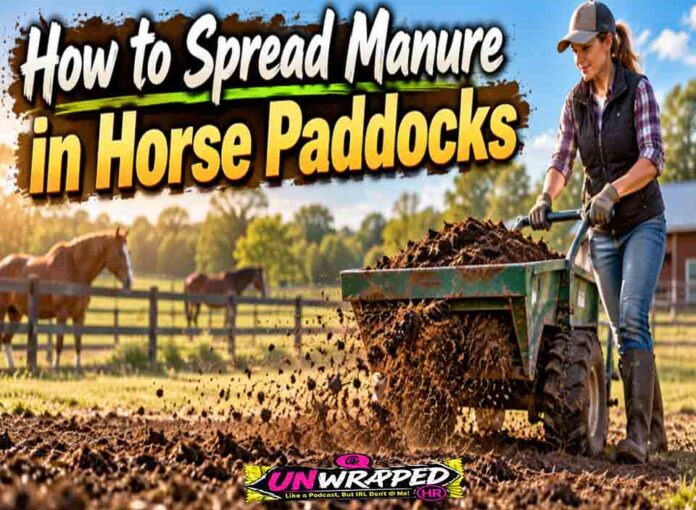
Horse manure builds up quickly in paddocks, especially around feeding areas, gateways and the places where your horses spend most of their time. If you leave it, these piles take up grazing space and make the paddock harder to manage. For smaller properties and lifestyle blocks, towing a grass harrow behind an ATV or utility vehicle is one of the simplest ways to break up the piles and spread them back across the pasture.
Why Spread Horse Manure Across the Paddock?
Horses tend to drop manure in the same areas and avoid grazing near it. Over time, the grass around these areas grows long and rank, while your horses graze other parts of the paddock right down. Spreading the manure helps even out the pasture and puts nutrients back into the parts of the paddock that need them.
Regular harrowing helps you:
- Break up large manure piles
- Spread manure evenly across the pasture
- Return nutrients to a wider area
- Smooth out minor surface unevenness
A harrow also removes dead thatch and lightly aerates the soil as it works, so you get more out of each pass.
When Is the Best Time to Spread Horse Manure?
The ground should be firm enough to take your vehicle and harrow without leaving ruts. If it’s soft or boggy, wait until it dries out, as wheels and spikes can easily damage wet pasture.
Slightly moist piles, such as after a light shower, usually break apart more easily than ones that have dried hard. Warm, dry weather after spreading then helps the manure dry out on the pasture.
When you spread manure, you also spread worm eggs and larvae across the paddock. If you harrow in warm, dry conditions and keep your horses out for a while afterwards, the sun has time to dry them out before your horses graze there again. Moving your horses out before you start also gives you room to work the paddock safely.
How Do You Spread Horse Manure With a Harrow?
A simple process is:
- Walk the paddock first: Find where manure has built up and note any obstacles.
- Hitch up the harrow: Connect the harrow to your tow ball and adjust the tow chains to suit your vehicle.
- Make steady passes across the paddock: Drive at a steady speed and let the harrow break up the manure as you move over the ground. Overlap each run slightly so you don’t leave untouched strips.
- Check your work: Look for any large clumps left behind and go over those areas again.
Using an ATV to Spread Horse Manure
An ATV suits smaller horse paddocks and lifestyle properties well. It’s easy to manoeuvre, fits through paddock gates and gets into corners where a tractor isn’t practical. You can also tow an ATV harrow with a UTV or small tractor, and a ride-on mower can pull the smaller sizes.
How ATV Harrows Break Up Manure
As you drag a triangle and chain harrow across the pasture, rigid spikes on the triangle sections break up the manure piles and scratch the soil surface. A heavy centre bar then breaks up any remaining clumps, and a flat rear section with no spikes spreads the material evenly and leaves a smooth finish.
ATV harrows with this setup come in widths from 1.1m to 2.45m. The 1.1m suits tight spaces and lower-powered ATVs or mowers, the 1.5m and 1.75m balance coverage with manoeuvrability, and the 2.0m and 2.45m suit larger properties and more powerful vehicles. Matching the width to your vehicle’s power makes the job easier and puts less strain on your ATV.
How Often Should You Harrow a Horse Paddock?
How often you harrow depends on the number of horses, the size of the paddock and how your horses use the space. A small paddock with several horses builds up manure much faster than a larger paddock with only one or two, and feeding areas, shelters and gateways usually collect more than the rest.
Check your paddocks regularly and harrow when you see large piles building up or manure collecting in certain areas.
What Should You Check Before Harrowing?
Before you start, look around the paddock for:
- Rocks and fallen branches
- Holes or uneven ground
- Fences and gates
- Water troughs and other paddock equipment
- Areas where horses have badly damaged the pasture
Give the harrow a quick check too, looking over the chains, spikes and hitch points before you use it.
What If Manure Has Built Up in Large Piles?
Large, compacted piles often need more than one pass. Go over the area once and check how well the manure has broken apart. If large clumps remain, make another pass from a different direction, so you spread the manure out instead of pushing it into a new pile.
On rough ground, the harrow can bounce around. Some ATV harrows take optional drag weights, which keep the harrow steadier.
Spread Manure Without Overworking the Pasture
Work at a sensible speed and avoid unnecessary passes over the same area, as repeated harrowing can damage the pasture.
Once pugged areas dry out, a harrow helps you level them. Bare patches may also need reseeding, and a light pass with the harrow after you broadcast seed helps cover it with soil.
Make Manure Management Part of Paddock Maintenance
Regular harrowing stops manure building up in the same areas and keeps grazing more even across the paddock. Check your paddocks often, pick firm ground to work on and use a harrow that suits your towing vehicle. With the right approach, spreading manure becomes a simple part of your routine paddock maintenance.