



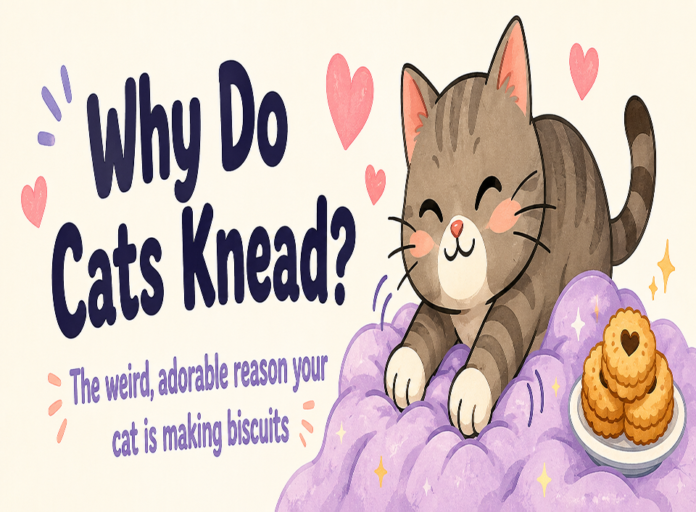
Why do cats knead?
Cats knead because it is a natural instinct linked to comfort, relaxation, kittenhood, sleep preparation, scent marking, and affection. Kneading is when a cat pushes their front paws rhythmically into a soft surface, often a blanket, bed, pillow, or unlucky human stomach. People call this “making biscuits” because, frankly, it looks like your cat has opened a tiny bakery.
Most of the time, cat kneading is completely normal. It usually means your cat feels safe, calm, cozy, or attached to whatever they are kneading. Sometimes, though, excessive kneading can be linked to stress, discomfort, or anxiety, especially if the behavior suddenly changes.
So, no: your cat is not trying to start a sourdough business. Probably.
What Kind of Cat Are You? Find OUT HERE
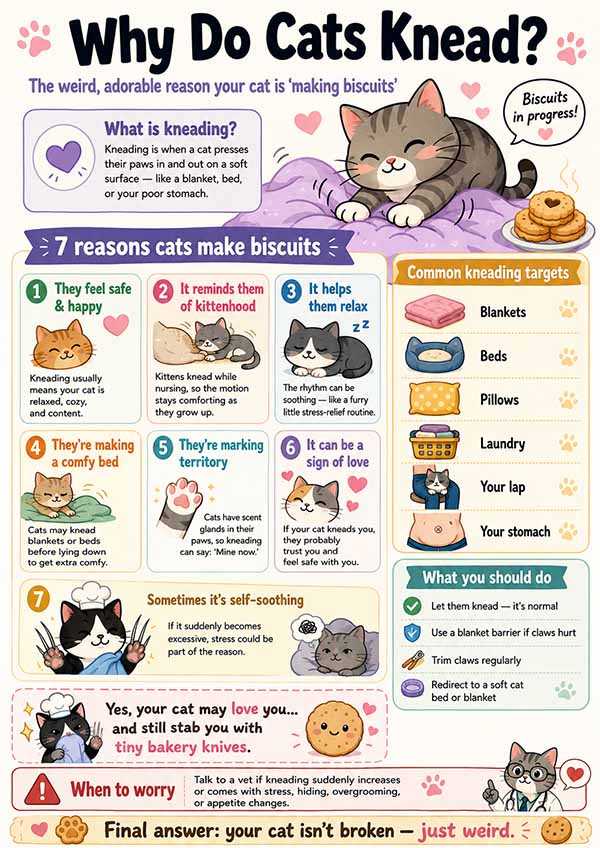
What is cat kneading?
Cat kneading is the repeated pushing motion cats make with their paws. One paw presses down, then the other, then the first again, usually into something soft. Some cats extend their claws while doing it. Some purr. Some drool. Some stare into the middle distance like they are remembering a past life as a Victorian baker.
A cat might knead:
- Blankets
- Pillows
- Beds
- Your lap
- Your stomach
- Your chest
- Another pet
- Soft jumpers
- Fresh laundry
- Anything you foolishly wanted to keep neat
The movement is instinctive, and it often starts when cats are kittens. Kittens knead their mother while nursing, which can help stimulate milk flow. Many cats keep doing it into adulthood because the action is associated with comfort and security.
Why do cats “make biscuits”?
Cats “make biscuits” for several reasons, and the truth is probably a mix of them. Cat behavior is rarely one clean answer. Cats are basically tiny furry riddles with knives on their feet.
1. Your cat feels safe and happy
The most common reason cats knead is simple: they are comfortable.
If your cat climbs onto your lap, starts purring, and begins pressing their paws into you like dough, they are probably relaxed. In cat language, this can be a big compliment. You are warm. You are soft. You are trusted. You are also, unfortunately, furniture.
Kneading often appears during calm, affectionate moments. Your cat may do it before settling down, while being petted, or when they are sleepy.
2. Kneading reminds cats of being kittens
Kneading begins early in life. Kittens knead their mother while nursing. Because nursing is linked with warmth, food, safety, and comfort, the motion can remain emotionally soothing into adulthood.
That does not mean your adult cat was necessarily taken from their mother too early. This is a common myth. Plenty of well-adjusted cats knead. It is just one of those kitten behaviors that some cats keep because it still feels good.
Basically, your cat’s brain says: “Soft surface plus paw squish equals peace.”
3. Cats knead to relax themselves
Many cats knead because it helps them calm down. The rhythm is repetitive, familiar, and soothing. It is a bit like how some people tap their foot, rub a blanket, stretch before bed, or sigh dramatically while opening their email.
A kneading cat may be getting ready to nap. They may also be winding down after excitement. If your cat kneads, purrs, and then curls up, that is usually a sign of contentment.
4. Cats knead blankets to make a cozy bed
Before domestic cats had luxury cushions, heated beds, and humans who buy them things they immediately ignore, wild cats had to prepare resting spots. Kneading soft materials may be connected to the old instinct of pressing down grass, leaves, or bedding to make a safe, comfortable place to sleep.
That may explain why cats knead blankets, beds, and piles of clothes. Your cat is not ruining your laundry. Your cat is conducting ancient wilderness bedding management.
Poorly. But confidently.
5. Cats knead to mark territory
Cats have scent glands in their paws. When they knead, they can leave their scent on the surface. That means kneading can also be a way of saying, “This is mine.”
If your cat kneads your blanket, it is their blanket.
If your cat kneads your pillow, it is their pillow.
If your cat kneads you, congratulations: you are also apparently theirs.
This scent marking is normal cat behavior. You probably cannot smell it, but other cats may detect it.
6. Cats knead because they love you
When cats knead people, it is often a sign of attachment. Your cat may knead your lap or chest because they associate you with comfort, warmth, and safety.
This is why many cats knead while purring. The two behaviors together usually point to a very relaxed cat. It is the feline version of saying, “You are my favorite soft object.”
A strange compliment, yes. But from a cat, it is practically poetry.
The Aussie Habit of Self-Deprecation (and When It Turns Toxic)
7. Cats may knead when they are stressed
Most kneading is harmless and happy. But sometimes cats knead to self-soothe. If your cat suddenly kneads much more than usual, seems restless, hides more, overgrooms, loses appetite, or acts differently, it may be worth checking for stress or health issues.
A cat that kneads obsessively may need more play, routine, enrichment, or veterinary advice. Sudden behavior changes should not be ignored.
Why does my cat knead me?
Your cat kneads you because they feel comfortable with you, want to settle down, are marking you with their scent, or associate you with safety and affection.
In other words: your cat likes you.
Unfortunately, your cat may express that love by puncturing your thighs.
If your cat kneads you with claws, try placing a thick blanket between you and the paws. Do not punish your cat for kneading. It is normal behavior, and punishment can create fear or anxiety. Instead, redirect the kneading to a blanket, cushion, or cat bed.
Why does my cat knead and purr?
A cat that kneads and purrs is usually relaxed, happy, or sleepy. Purring and kneading often happen together during cozy moments.
Your cat may knead and purr when:
- Sitting on your lap
- Getting ready to sleep
- Being petted
- Lying on a favorite blanket
- Feeling safe near you
However, cats can also purr when stressed or unwell, so context matters. If your cat’s body language is loose and calm, kneading and purring are usually good signs. If your cat seems tense, withdrawn, or suddenly behaves differently, pay attention.
Why do cats knead blankets?
Cats knead blankets because blankets are soft, warm, and perfect for comfort. A blanket may remind a cat of nursing, help them prepare for sleep, or serve as a scent-marked resting spot.
This is why some cats have a favorite kneading blanket. They may return to the same one again and again. Some cats even suckle the blanket while kneading, especially if the texture is fluffy or woolly.
Is it weird? Yes.
Is it normal? Also yes.
Why do cats knead before lying down?
Cats often knead before lying down because they are preparing a comfortable sleeping spot. It may be an inherited instinct from wild ancestors who pressed down grass or soft materials before resting.
Modern cats still do this, even when the “wild grass” is a luxury fleece blanket from a human who pays rent.
Why does my cat knead my stomach?
Your cat kneads your stomach because it is warm, soft, and moves gently when you breathe. To a cat, this is premium bedding. Five stars. Excellent squish. Would knead again.
Your stomach may also feel like a safe resting place if your cat trusts you. The only issue is claws. If it hurts, place a folded blanket over your stomach before your cat settles in.
Why does my cat knead my chest?
Cats knead your chest for warmth, closeness, comfort, and bonding. Your chest has body heat, your scent, and the rhythm of your breathing. Some cats find that very soothing.
It can feel sweet until one paw lands directly on a rib. Again: use a blanket barrier.
Why does my cat knead with claws?
Cats knead with claws because claw extension is part of the natural paw movement. Your cat probably is not trying to hurt you. They are just doing the full deluxe biscuit-making routine.
To make it less painful:
- Keep your cat’s claws trimmed
- Put a thick blanket on your lap
- Redirect your cat to a designated kneading blanket
- Reward them when they use the blanket
- Avoid yelling, pushing, or spraying them
The goal is not to stop the instinct. The goal is to make the instinct less stabby.
Should I stop my cat from kneading?
You usually should not stop your cat from kneading completely. It is a natural behavior and often a sign of comfort. But you can redirect it.
Give your cat acceptable kneading targets, such as:
- A thick fleece blanket
- A soft cat bed
- A cushion
- A folded towel
- A washable throw
When your cat starts kneading your skin, gently move them to the blanket. Over time, many cats learn where to knead.
When is cat kneading a problem?
Cat kneading may be a problem if it becomes obsessive, destructive, painful, or appears suddenly alongside other behavior changes.
Speak to a vet if your cat:
- Suddenly kneads much more than usual
- Seems anxious or unsettled
- Overgrooms
- Hides more than normal
- Stops eating normally
- Cries, limps, or seems physically uncomfortable
- Kneads while appearing distressed
Most kneading is normal, but sudden changes deserve attention.
Do all cats knead?
No, not all cats knead. Some cats knead constantly. Some only knead certain blankets. Some never knead at all.
That does not automatically mean anything is wrong. Cats have different personalities. Some are biscuit chefs. Some are not.
Is cat kneading a sign of love?
Often, yes. When a cat kneads you during a relaxed, affectionate moment, it can be a sign that they trust you and feel safe with you.
It is not the only reason cats knead, but it is one of the nicest explanations. Your cat may be saying, in their own odd little way, “You are safe. You are warm. You are mine.”
And possibly: “You have the texture of bread.”
Quick answers: cat kneading FAQs
Why do cats knead soft things?
Cats knead soft things because soft surfaces are comforting and good for settling down. Blankets, beds, and pillows are especially popular.
Why does my cat knead me but not other people?
Your cat may knead you because they trust you most, like your scent, prefer your lap, or associate you with comfort.
Why does my cat drool while kneading?
Some cats drool when deeply relaxed. If the drooling is new, excessive, or comes with bad breath or eating problems, check with a vet.
Why does my cat bite the blanket while kneading?
Some cats suckle or bite blankets while kneading because it resembles kitten nursing behavior. It is usually harmless unless they swallow fabric.
Why does my cat knead then bite me?
Your cat may become overstimulated, playful, or annoyed. Watch their body language. If their tail flicks, ears flatten, or skin twitches, stop petting and give them space.
Are cats happy when they knead?
Most of the time, yes. Kneading is commonly associated with comfort and relaxation, though some cats may also knead to soothe themselves when stressed.
Why do cats knead at night?
Cats may knead at night because they are settling in to sleep, seeking comfort, or trying to get cozy near you.
Why does my cat knead my hair?
Your hair may feel soft, warm, and familiar. Your cat may also be mixing kneading with grooming or bonding behavior.
Final answer: your cat is not broken — just weird
Cats knead because it is instinctive, comforting, and deeply tied to feelings of safety. Whether your cat is kneading a blanket, your lap, your stomach, or your expensive jumper, they are usually doing something normal and emotionally positive.
So the next time your cat starts making biscuits on you, take it as a compliment.
A painful, tiny-clawed, bakery-themed compliment.
Australia Day Educational Programs: Learning About National History