




A travel image can become more inviting with one small edit and less trustworthy for the same reason. Warmer light may be harmless. A wider beach, a moved track, a clearer swimming hole or a missing warning sign can change what a reader thinks exists at a real destination. The problem begins when atmosphere quietly turns into evidence.
That boundary matters even when Nano Banana AI produces a polished result. Travel readers use pictures to judge terrain, access, crowds and season. An editor therefore needs a place-claim ledger before asking for a prettier sky or cleaner foreground.
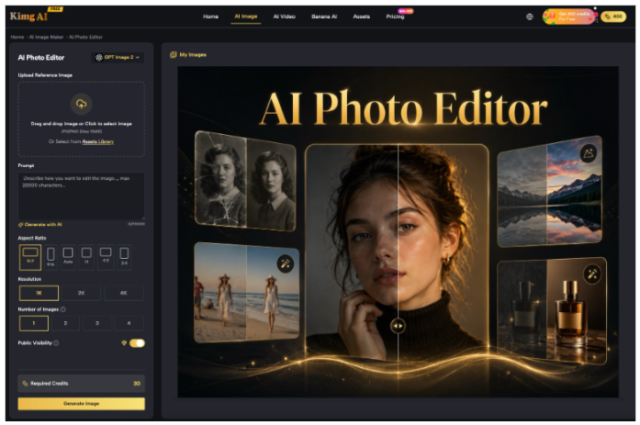
Kimg AI supports prompt-led generation and edits from a source image. Reference input and direct change instructions make restrained variants possible. They also make it easy to change more than the editor intended, so the original frame must remain the comparison point throughout the job.
Separate Recorded Place Facts From Added Atmosphere
Start by dividing the source image into recorded facts and reversible styling. A recorded fact is any visible detail a traveller could use to make a decision: the shape of a headland, the position of a path, the presence of railings, the water entry, a road surface or a sign. Styling includes a warmer color grade, a modest cloud layer or a small reduction in background clutter that does not change access.
| Visual detail | How a reader may interpret it | Editorial treatment |
| Coastline, trail or river edge | Physical route and terrain | Freeze to the source |
| Gate, railing, warning sign or steps | Access and safety condition | Freeze and verify |
| Cloud tone and late-afternoon warmth | Mood or likely weather | Edit lightly and label reconstruction when material |
| Temporary crowd or parked vehicle | Busyness and convenience | Remove only when the caption cannot imply typical conditions |
The ledger prevents a vague instruction such as “make the location more cinematic” from touching every visible element. It gives the editor a short list of protected details and a separate list of style changes that can be judged on their own.
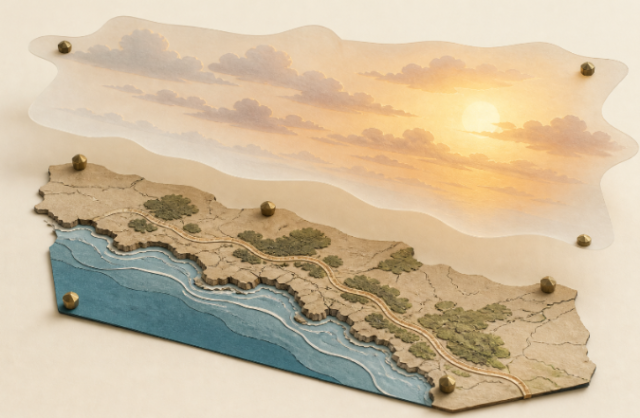
Freeze Details That Identify The Real Location
A source image is strongest when its provenance is clear and its viewpoint is understood. Note when it was captured, where the camera stood and which visible features identify the place. If that information is missing, use the picture as generic atmosphere rather than proof of a named destination.
A simple source note can hold the location, capture date, photographer or owner, and any known change since the image was made. That note stays outside the published prose, but it gives the approver a concrete baseline when an edit makes the scene look newer or easier to reach.
Keep Landforms And Access Points Untouched
Draw an imaginary lock around cliffs, tracks, water edges, ramps, steps and built safety features. These elements belong in the “do not change” part of the instruction. The same rule applies to the relative distance between them. Moving a lookout closer to a track can suggest easier access even when both objects still exist.
Before editing, save a copy of the original beside the article draft. Give the source and candidate distinct filenames so the edited version never replaces the evidence frame. The comparison should stay visible to the person approving the story.
Treat Signs And Labels As Live Copy
Readable text in a generated or edited image is still copy. A model may render letters cleanly and still produce the wrong place name, distance or instruction. Nano Banana Pro has stronger multilingual text rendering than earlier image systems, but legibility is not verification. Keep real signs from the source, or remove the text area from the editorial claim and rebuild approved words through a controlled design step.
Keep Weather Claims Outside The Picture
A dramatic sky can make a quiet guide more engaging, yet it should not imply predictable weather. Avoid adding snow, surf, flowering vegetation or seasonal water levels unless the article clearly presents the scene as an illustration. Color treatment can change mood; it should not manufacture a season.
Edit One Reversible Layer At A Time
Constrained editing works best when each candidate answers one question. Change the light, inspect it, and stop. Then test crowd reduction as a separate branch if the story needs it. Combining sky replacement, object removal, path cleanup and wider framing in one prompt makes the failure hard to locate.
Upload The Strongest Source Frame First
Choose the image with the clearest permanent features rather than the most dramatic composition. A straight horizon, readable access point and unblocked route give the edit more reliable material. Kimg AI accepts a source image through its editor, followed by a direct description of the wanted change and output settings.
Write protected details into the same instruction. A useful structure is: change one styling layer; preserve the coastline, track, railing and relative positions; add no text or structures. This is an editorial constraint, not a promise that the system will obey every element.
Describe One Change And Keep The Rest
Ask for a bounded adjustment such as softer midday light or fewer distracting objects in the far background. A route such as Kimg makes it practical to compare more than one candidate, but all candidates should share the same source and instruction. If a second idea appears, save it for another branch.
Compare Against The Original Before Export
Place the source and candidate side by side at the same size. Look for changes in geometry before judging color. Then scan protected objects from left to right. The review should answer four questions:
- Did any landform, route or access feature move?
- Did a warning, sign or built structure disappear?
- Did the edit create a seasonal or safety claim?
- Can the caption clearly describe what was reconstructed?
Reject the candidate when a permanent feature changes, even if the overall picture looks better. When only the planned styling layer changes, store the candidate beside the source and record the instruction used.
Kimg AI keeps generation metadata with saved assets, including the prompt, model, parameters, references and timestamp. That trail can help an editor reconstruct the job, but the article record should still include the source/candidate pair and the publication label.
Know The Limits Of Model-Led Verification
World knowledge and improved text rendering can help a model compose a convincing travel scene, yet factual accuracy and complex edits can still need correction. The tool cannot confirm current access, water safety, closures or seasonal conditions. A person must verify those claims from current authoritative information before publication.
Use Atmosphere Without Rewriting The Destination
An editor with a credible source image can make a restrained atmospheric variant under this rule. A guide that lacks verified photography should never use generation to show exact access, hazards or present conditions.
Keep Kimg AI on the reversible side of the ledger: change one styling layer, hold the source beside every candidate and record the difference. Label reconstructed atmosphere wherever readers could mistake it for documentary evidence. The destination must remain more authoritative than the polish around it.