



Every decision—big or small—is shaped by an invisible tug-of-war between logic and emotion. From choosing a career path to ordering food at a late-night stand, the human mind constantly balances rational thinking with instinctive feeling. While some individuals pride themselves on being analytical and calculated, others lean into their emotional compass, trusting intuition over spreadsheets. But the reality is more complex than simply labeling someone as “logical” or “emotional.”
Modern psychology suggests that both systems are essential, not opposing. Decision-making is rarely purely rational or purely emotional—it is a blend of both. Understanding how these two forces interact can unlock better choices, stronger relationships, and improved self-awareness.
What Does It Mean to Be Logic-Driven?
A logic-driven individual prioritizes facts, data, and structured reasoning when making decisions. This approach often minimizes bias and focuses on outcomes rather than feelings.
Key Traits of Logic-Driven Thinking:
- Relies on evidence and analysis
- Focuses on long-term consequences
- Maintains emotional distance in decision-making
- Prefers structured problem-solving
For example, in financial planning, a logic-driven person may consult resources like Investopedia to evaluate risks before making a decision.
Strengths of Logic-Driven Individuals:
- More consistent decision-making
- Better at managing risk
- Strong analytical and critical thinking skills
Limitations:
- May overlook emotional impact on others
- Can appear cold or detached
- Risk of analysis paralysis
People Also Love: Why Some People Need a Day Before They Can Speak
What Does It Mean to Be Emotion-Driven?
Emotion-driven individuals rely on feelings, intuition, and personal values to guide decisions. This approach is deeply connected to empathy and human experience.
Key Traits of Emotion-Driven Thinking:
- Guided by intuition and gut feeling
- Prioritizes relationships and personal values
- Responds quickly in uncertain situations
- Strong emotional awareness
Strengths of Emotion-Driven Individuals:
- High empathy and interpersonal skills
- Faster decision-making in dynamic environments
- Strong alignment with personal values
Limitations:
- Decisions may be inconsistent
- Susceptible to bias or impulse
- Can prioritize short-term satisfaction over long-term benefit
Logic vs Emotion: Why the Balance Matters
The most effective decision-makers are not purely logical or emotional—they are adaptable. Emotional input is essential for making even basic decisions.
Why Balance Is Critical:
- Logic ensures clarity and structure
- Emotion ensures meaning and connection
- Together, they create well-rounded decisions
Real-Life Example:
Choosing a job:
- Logic evaluates salary, benefits, and growth
- Emotion evaluates passion, culture, and fulfillment
Ignoring either side can lead to dissatisfaction.
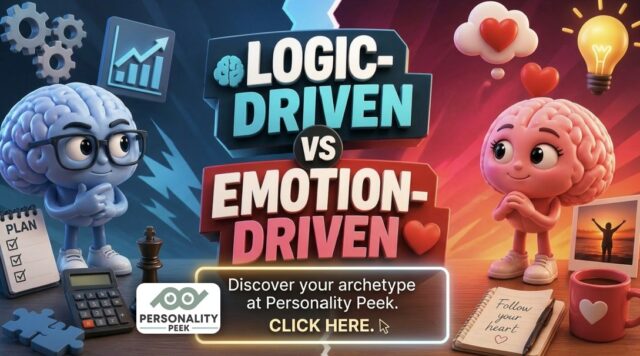
Common Scenarios: Logic-Driven vs Emotion-Driven
1. Career Decisions
- Logic-driven: Chooses stability and higher income
- Emotion-driven: Chooses passion and purpose
2. Relationships
- Logic-driven: Evaluates compatibility and long-term potential
- Emotion-driven: Follows feelings and emotional connection
3. Spending Habits
- Logic-driven: Budgets and saves
- Emotion-driven: Spends based on desire or mood
The Psychology Behind Decision-Making
Psychologist Daniel Kahneman, author of Thinking, Fast and Slow, explains two systems of thinking:
- System 1: Fast, emotional, intuitive
- System 2: Slow, logical, analytical
Both systems work together constantly. According to Kahneman’s research, relying too heavily on one system can lead to poor judgment.
How to Strengthen Both Thinking Styles
Ways to Improve Logical Thinking:
- Practice critical thinking exercises
- Analyze past decisions objectively
- Use frameworks like pros and cons lists
Ways to Improve Emotional Intelligence:
- Develop self-awareness
- Practice empathy in conversations
- Reflect on emotional triggers
Practical Tip:
Before making a decision, ask:
- “What do the facts say?” (Logic)
- “How do I feel about this?” (Emotion)
Why People Lean One Way Over the Other
Several factors influence whether someone becomes more logic-driven or emotion-driven:
- Upbringing: Analytical environments vs expressive households
- Education: Emphasis on critical thinking vs creativity
- Personality traits: Some individuals naturally lean toward intuition
- Past experiences: Emotional events can shape future decisions
Understanding these influences helps explain behavior without judgment.
Call to Action: Discover Your Thinking Style
Curious about whether decisions lean more toward logic or emotion? Understanding personal patterns can lead to better outcomes in career, relationships, and daily life.
Explore deeper insights and uncover unique personality traits through this free starter quiz:
👉 https://personalitypeek.com/test/free-starter-quiz
Conclusion
The debate between logic-driven and emotion-driven thinking is not about choosing a side—it is about understanding the interplay between both. Logic provides structure and clarity, while emotion adds depth and meaning. When combined, they create decisions that are not only smart but also fulfilling.
In a world filled with complex choices, the most successful individuals are those who can pause, reflect, and balance both perspectives. Recognizing when to rely on data and when to trust instinct is a skill that evolves over time. By developing awareness of both systems, decision-making becomes less about conflict and more about harmony.