


Personality has fascinated psychologists, researchers, and everyday people for decades. One of the most common questions people ask when exploring personality is simple: “Am I an introvert or an extrovert?” While the answer may seem obvious to some, personality is often more layered than expected.
Some people feel energized after social interaction, while others need solitude to recharge. Some enjoy deep conversations in quiet spaces, while others naturally thrive in fast-moving group environments. These differences are often linked to introversion and extroversion — two of the most recognized personality dimensions in modern psychology.
Today, millions of people search online for personality tests that can reveal whether they lean introverted, extroverted, or somewhere in between. But not every personality test measures these traits accurately. Some focus only on surface-level habits, while others explore deeper emotional, social, and cognitive patterns.
Understanding which personality test actually measures introversion and extroversion can help people better understand relationships, work styles, communication preferences, and emotional energy.
What Does Introvert vs Extrovert Actually Mean?
Many people misunderstand these terms.
Being introverted does not automatically mean someone is shy, antisocial, or awkward. Likewise, being extroverted does not always mean being loud or constantly outgoing.
According to research discussed through the American Psychological Association, introversion and extroversion primarily relate to how people gain and lose energy.
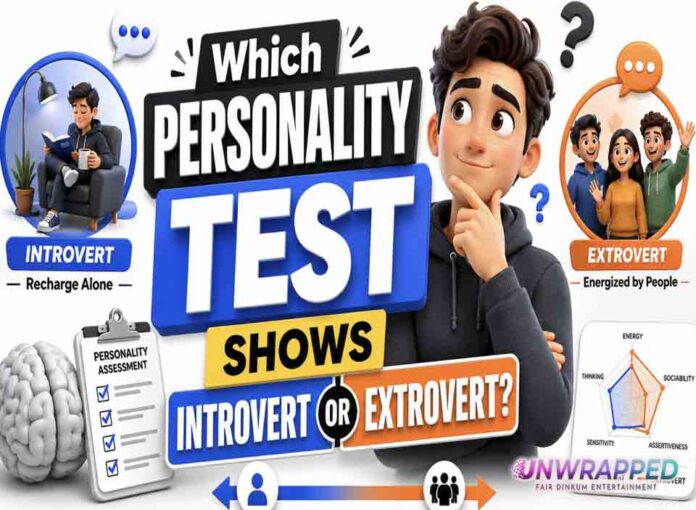
Introverts Often:
- Recharge alone
- Prefer deeper conversations
- Feel drained after too much stimulation
- Think before speaking
- Enjoy quieter environments
Extroverts Often:
- Gain energy through interaction
- Enjoy group activities
- Think out loud
- Seek stimulation and variety
- Feel energized by social settings
However, most people exist somewhere in the middle. This is often called being an ambivert.
That is why personality testing has become so popular. It gives people language to understand patterns they already feel internally.
Which Personality Tests Measure Introvert or Extrovert?
Several personality systems measure introversion and extroversion directly. Some are more scientific, while others are designed for self-discovery and personal growth.
Here are the most recognized options.
Myers-Briggs Type Indicator (MBTI)
The Myers-Briggs Type Indicator (MBTI) is one of the most famous personality systems in the world.
It divides people into 16 personality types based on four major dimensions. One of those dimensions is:
Introversion (I) vs Extroversion (E)
This test focuses on where people naturally direct their energy and attention.
For example:
- Introverts often process internally before acting
- Extroverts often process externally through interaction
Popular MBTI personality examples include:
- INFJ
- ENFP
- INTJ
- ESFP
The MBTI became especially popular because it makes personality feel understandable and practical for everyday life.
Strengths of MBTI
- Easy to understand
- Widely recognized
- Helpful for self-reflection
- Strong focus on communication styles
Weaknesses of MBTI
- Some psychologists criticize its scientific reliability
- Personality may change depending on mood or environment
- Results can feel overly simplified for some users
Still, it remains one of the most searched personality systems for identifying introvert or extrovert tendencies.
Another Must Read: What Is A Relationship Personality Test?
The Big Five Personality Test
Many psychologists consider the Big Five Personality Traits Model one of the most scientifically supported personality frameworks.
Unlike MBTI, the Big Five measures personality on sliding scales instead of fixed types.
The five dimensions include:
- Openness
- Conscientiousness
- Extraversion
- Agreeableness
- Neuroticism
In this model, extroversion exists on a spectrum rather than a strict label.
Someone may score:
- Very high in extroversion
- Moderately introverted
- Socially balanced
- Highly reserved
This approach often feels more realistic because personality is rarely all-or-nothing.
Why the Big Five Is Popular
- Backed by extensive psychological research
- Used in academic studies
- More flexible than rigid typing systems
- Gives nuanced results
People looking for a scientifically grounded answer about introversion or extroversion often prefer the Big Five model.
Personality Peek and Modern Personality Archetypes
Newer personality systems are also becoming popular because they combine psychology with emotional insight and modern behavior patterns.
For example, Personality Peek uses personality archetypes and behavioral patterns to explore:
- Social energy
- Emotional processing
- Group behavior
- Communication style
- Decision-making
- Creativity
- Stress responses
Instead of simply labeling someone introverted or extroverted, these systems explore how those traits appear in real life.
For example:
- Some introverts are emotionally expressive
- Some extroverts prefer independence
- Some people appear outgoing socially but mentally recharge alone
This layered approach often feels more personal and emotionally accurate for modern users.
Why People Want to Know If They Are Introverted or Extroverted
This question is about more than curiosity.
Understanding personality can improve:
- Relationships
- Work environments
- Communication
- Self-confidence
- Emotional boundaries
- Stress management
For example, an introvert may wrongly believe something is “wrong” with them for needing alone time after social events. An extrovert may feel confused about why isolation affects their mood so strongly.
Personality testing can help normalize these differences.
It also helps people stop comparing themselves unfairly to others.
Signs Someone May Be More Introverted
While personality tests offer structured insight, everyday behavior often reveals patterns too.
Common Introvert Traits
- Prefers meaningful conversations over small talk
- Needs quiet time after socializing
- Observes before joining conversations
- Enjoys solo hobbies
- Thinks deeply before making decisions
Importantly, introverts can still be confident, funny, socially skilled, and emotionally expressive.
Introversion is about energy management — not social ability.
Signs Someone May Be More Extroverted
Common Extrovert Traits
- Feels energized around people
- Enjoys fast-paced environments
- Thinks out loud
- Builds energy through activity
- Naturally starts conversations
Extroverts also vary widely.
Some are highly social leaders. Others simply feel emotionally refreshed through interaction even if they are not especially loud.
Can Someone Be Both?
Absolutely.
Many people are ambiverts.
This means they display both introverted and extroverted tendencies depending on:
- Environment
- Stress levels
- Familiarity
- Emotional state
- Social comfort
An ambivert may:
- Love social events occasionally
- Need recovery time afterward
- Enjoy leadership but still value solitude
- Switch between outgoing and reflective modes
This is one reason modern personality systems increasingly avoid rigid labels.
Human personality is fluid.
Why Online Personality Tests Became So Popular
Personality testing exploded online because people are searching for identity clarity.
In a fast-moving digital world, personality frameworks help people answer questions like:
- Why do certain environments drain energy?
- Why do some friendships feel effortless?
- Why does conflict affect people differently?
- Why do some people love attention while others avoid it?
Platforms like Psychology Today and modern personality communities continue exploring how personality shapes emotional experience, motivation, and behavior.
People are not just searching for labels anymore.
They are searching for self-understanding.
How to Choose the Right Personality Test
The best personality test depends on the goal.
Choose MBTI If:
- Looking for simple personality categories
- Interested in personality types
- Enjoying self-discovery frameworks
Choose Big Five If:
- Wanting scientifically grounded results
- Preferring flexible personality scales
- Interested in research-backed psychology
Choose Modern Archetype Systems If:
- Looking for emotional depth
- Exploring behavior patterns
- Wanting practical self-awareness insights
The most valuable personality tests are the ones that encourage reflection rather than limitation.
Personality should feel like understanding — not a box.
Call to Action
Curious whether personality patterns shape the way energy, emotions, and relationships work?
Take the FREE Core-64 Personality Quiz at Personality Peek and discover deeper insights into introversion, extroversion, emotional wiring, communication style, and hidden personality strengths.
Share the results with friends and compare personality styles to see how differently people experience the world.
Conclusion
Personality tests continue growing in popularity because they help people feel understood. Introversion and extroversion are not rigid identities but energy patterns that shape how people think, connect, recharge, and respond to the world around them.
Some personality systems focus on science and measurable traits, while others focus on emotional patterns and self-awareness. Both approaches can be valuable when used thoughtfully.
The most important thing is not finding a perfect label. It is gaining language for understanding behavior, emotional needs, social comfort, and personal growth more clearly. When personality insight is used correctly, it becomes less about putting people into categories and more about helping them understand themselves with greater honesty and confidence.
See Also: How Do Personality Tests Work?