

The Honest Answer: Yes, But That Does Not Make Them Useless
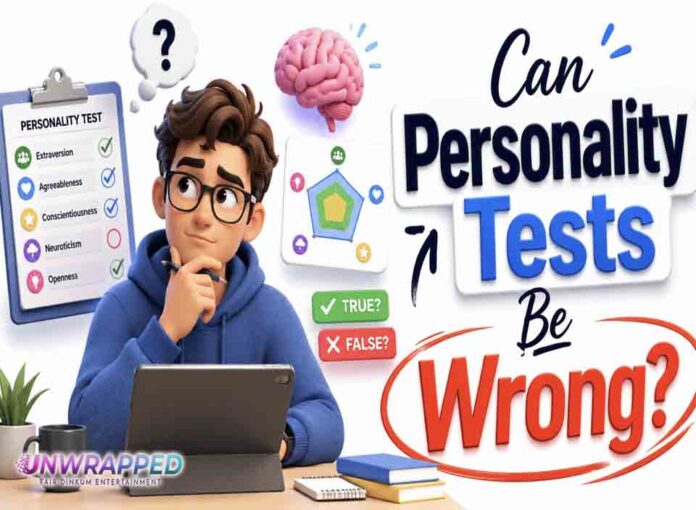
Personality tests can be helpful, entertaining, revealing, and even life-changing when they give people better language for understanding themselves. But can personality tests be wrong? Yes, they can. A test result can miss important context, oversimplify a person, or reflect how someone felt on the day they answered the questions.
That does not mean every personality test is fake or useless. It means personality tests should be treated as self-awareness tools, not final verdicts. The best tests open a door. They do not lock a person inside a label.
Personality is layered. Mood, age, environment, culture, stress, relationships, work pressure, and self-perception can all influence how someone answers. A person may test as outgoing during a confident season of life but feel more introverted during burnout. Someone may score as highly organized at work but feel chaotic at home. Real personality is not always simple enough to fit inside one result.
That is why the real question is not only, “Can personality tests be wrong?” A better question is: what kind of personality test is being taken, how was it designed, and how should the result be used?
Why Personality Tests Can Be Wrong
Personality tests usually depend on self-report answers. That means the result is only as accurate as the answers given. If someone answers based on who they wish they were, who they are under pressure, or who they are around certain people, the result may shift.
The American Psychological Association explains that test validity refers to how well evidence and theory support the interpretation of test scores for a specific use. In simple terms, a personality test needs to measure what it claims to measure, and the result should be used only for the purpose it was designed for.
A personality quiz can be wrong when it:
- Uses vague questions
- Forces people into extreme categories
- Ignores situation and context
- Has no research behind it
- Gives flattering but generic results
- Confuses behavior with deeper personality patterns
- Treats changing moods as permanent traits
For example, a person may answer “yes” to enjoying social events, but that does not automatically mean they are extroverted. They might enjoy people and still need a lot of alone time afterward. Without nuance, the test can misread the pattern.
Another Must-Read: How Do Personality Tests Work?
Personality Is Not Always Fixed
One major reason personality tests can feel inaccurate is that people are not the same in every situation. Personality is relatively stable, but behavior changes depending on setting.
A person may be:
- Quiet at work but playful with close friends
- Calm in public but anxious before big decisions
- Organized with money but messy with time
- Independent emotionally but highly cooperative in teams
- Confident online but reserved in person
This is why a single test result should not be treated like a full identity. Personality is more like a map than a prison cell. A good test gives direction, but it cannot capture every room, road, storm, and shortcut inside someone’s life.
Reliability vs. Validity: Why These Words Matter
Two important words explain why some personality tests are stronger than others: reliability and validity.
Reliability means a test gives consistent results under similar conditions. The APA Dictionary describes a standardized test as an assessment instrument whose validity and reliability have been established through empirical investigation and analysis.
Validity means the test actually measures what it says it measures. APA PsycTests also notes that test records may include information on reliability, validity, and factor analysis when those data are reported, which is exactly the kind of evidence people should look for when choosing serious assessments.
Here is a simple example:
- A bathroom scale that gives the same number every time may be reliable.
- But if it is always ten pounds off, it is not valid.
- A personality test can also feel consistent but still measure the wrong thing.
That is why a fun online quiz should not be used the same way as a professional psychological assessment.
Why Some Online Personality Quizzes Feel Accurate Even When They Are Not
Some personality tests feel extremely accurate because they use broad statements that apply to many people. This is often connected to the “Barnum effect,” where people accept general descriptions as personally meaningful.
A result might say:
“You are caring, but you sometimes hide your emotions.”
Many people will relate to that. It feels personal, but it may not be specific enough to prove accuracy.
This does not mean fun quizzes have no value. They can spark reflection. They can start conversations. They can help people notice patterns. But a good personality test should do more than sound flattering. It should give useful insight that helps someone understand behavior, emotional needs, decisions, relationships, and growth areas.
The Big Five and Research-Based Personality Testing
Not all personality tests are built the same. Some models have stronger research support than others. The Big Five model is widely used in psychology because it measures personality traits on a spectrum instead of forcing people into fixed types.
The Big Five usually includes:
- Openness
- Conscientiousness
- Extraversion
- Agreeableness
- Neuroticism or emotional stability
Research on Big Five inventories has examined reliability and score consistency, including studies using the Big Five Inventory to evaluate how dependable scores can be across different measurement approaches.
A spectrum-based model can be more realistic because people are rarely “all introvert” or “all extrovert.” Someone may score moderately high in extraversion, low in emotional volatility, and high in openness. That combination gives a more layered picture than one simple label.
Can Job Personality Tests Be Wrong?
Yes, and the stakes can be higher.
Personality tests used in hiring, leadership, or workplace screening should meet stricter standards than entertainment quizzes. The Society for Industrial and Organizational Psychology provides principles for validating and using personnel selection procedures, highlighting the importance of reliability, validity, fairness, and proper use in employment decisions.
A workplace personality test can be problematic if it:
- Screens out good candidates unfairly
- Measures traits unrelated to the job
- Encourages applicants to fake answers
- Treats personality as more important than skills
- Ignores culture, training, and experience
For hiring, personality data should support decision-making — not replace interviews, experience, work samples, references, and human judgment.
Common Reasons Someone Gets the “Wrong” Result
A personality test may feel wrong for many normal reasons. It does not always mean the person answered badly or the test is terrible. Sometimes the test captured only one version of them.
1. They answered based on mood
A stressed person may seem less patient, less social, or less motivated than usual.
2. They answered based on identity
Someone may choose answers that match who they want to be, not how they usually act.
3. The questions were too limited
Some tests ask simple either-or questions when the real answer is “it depends.”
4. The test ignored context
A person may behave differently at work, in romance, with family, and under pressure.
5. The result was too rigid
A label can feel wrong when it describes only one part of a person’s personality.
Are Personality Tests Still Worth Taking?
Yes — when used the right way.
A personality test is most useful when it helps someone ask better questions, such as:
- What gives energy?
- What drains energy?
- How does stress change behavior?
- What patterns show up in relationships?
- What kind of work environment feels natural?
- What communication style feels easiest?
- What blind spots keep repeating?
A test becomes less useful when someone treats it as destiny.
The best personality insight sounds like: “This helps explain a pattern.”
The worst version sounds like: “This label decides who someone is forever.”
How to Tell If a Personality Test Is Better Quality
A stronger personality test usually has a few signs of quality.
Look for tests that:
- Explain what they measure
- Avoid extreme labels
- Use clear questions
- Give nuanced results
- Mention limitations
- Encourage reflection, not fear
- Connect results to real-life behavior
- Avoid pretending one quiz can explain everything
Good personality testing should feel clarifying, not controlling.
Call to Action: Use Personality Tests as a Mirror, Not a Cage
Personality tests are best when they help people understand themselves with more honesty and compassion. A result should not limit someone. It should help them notice patterns, strengths, emotional habits, and growth opportunities.
For a deeper, more personal look at personality patterns, take the free Personality Peek Core-64 Quiz:
https://personalitypeek.com/test/free-starter-quiz
It can help explore personality style, decision patterns, emotional wiring, strengths, and hidden traits in a way that feels practical, reflective, and easy to understand.
Final Thoughts
Personality tests can be wrong, especially when they are vague, poorly designed, or treated like permanent identity labels. People are too complex to be fully explained by one score, one archetype, or one quiz result.
Still, personality tests can be powerful when they are used wisely. They can reveal patterns someone has felt for years but never had the words to explain. They can improve self-awareness, relationships, communication, and personal growth.
The smartest approach is simple: take the result seriously enough to reflect on it, but not so seriously that it replaces lived experience. A personality test should begin a conversation with the self — not end it.
See Also: Which Personality Test Shows Introvert Or Extrovert?